What a Guest House or ADU Adds in Fort Worth
Home Improvement
Home Improvement
A client last spring wanted to put a guest house in the back yard for her mother. The builder quoted $165,000 for twelve hundred square feet. She asked me what it would be worth when she sold.
I told her what I knew: accessory units rarely return what they cost, and the size of the builder's quote had very little to do with what a buyer would pay for it. Then I went and proved it, because nobody in this market had.
2,002 accessory units out of the Dallas–Fort Worth closings, each one compared against its own neighbors in the same subdivision. Having a guest house adds about 7% of the price. How big it is adds nothing the data can detect.
She built four hundred square feet and kept the difference.
Put both questions into the same model — does it have one, and how many square feet does it have — and they separate. (The 7% above is what a unit is worth when you do not ask about size at all. Ask about both at once and the presence term settles a little lower, which is the number below.)
Has an accessory unit | +5.4% | of the price |
Each additional 100 sq ft of it | +0.3% | not distinguishable from zero |
The median accessory unit around here is 600 square feet. Doubling that to 1,200, on 753 sales with a recorded size, bought nothing measurable.
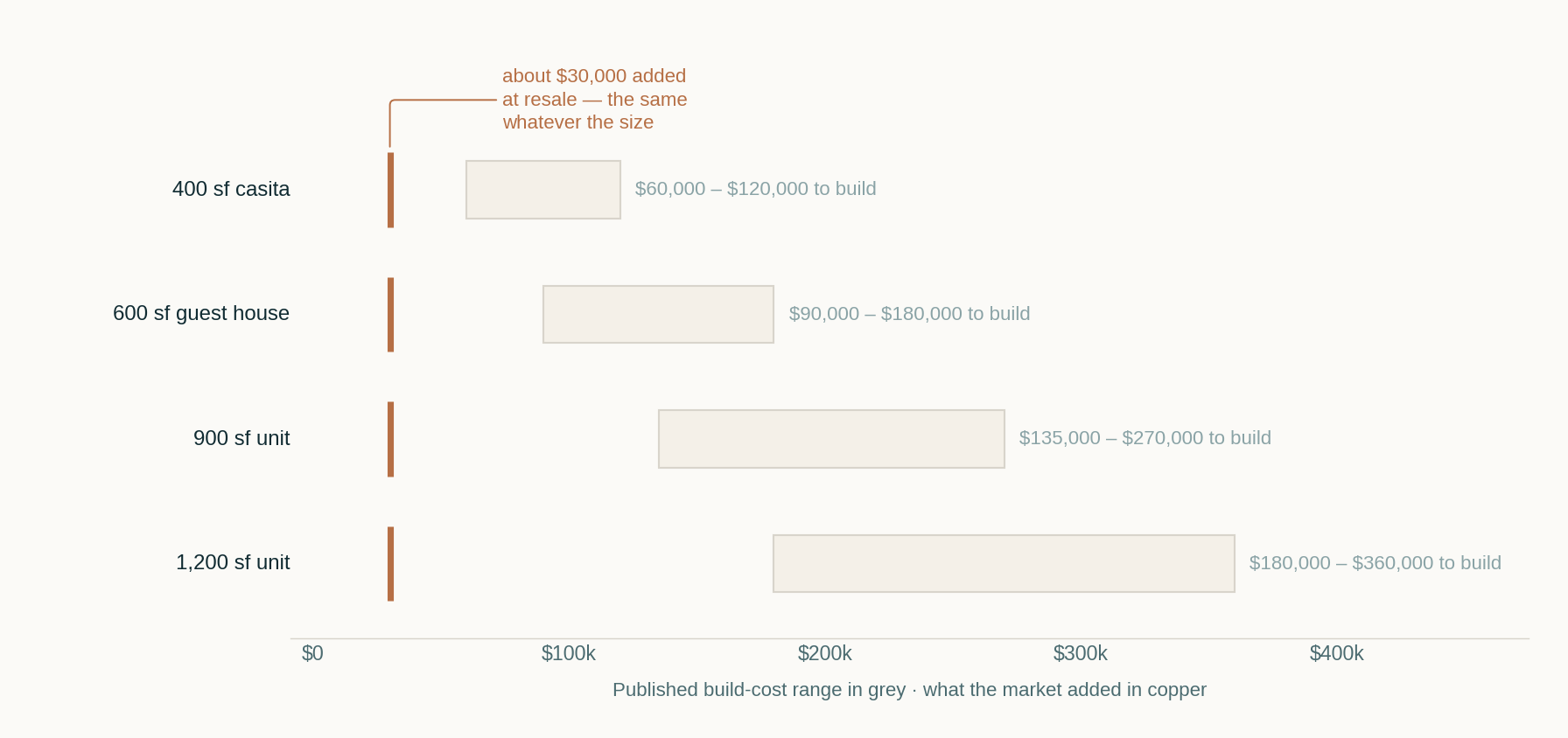
Cost scales with size. Contribution doesn't.
Which is why that $165,000 quote was the wrong end to start from. Twelve hundred feet would have returned roughly what four hundred feet returns — and four hundred feet still houses a mother.
Square footage inside the main house behaves normally — it's worth about $186 a foot at the margin. Accessory square footage works out closer to $50. About a quarter.
A buyer isn't shopping for floor area out there. They're shopping for the fact of a separate place to put a parent, a guest, an adult kid who moved home, or a renter. Once that box is checked, another four hundred feet doesn't change their offer.
Here's what I ran into while writing this up, and it's the part I'd want to know as a buyer.
A freestanding casita in the back yard and a guest suite tucked under the main roofline are recorded identically. Same checkbox. There is no MLS field for attached versus detached, the type field doesn't distinguish it, and agents almost never specify in the remarks whether the unit is attached or detached. Only 28% of accessory units have any detached structure noted anywhere in the record.
Two of my own listings show how far apart those can be.
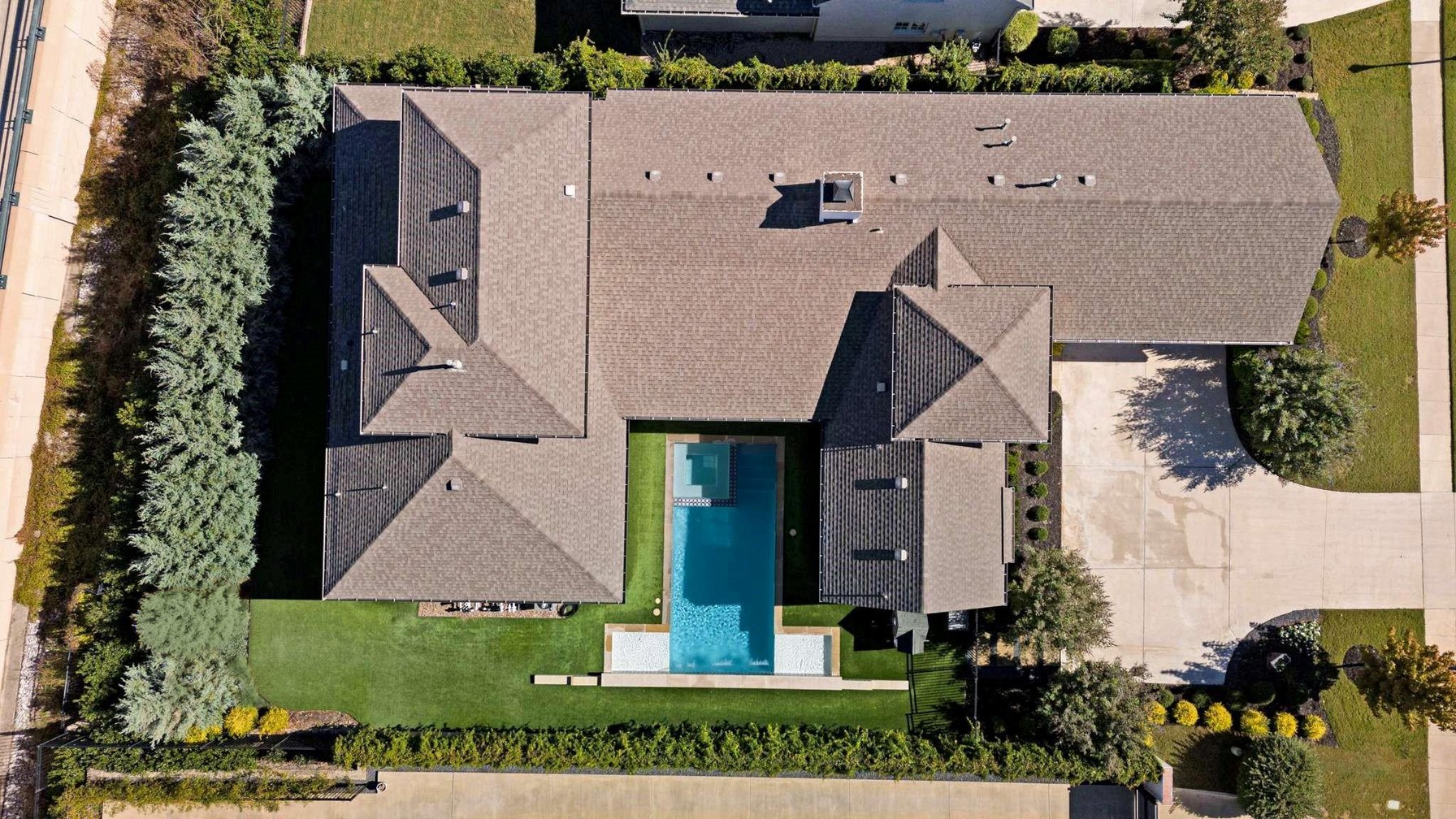
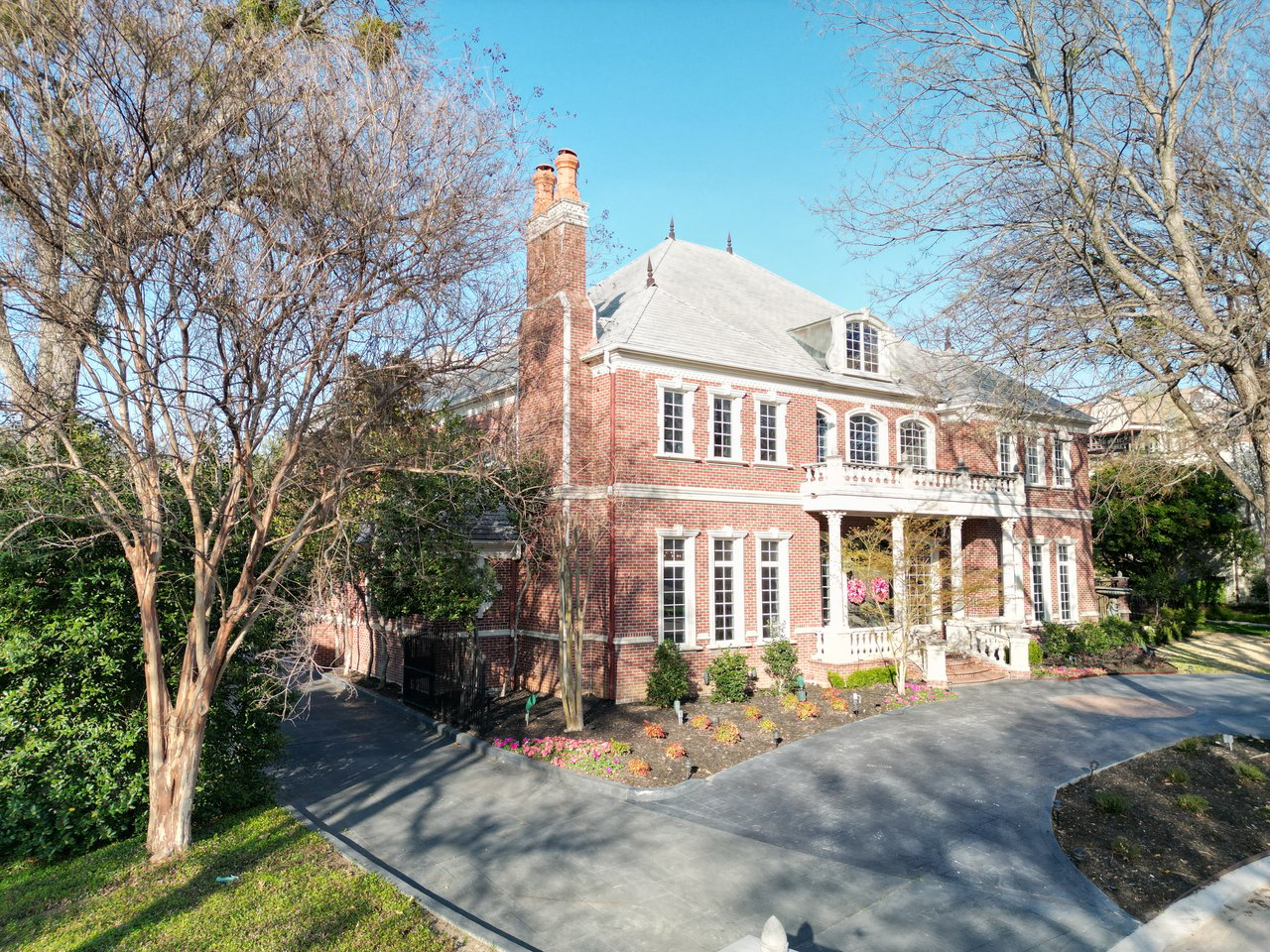
Fort Worth, sold at $1,595,000. There's a 407-square-foot guest suite in there — you can't see it, because it sits under the same roofline. You reach it from outside, but it never reads as a separate building.
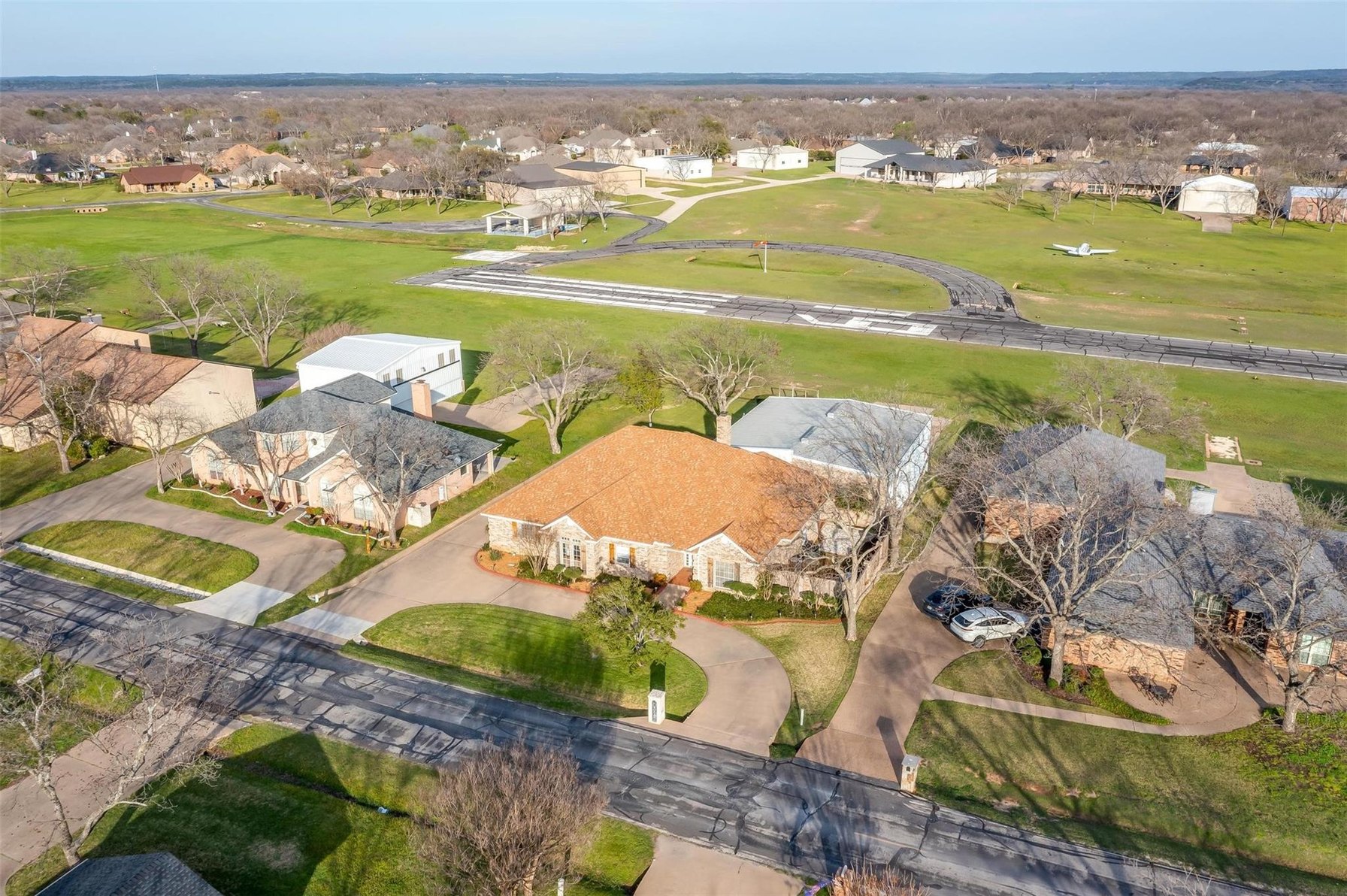
Granbury, sold at $635,000 — in Pecan Plantation, the gated community on the Brazos that also has an airpark. This one's accessory space runs 2,250 square feet, alongside a private hangar.
Five and a half times the floor area, on a house that sold for a third as much. In the MLS they are the same single checkbox.
Those two properties differ in everything — market, land value, age, size, finish, one has a pool and one doesn't. So the pair proves nothing about what a guest house is worth. That's exactly the point. It shows what the record fails to tell you.
When I tried to measure the difference properly, freestanding units did look better — about 11% against 6% — and that gap held at every price level. But compared head to head against each other, rather than each against houses with no unit at all, the difference couldn't be told apart from zero. Too few neighborhoods contain both kinds to compare. And properties with freestanding units sit on much larger lots and have pools far more often, so some of that premium is the property rather than the building.
My honest read: a freestanding unit is probably worth more, I'd bet on it, and I can't prove it with this data. If you're buying, find out which kind you're getting, because nothing in the listing will tell you.
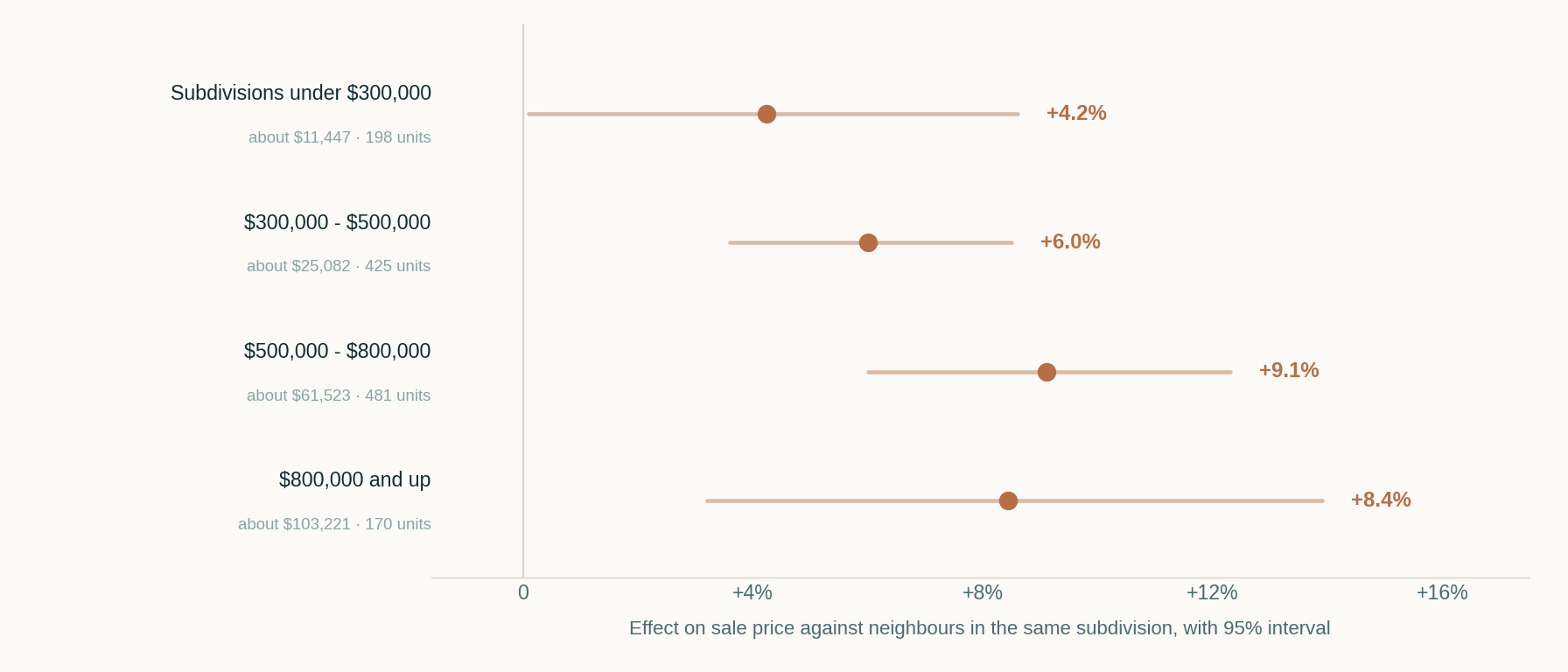
Neighborhoods where houses sell for | A guest house adds | In dollars |
Under $300,000 | +4.2% | about $11,400 |
$300,000 to $500,000 | +6.0% | about $25,100 |
$500,000 to $800,000 | +9.1% | about $61,500 |
$800,000 and up | +8.4% | about $103,200 |
Same feature, roughly nine times the dollars from the bottom of the market to the top.
Now put that against what one costs. Published build costs for a detached unit run $150 to $300 per square foot — so $90,000 to $180,000 for six hundred feet.
In a $400,000 neighborhood you get about $25,000 of that back — the weakest resale return of anything I've measured. Above $800,000 it's competitive with a pool, which returns a third to three quarters of its cost. Owned solar returns about 40%.
This is the whole practical finding, and it saves real money. A 450-square-foot casita costs roughly $68,000 to $135,000. A 1,200-square-foot unit costs $180,000 to $360,000. They carry the same measured premium.
Beyond that, build one because you need it. Housing a parent, a returning kid, a long-term guest, or renting it — those are all good reasons and none of them are resale reasons.
If the point is housing a parent, four hundred square feet houses a parent. The market will pay you about the same for it as for a thousand, and it will cost you less than half as much.
And if the plan is rental income, that's a completely different calculation — rent, vacancy, financing, how long you hold it — and none of it shows up in a sale price. Don't let a resale number decide an income question.
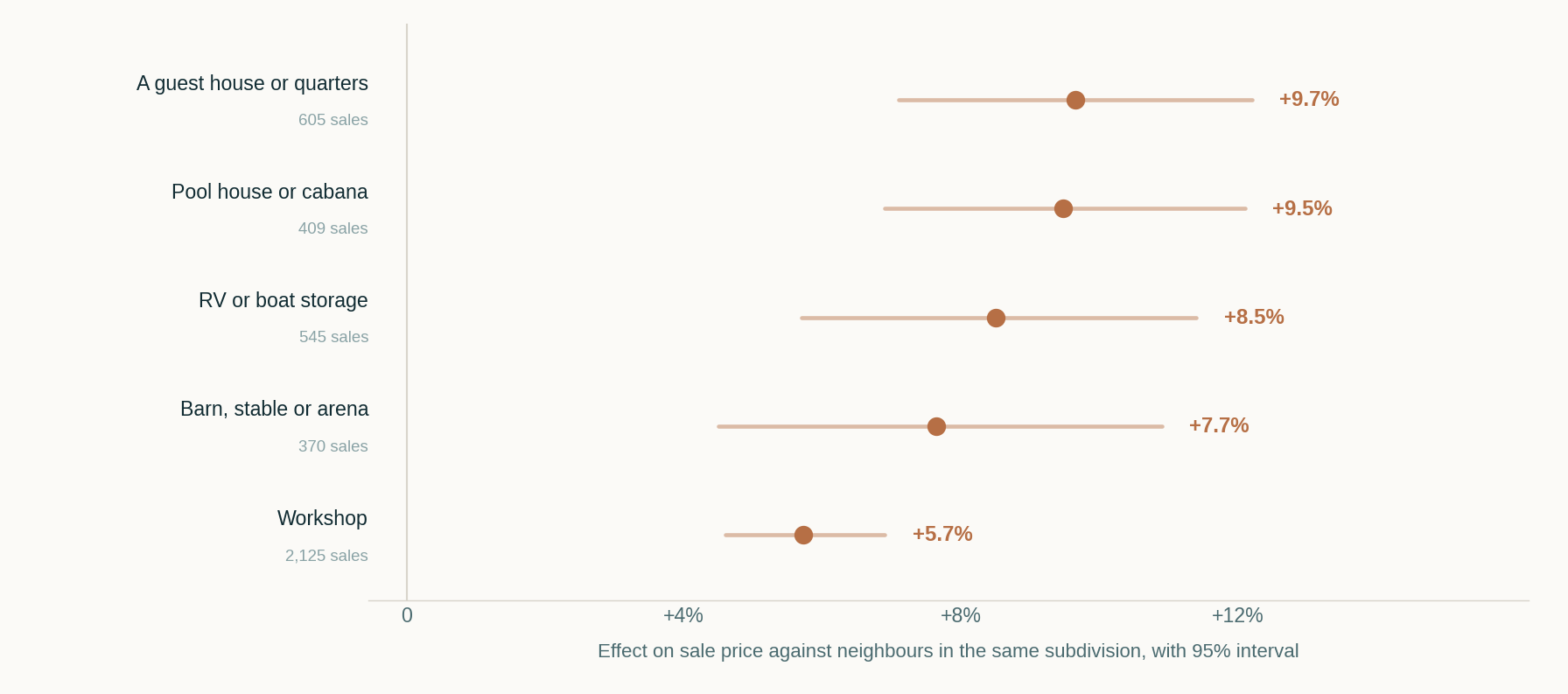
Here's the comparison nobody makes. The MLS records every other structure on the lot, so I measured those the same way:
Structure | Adds | Sales |
Guest house or separate quarters | +9.7% | 605 |
Pool house or cabana | +9.5% | 409 |
RV or boat storage | +8.5% | 545 |
Barn, stable or arena | +7.7% | 370 |
Workshop | +5.7% | 2,125 |
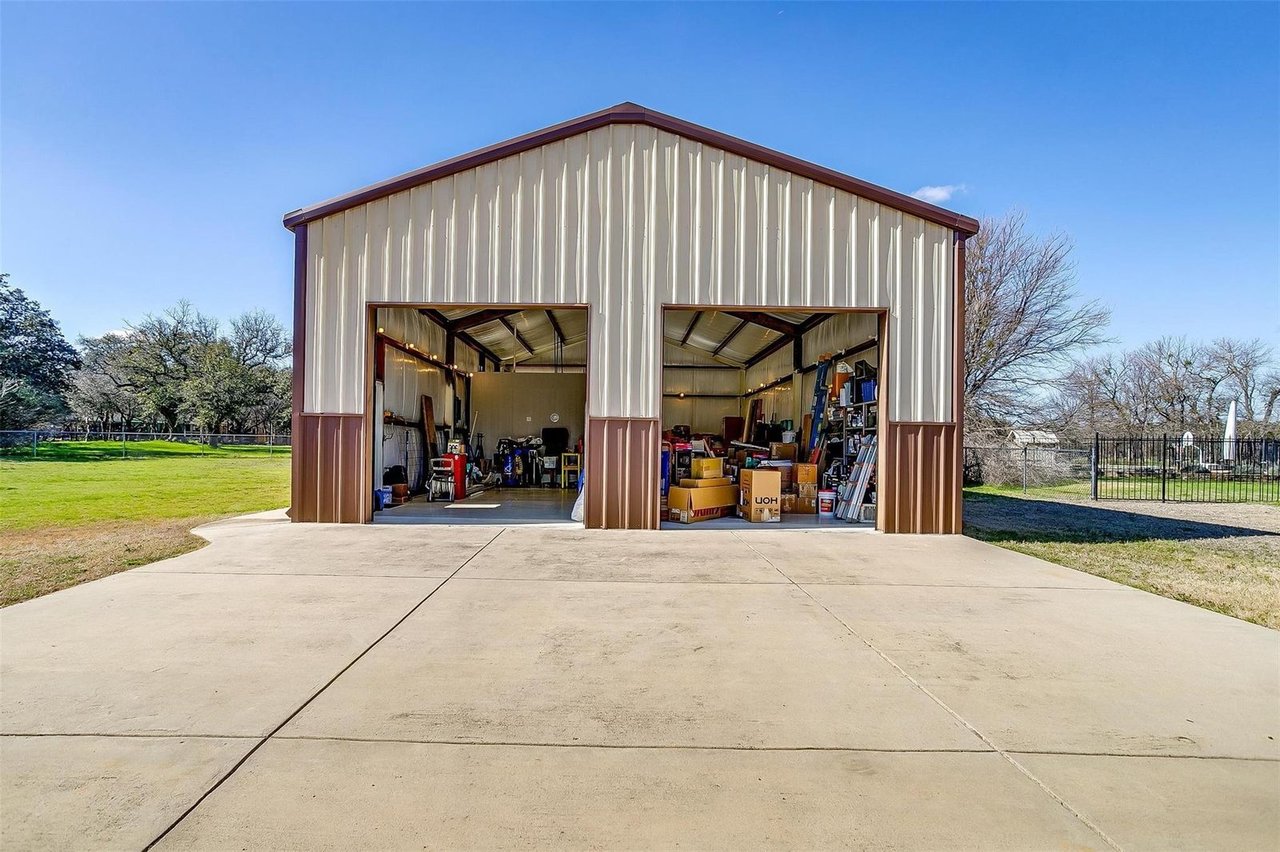
A workshop returns 5.7% against a guest house's 9.7% — but a metal building on a slab with power costs a fraction of what habitable space costs to put up. Per dollar spent, the shop wins by a mile.
And the shop scales with land in a way the guest house doesn't:
Lot size | Workshop adds | Guest house adds |
Under a quarter acre | +3.4% | +9.7% |
Quarter acre to an acre | +5.5% | +6.7% |
One to five acres | +7.9% | +8.0% |
Five acres and up | +8.8% | not measurable |
A shop on a tenth of an acre is storage. A shop on five acres is why somebody bought five acres. If you're buying acreage west of Fort Worth — Weatherford, Springtown, Aledo — the shop matters more than most people budget for.
One more thing sellers should know. Within the same subdivisions, houses with an accessory unit went under contract in a median 32 days against 27, and closed at 96.3% of original asking against 97.1%. The freestanding ones are the slow half, at a median of 41 days.
Five days slower and about eight tenths of a point weaker. It runs the opposite direction from a pool, which sells eight days faster. Pools are common where they exist. A guest house is a specific answer to a specific need, and the buyer who has that need is a smaller slice of the market.
Find out whether it's actually detached. The listing won't say, and it may be the biggest single thing about it. Ask, and look at the plat.
Find out what it legally is. Permitted second dwelling, converted garage, unpermitted addition, or a shop somebody put a bathroom in. These are four different properties with four different closings, and the listing almost never says which.
Check the utilities. Separate meter, separate entry, kitchen, HVAC. These drive whether it functions as a second household or as a nice room you have to walk outside to reach.
If it has a tenant, read the lease before you write the offer. You're inheriting it.
And don't pay main-house rates for it. If someone's pricing a 2,400 sf house with a 700 sf casita as a 3,100 sf house, that's a $175,000 error on a $250-a-foot street.
The technical version — confidence intervals, why a cost approach gives the wrong answer here, why you can't adjust per square foot, and the full attached-versus-detached analysis including where it falls apart — is on my appraisal site: what a guest house or ADU adds.
I'm a Texas broker and a Certified Residential Appraiser. On a property with a guest house that means I can tell you what it's contributing in your subdivision, what the permit situation does to your buyer pool, and whether the square footage you're being charged for is square footage anyone will pay you back for.
Browse active listings in this price range, or call or text (682) 207-4310, or send me a note.
Based on NTREIS closed sales of detached single-family homes across Dallas–Fort Worth, 2023 through September 2026 — 89,302 closings, 21,487 with the accessory-unit field answered, of which 2,002 carried a unit. Premiums are measured within subdivisions containing both, holding living area, lot size, year built and sale date constant, with standard errors clustered by subdivision. Build costs are published national ranges, not local bids. The attached-versus-detached split infers form from whether a detached structure appears elsewhere in the record, since no field records it directly; that comparison does not survive a direct head-to-head test and should be read as suggestive rather than established. The accessory-unit flag, type and size are as entered by the listing agent and are not independently verified; permit status and utility separation are not recorded at all. Nothing here is an appraisal or a valuation of any particular property.
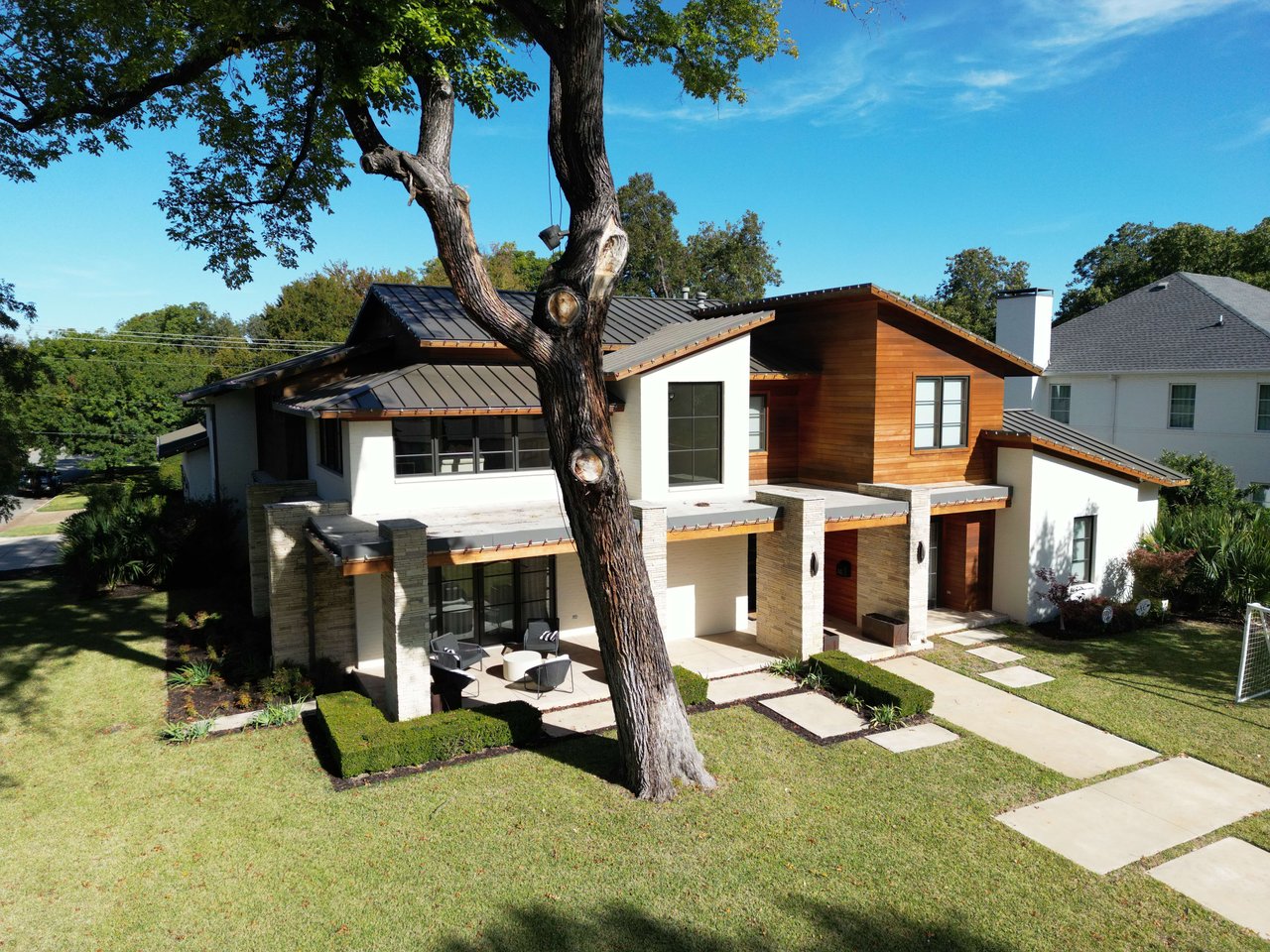 Tanglewood
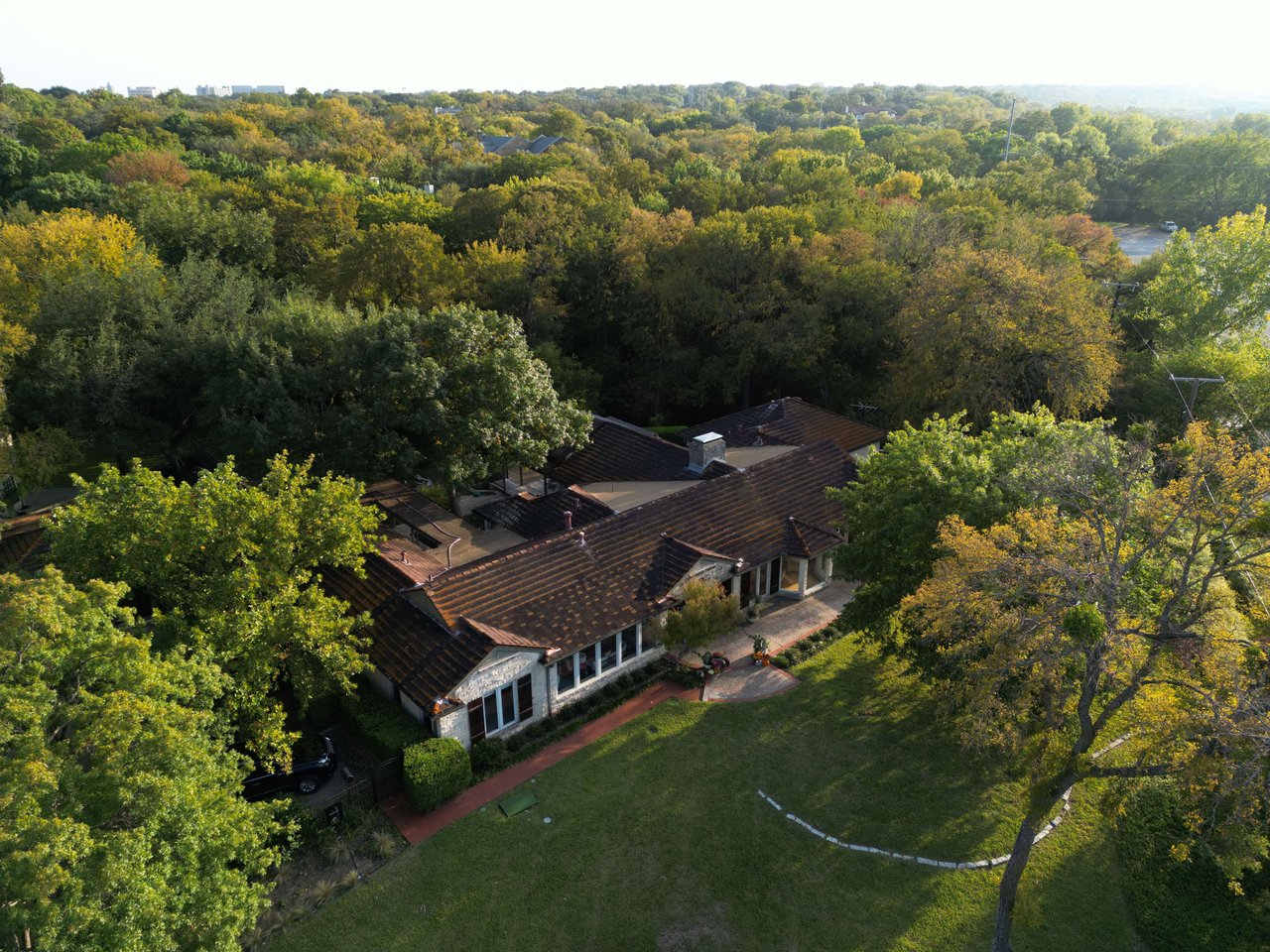 Crestwood
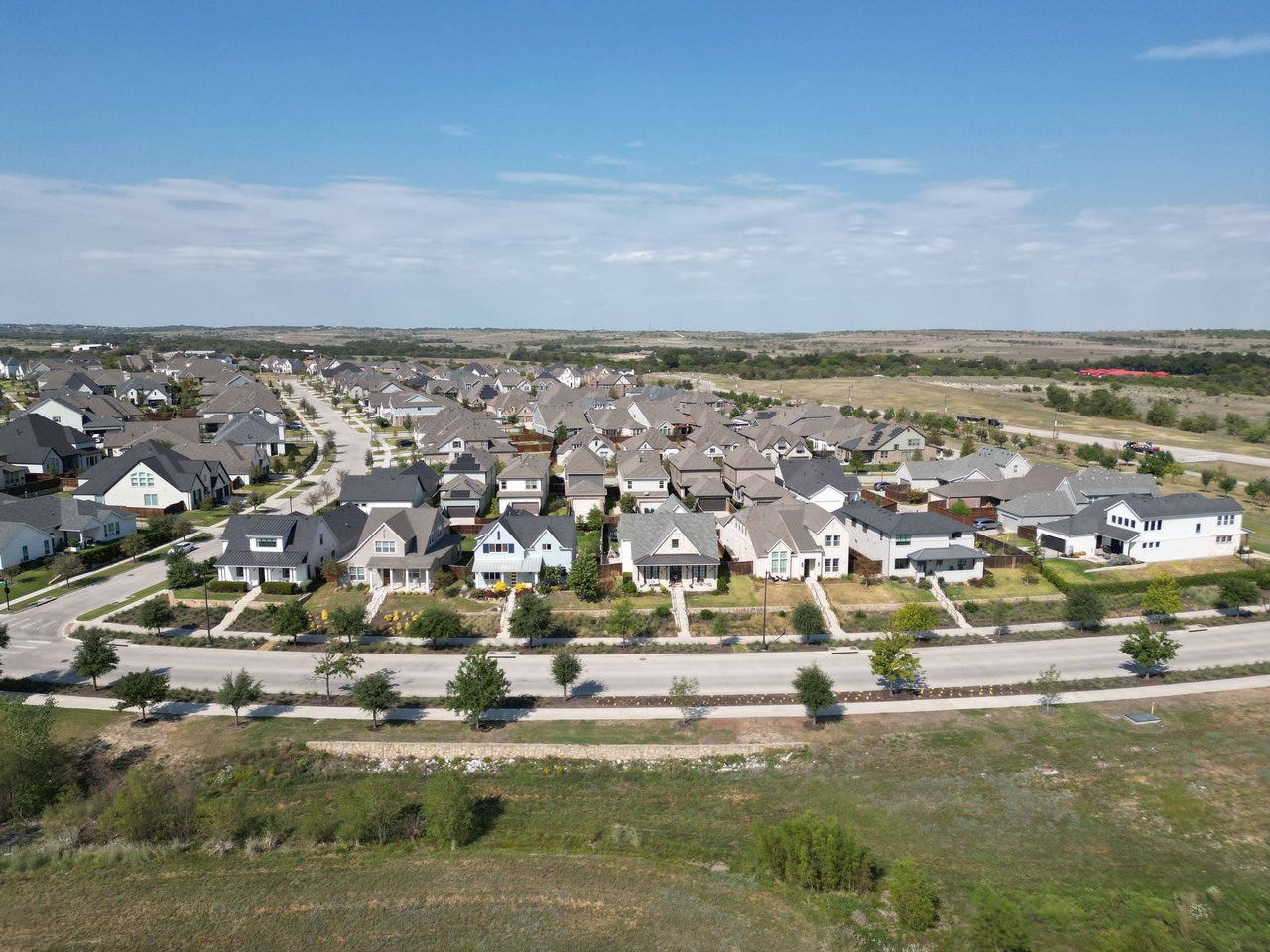 Walsh Ranch
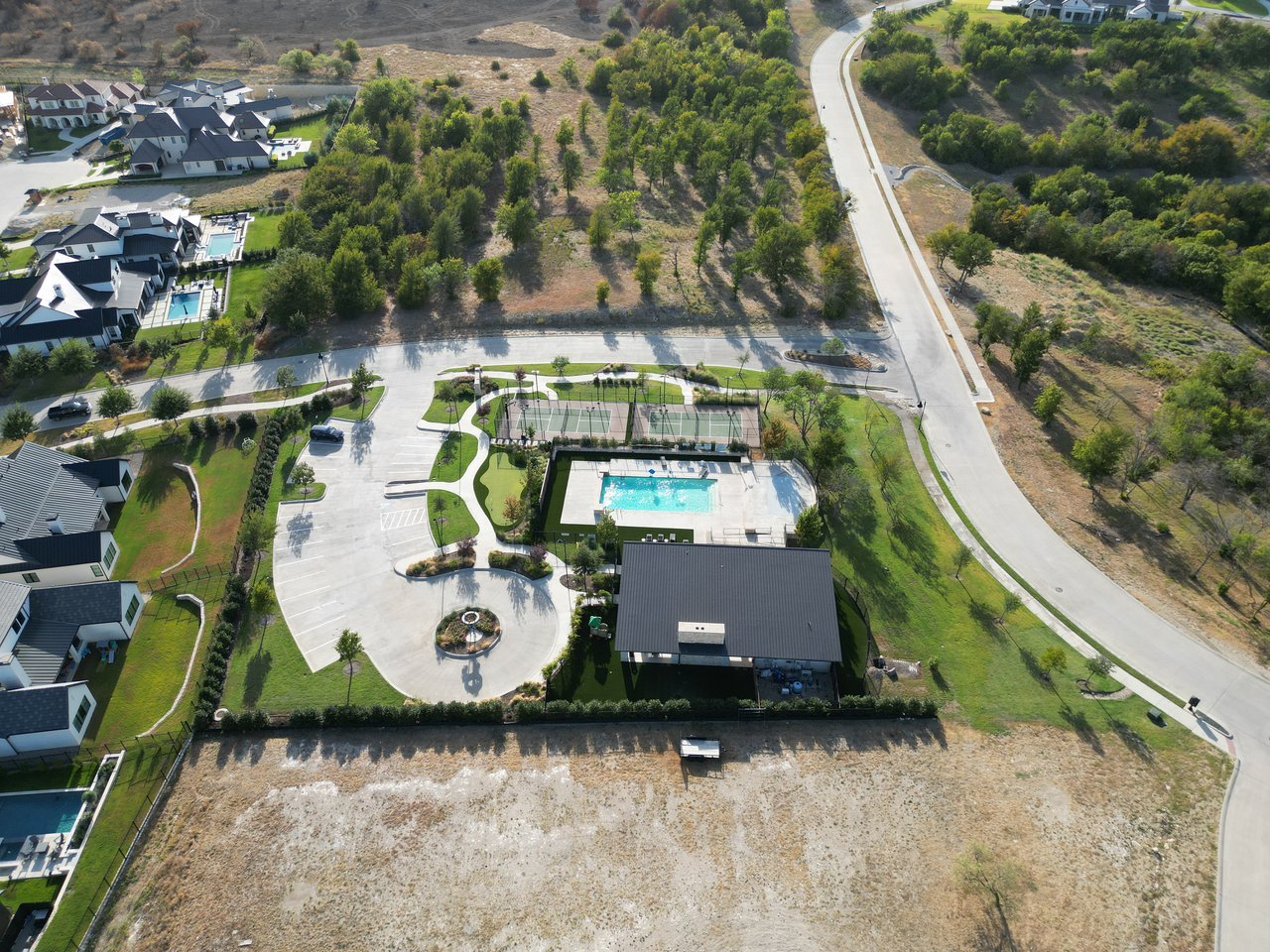 Montserrat / Montrachet
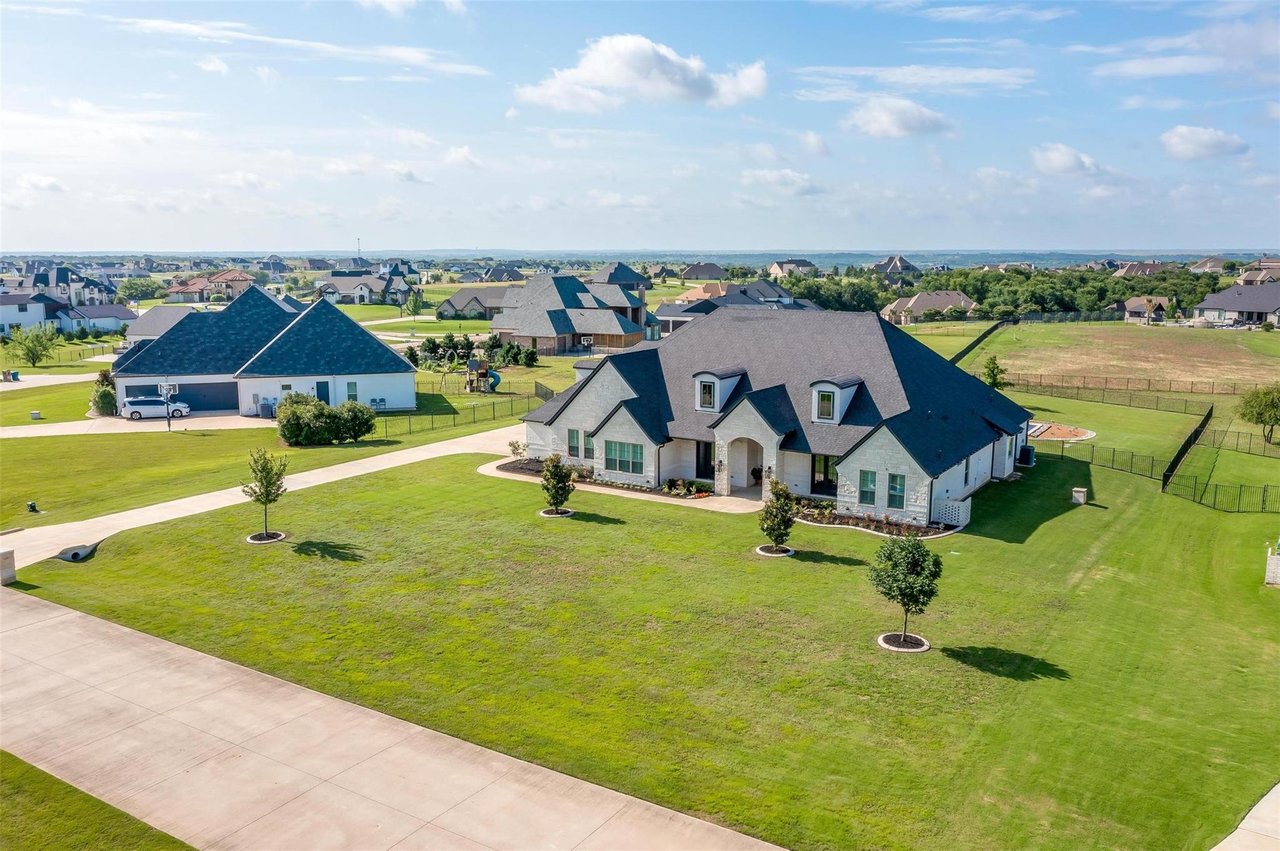 Bella Flora
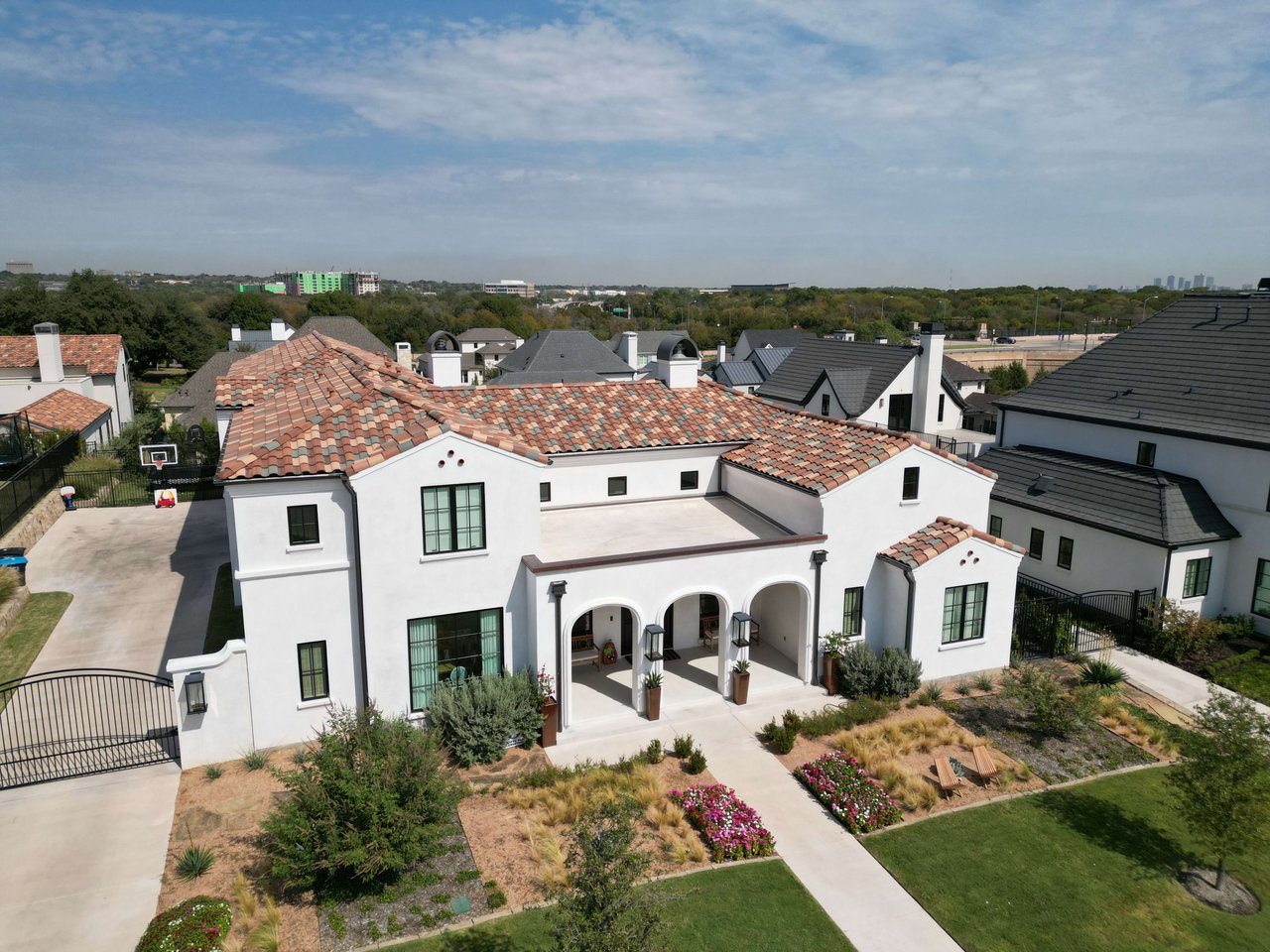 Edwards Ranch Riverhills
 Tavolo Park
 Ryan Place
 Fairmount
 Ridglea
 Ridglea North
 Ridgmar
 Westover Hills
Rivercrest Bluffs & River District
Westover Hills
Rivercrest Bluffs & River District
 Rivercrest, Monticello & North Hi Mount
 Mira Vista
Overton Park
Overton Woods
Westcliff
Arlington Heights
Benbrook
Ventana
Downtown
Linwood
Eagle Mountain & Marine Creek
Beltmill & Watersbend
Heritage & Alliance
Presidio & Tehama Ridge
Wedgwood
North Richland Hills
Hurst
Euless
Bedford
Grapevine
Westlake
Keller
Southlake
Colleyville
Arlington
Burleson
Crowley
Mansfield
Kennedale
Aledo
Weatherford
Azle
Granbury
Springtown
Cleburne
Joshua
Godley
Alvarado
Ponder
Krum
Waxahachie
Midlothian
Poolville
Decatur
Justin
Mira Vista
Overton Park
Overton Woods
Westcliff
Arlington Heights
Benbrook
Ventana
Downtown
Linwood
Eagle Mountain & Marine Creek
Beltmill & Watersbend
Heritage & Alliance
Presidio & Tehama Ridge
Wedgwood
North Richland Hills
Hurst
Euless
Bedford
Grapevine
Westlake
Keller
Southlake
Colleyville
Arlington
Burleson
Crowley
Mansfield
Kennedale
Aledo
Weatherford
Azle
Granbury
Springtown
Cleburne
Joshua
Godley
Alvarado
Ponder
Krum
Waxahachie
Midlothian
Poolville
Decatur
Justin
Stay up to date on the latest real estate trends.

H-E-B is coming to Chisholm Trail and Oakmont in late 2028. I measured six North Texas stores to find out what that does to home values. It doesn't — but it changes ho… Read more
Home Improvement
A shop with electricity adds about 6% of the sale price. The same building without power adds 2.6% — the same as a storage shed.
Home Improvement
2,002 accessory units measured. Having one adds about 7% — and how big it is adds nothing, so build the smallest one that does the job.
Seller Resources
Your old days on market follow you until you've been gone 30 days — then they vanish completely. 16,465 relisted DFW houses measured.

Home Improvement
About 9% of your price almost regardless of neighborhood — half to all of what one costs to build. And they sell eight days faster.
Buyer Resources
On a new build the listed tax is the vacant lot's bill, and it roughly quadruples in year two — about $526 a month on a $450,000 house.
Buyer Resources
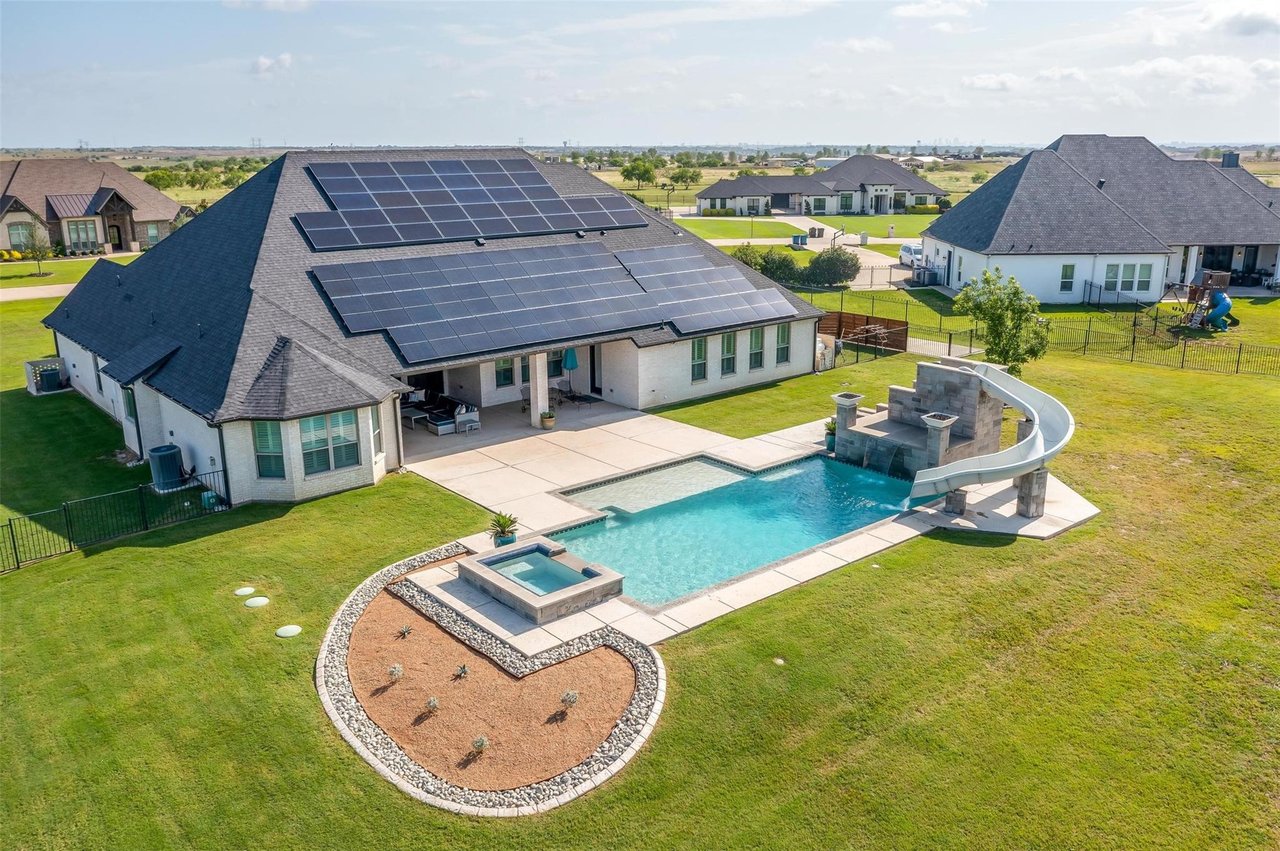
Owned panels add about 3%. Leased panels add nothing — and a listing that doesn't say which gets priced like a lease.
Seller Resources
Your twenty acres are not worth ten times your neighbor's two. Per-acre price falls about a quarter every time a tract doubles.
Owner Resources
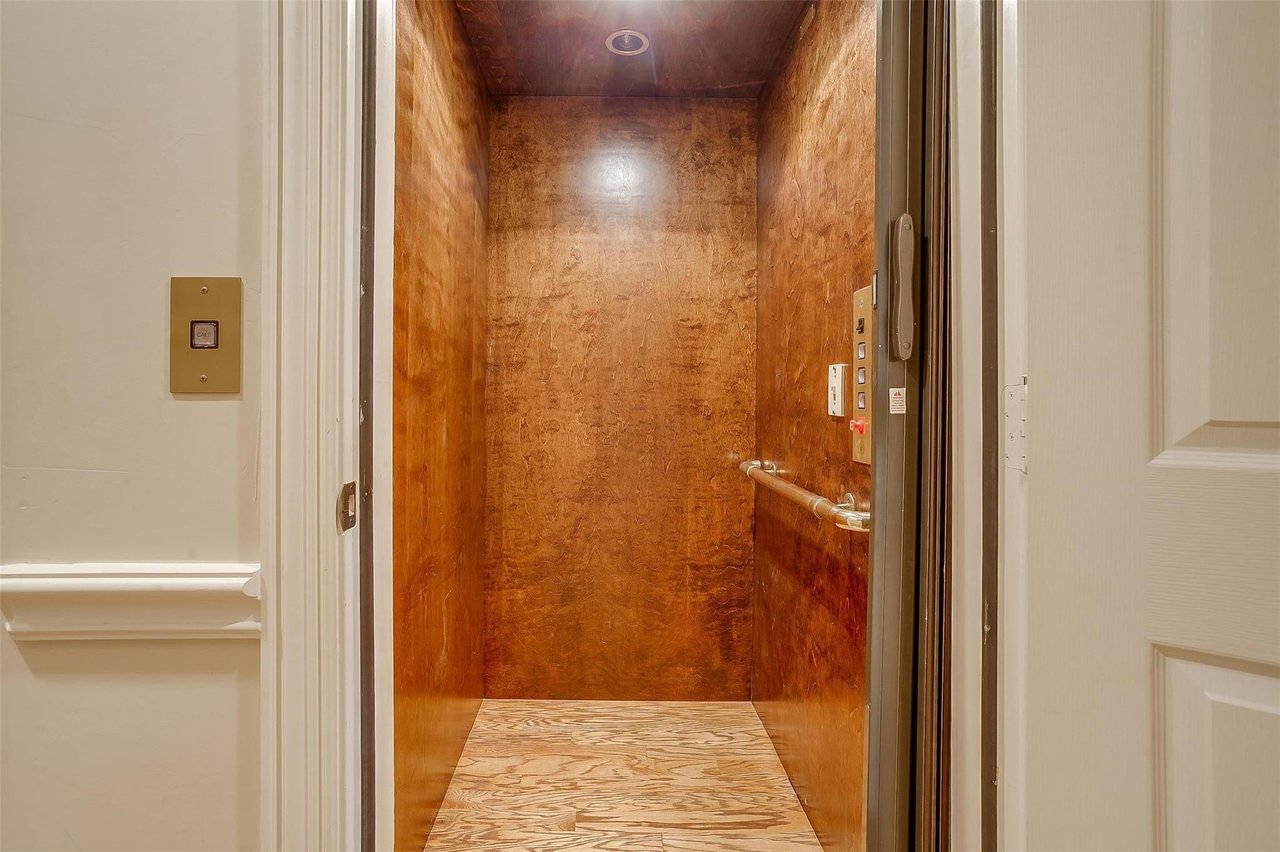
I listed one in North Richland Hills that sold in nine days at 99% of asking. The elevator wasn't why — and 121 sales out of 89,302 show why not.
I've trained three appraisers in this market, and every figure on this blog comes from closed sales I pull and model myself. The same analysis, applied to one address.