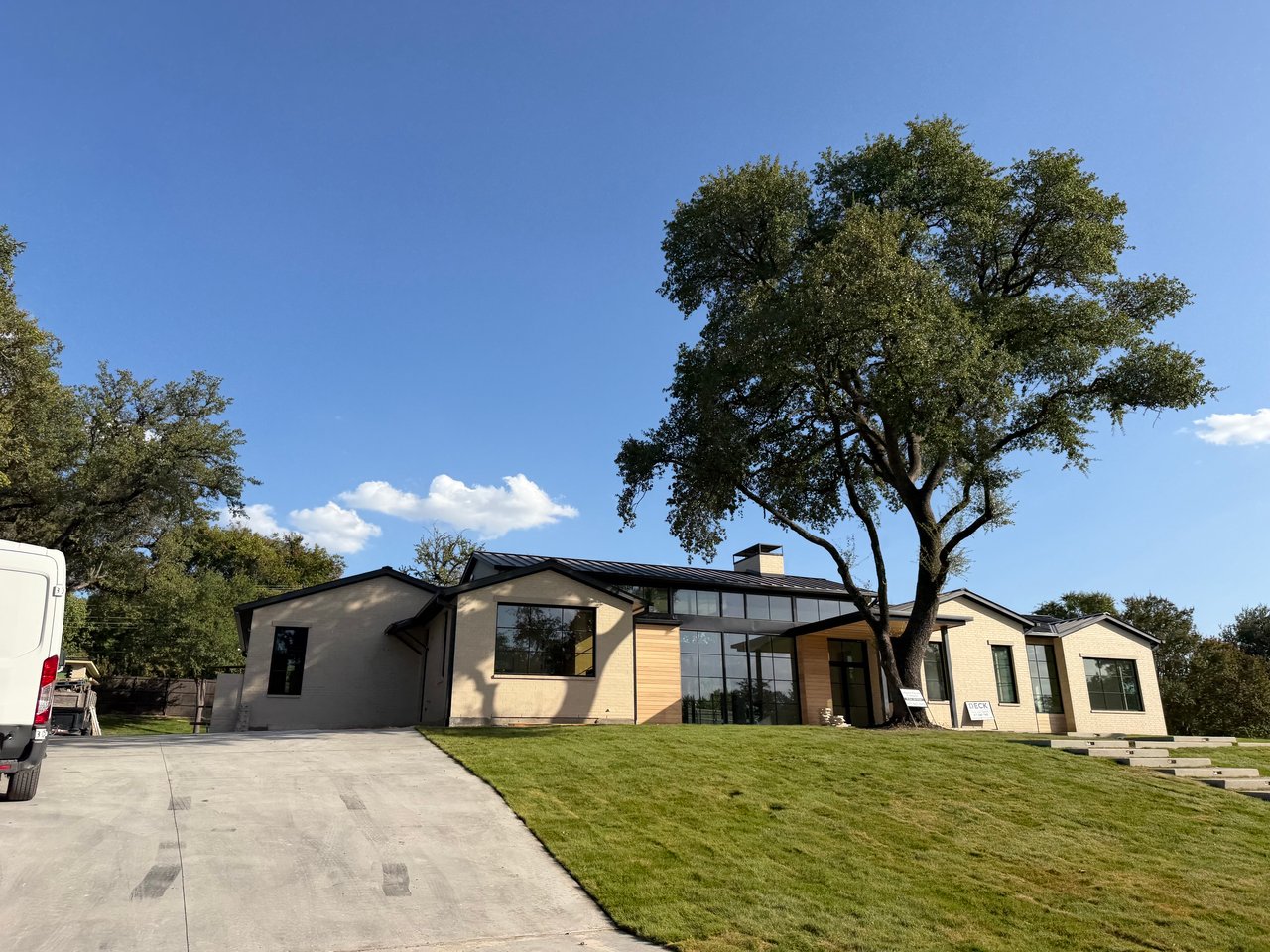
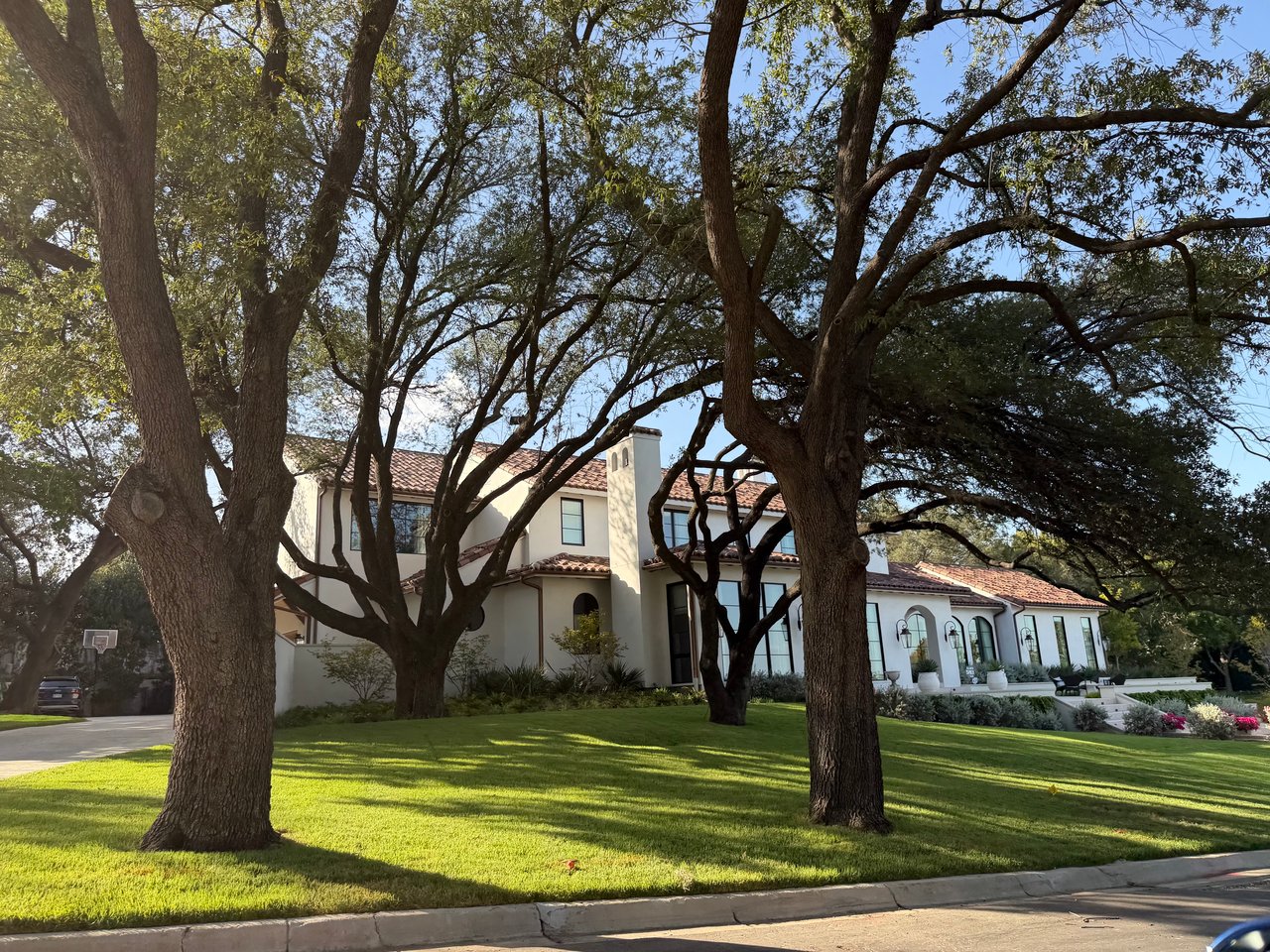
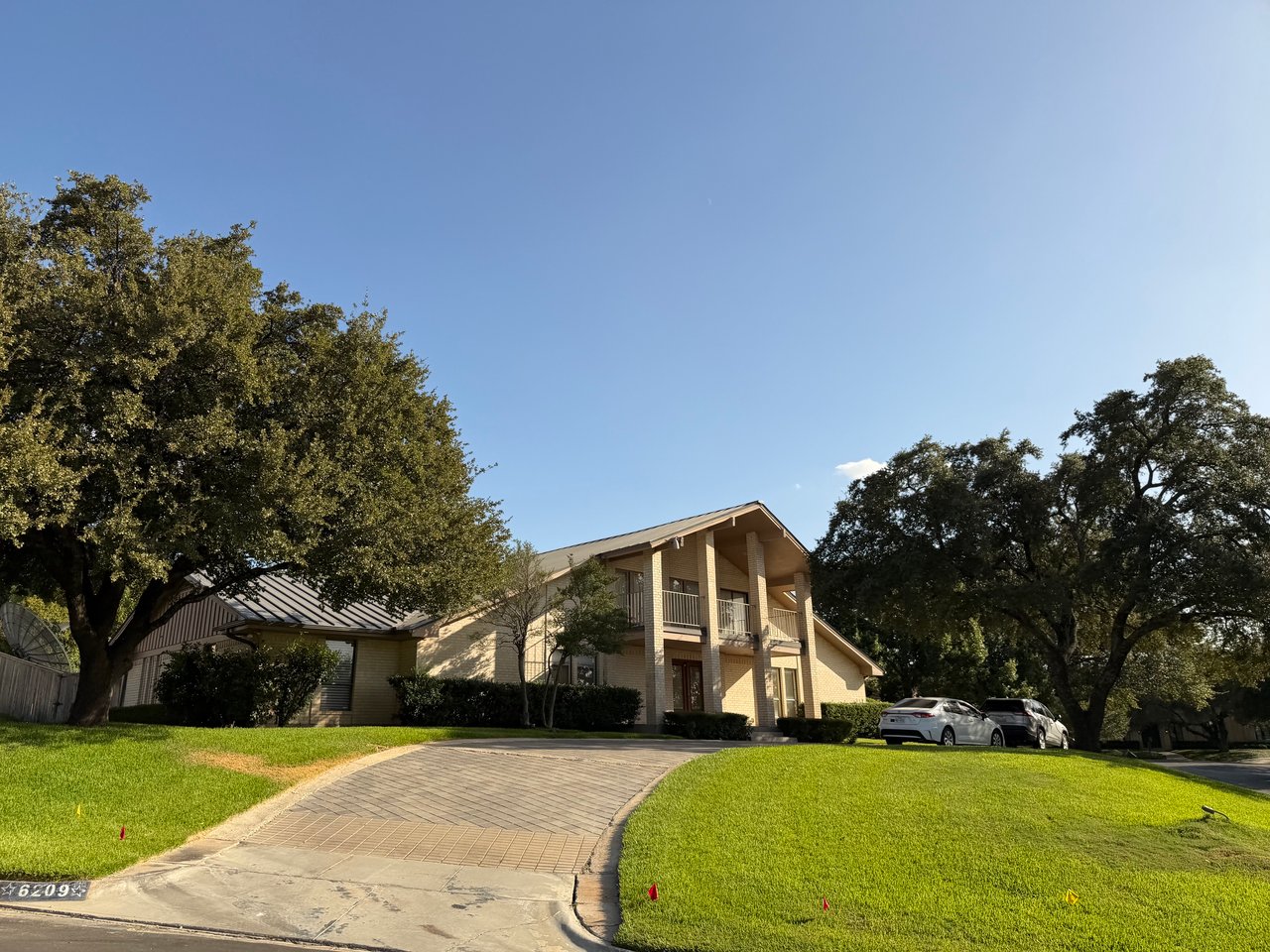
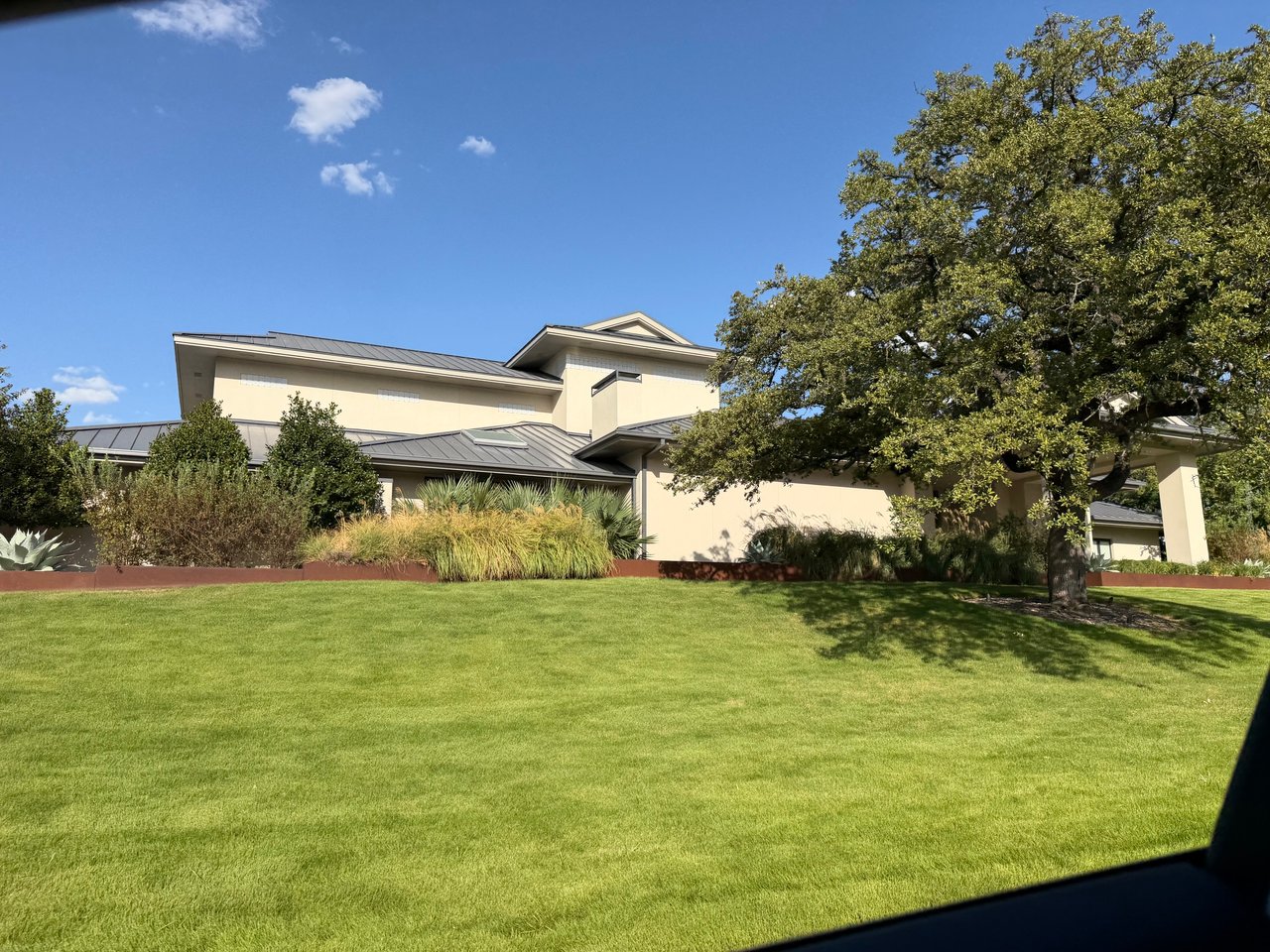
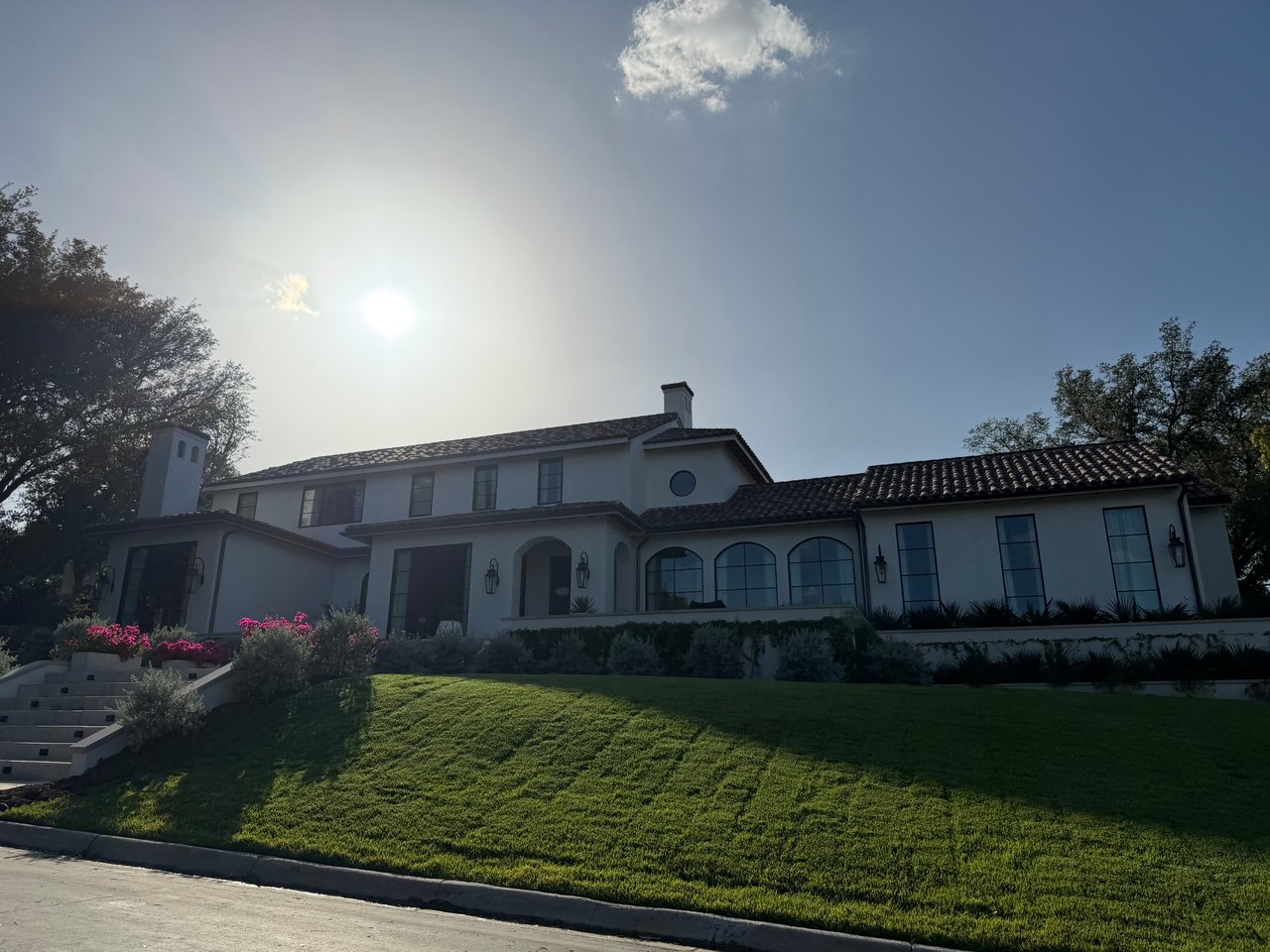
Westover Hills is a town of about 640 people and 300 households, occupying seven-tenths of a square mile entirely surrounded by Fort Worth. Large wooded lots, long private drives, mature canopy, and a street plan that has barely changed in seventy years. Shady Oaks Country Club sits on its edge. It is, by a considerable margin, the quietest address this close to downtown Fort Worth.
It is also a separate incorporated town — its own mayor and council, its own police department, its own tax rate. That's not a technicality. It changes what you pay and how the place is run, and it's the first thing I'd want a buyer to understand.
Children are zoned to Fort Worth ISD — Phillips Elementary, Monnig Middle and Arlington Heights High — and a great many families here choose Fort Worth Country Day or other independent schools.
I'm a Fort Worth broker and a Certified Residential Appraiser, and I've completed a good deal of appraisal work inside Westover Hills. Here's what five years of sales show.
What the town line is worth
Residents don't pay City of Fort Worth taxes. They pay the Town of Westover Hills, and the rate is lower:
- Town of Westover Hills, 2026: $0.486364 per $100
- City of Fort Worth: $0.67 per $100
With the shared levies — Fort Worth ISD, Tarrant County, hospital, college and water district — the combined rate lands near 2.01% here against roughly 2.19% in Fort Worth. On a home at the neighborhood median that's close to $5,000 a year, indefinitely, in a town that also funds its own police force. It's one of the few places where paying less buys you more service.
One thing to plan for rather than be surprised by. Assessed values here run well below sale prices — across the closed sales I reviewed, annual taxes came to about 1.54% of the purchase price against a rate near 2.01%. That's what happens in a town where families hold for decades and the homestead cap compounds in their favour. When a house changes hands the assessment resets toward market, and the bill can rise on the order of $12,000 a year.
It's entirely manageable if you know about it. Ask your lender to escrow on expected assessed value rather than the seller's current one, and confirm the figures for the specific parcel with the appraisal district — exemptions and caps are property by property.
What homes here are
Over the five years ending September 2026: 64 listings, 25 closed sales.
- Median close $2,681,750 on 5,558 square feet — about $475 per foot
- Median lot 0.68 acre, ranging from about a third of an acre to nearly two
- Median year built 1974, with homes from 1939 to 2001
- Four bedrooms is typical; roughly two-thirds have a pool
- Closed prices ran $925,000 to $5,000,000
That's the character of the place: substantial 1970s and 1980s houses on generous, wooded ground, with a scattering of older homes and a handful of newer ones. It is not a neighborhood of recent construction, and the buyers who love it aren't looking for that.
The range of outcomes is the thing to notice. Closed sales ran from $265 to $874 per square foot — more than three to one, inside seven-tenths of a square mile. A thoroughly renovated house and an original one of the same size are worth entirely different amounts here, and no per-foot average captures it. Which is why a number pulled from a neighborhood summary is close to meaningless for any particular house.
How this market actually works
Four or five sales a year, in a town of 300 households.
That's the single most important fact about buying or selling here, and it explains almost everything else. Nobody in Westover Hills has to sell. Owners tend to hold for a long time, they're rarely under pressure, and when a number doesn't materialize they simply stay put. Over five years, about half the listings that appeared were eventually withdrawn — and in a market like this that's less a sign of distress than of owners who tested the water and decided they were fine where they were.
It does mean a few things are true here that aren't true elsewhere:
Comparable sales are genuinely scarce. For a specific house there may be one or two real comparables in five years. Pricing has to be reasoned rather than averaged, which is the part most people underestimate.
The market rewards a realistic opening number. Homes that sold did so in a median of about seven weeks. Listings that came off the market had been asking a median of $661 a foot against the $486 that sales were actually clearing, and they sat about five months before being withdrawn. The evidence is consistent: start near where the market is and it trades; start well above and it tends to sit rather than be negotiated down, because there aren't enough buyers in the pool to produce a counteroffer.
Successful sellers typically landed near 86% of their original asking price. Read that as a comment on first list prices rather than on the market — high opening numbers are something of a custom here, and the eventual sale prices are perfectly healthy.
Selling quietly is a real option here
A meaningful share of activity in Westover Hills never appears publicly. At this price point, in a town this small, plenty of owners would rather not advertise that they're considering a move.
I'm with Compass, which means a home can be offered as a private exclusive — shown discreetly to qualified buyers and agents, without a public listing, without days on market accumulating, and without a price history attached to the property.
Given how this market behaves, that's worth knowing about. A quiet first attempt costs you nothing if the number isn't there. A public one leaves a record, and in a town with four or five sales a year, a record lasts.
What I look at in a Westover Hills house
- The lot and its position. A third of an acre to nearly two, with real topography and mature trees. Land is a large share of value here and it varies enormously from one address to the next.
- What the renovation touched, and when. A 1974 house updated in 2005 and the same house updated last year are different assets, and at this price point the gap is substantial.
- Systems and structure. Large fifty-year-old houses, often with additions. Roof and mechanical inventory alone is worth understanding before you write.
- Whether the price rests on one or two genuine comparables, or on a per-foot figure borrowed from a market that isn't this one.
What the market is actually doing
Worth setting the context, because Westover Hills is one of only four neighborhoods where I can show a rising market rather than assert one — with an honest caveat about sample size. Across 25 closed sales spanning four and a half years, price per square foot has risen about 10% a year once you control for house size, at p = 0.03. At five or six sales a year I'd treat that as strongly suggestive rather than settled, but the direction is clear and it is upward.
It's the right frame for the withdrawal rate above. Values rose while more than half of listings came off the market, which is precisely what you'd expect from owners under no pressure at all. For context, none of the eighteen Fort Worth neighborhoods I measure shows a statistically significant decline in price per square foot.
Buying or selling in Westover Hills
I'll be straightforward with you: I've done considerable appraisal work inside Westover Hills, and I have not yet represented a buyer or seller here.
I'd make the case that the appraisal work is the qualification that matters most in this particular town. When a house may have one true comparable in five years, valuation stops being a formality and becomes the whole job — and doing it properly is what I was trained for.
If you own here and are thinking about a move, publicly or quietly, I'd welcome the conversation. I'll tell you what the evidence supports.
Call or text (682) 207-4310, or send me a note.
Sales figures are from NTREIS listings and closed sales for the five years ending September 2026, reported in aggregate. Tax rates, exemptions and assessment practices change and are property-specific — confirm current figures with the Town of Westover Hills and the Tarrant Appraisal District before relying on them.