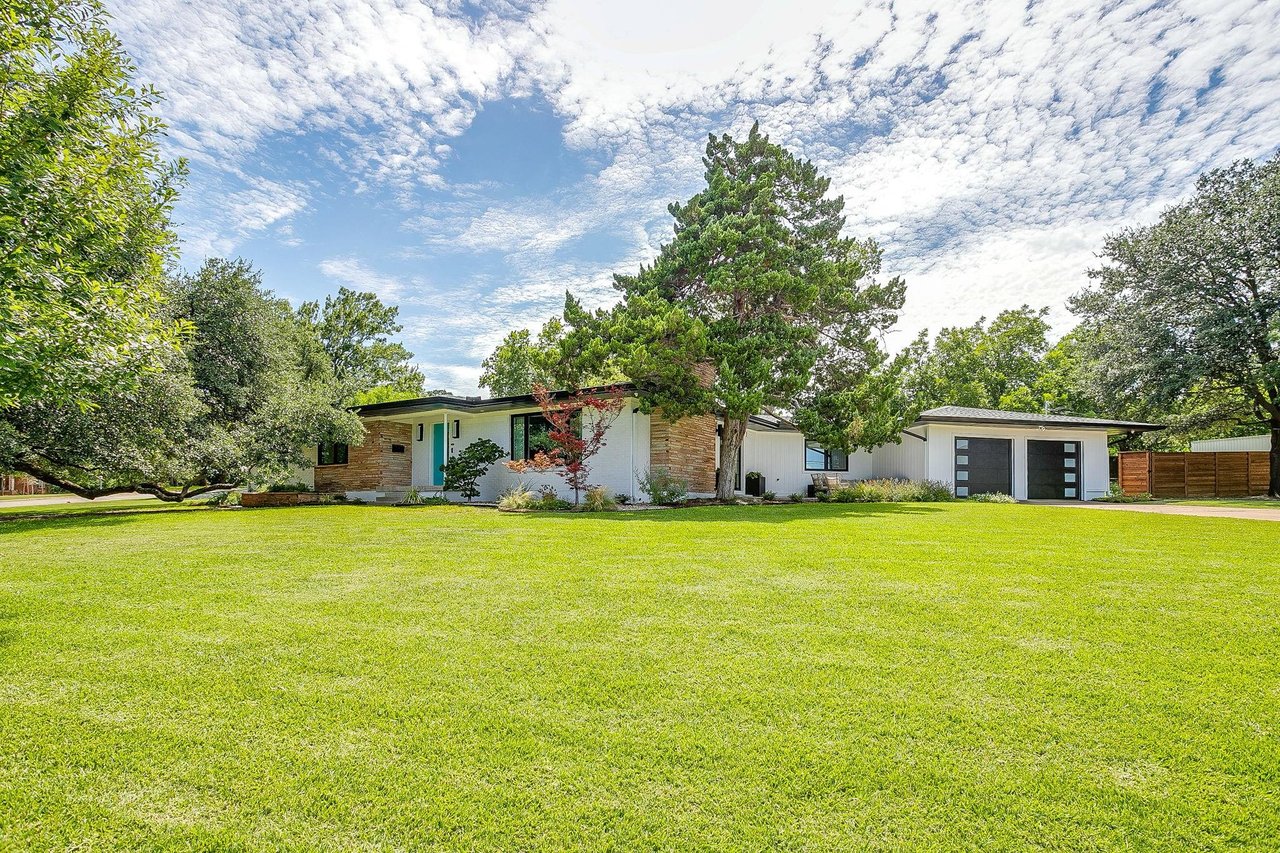
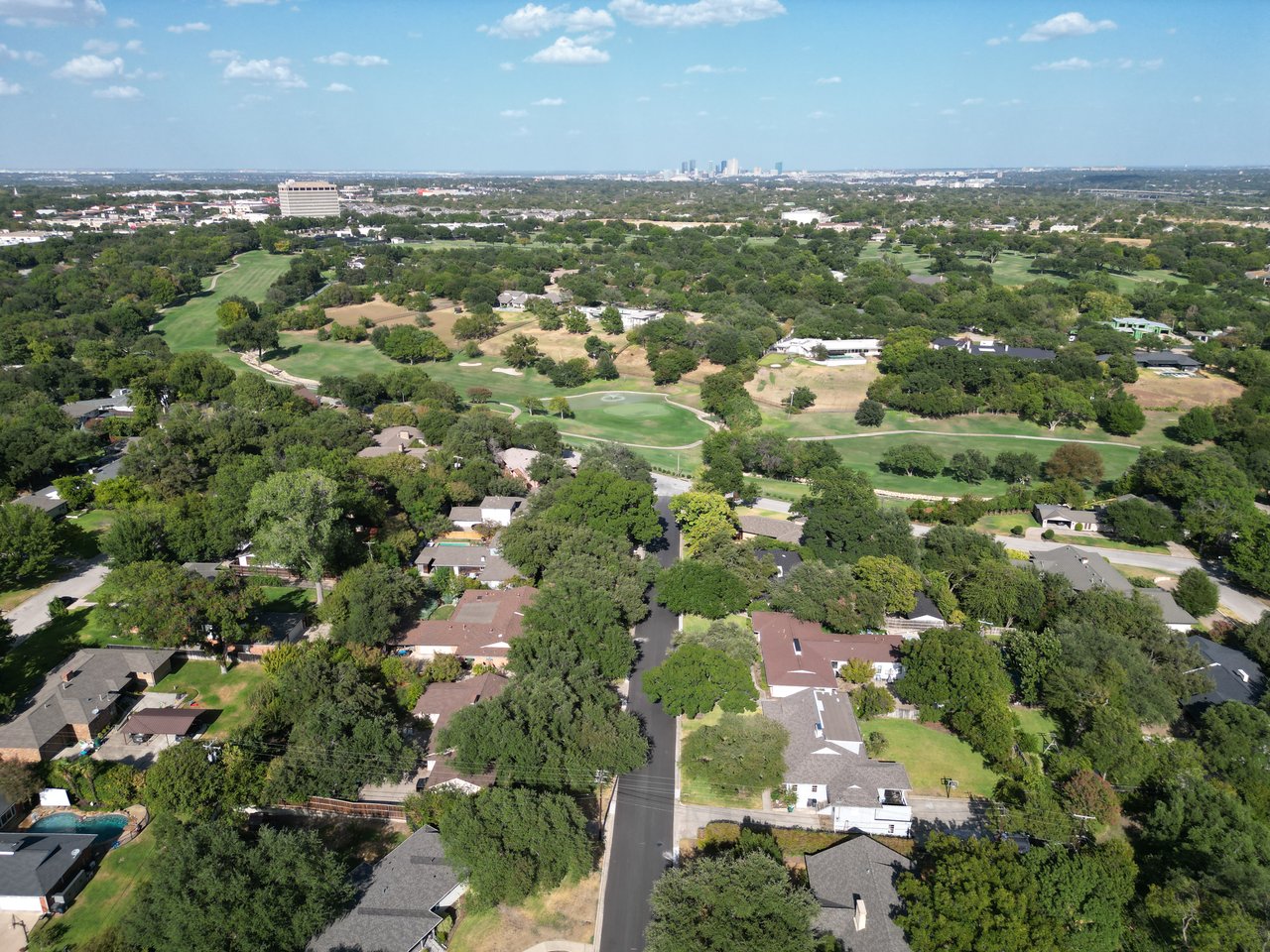
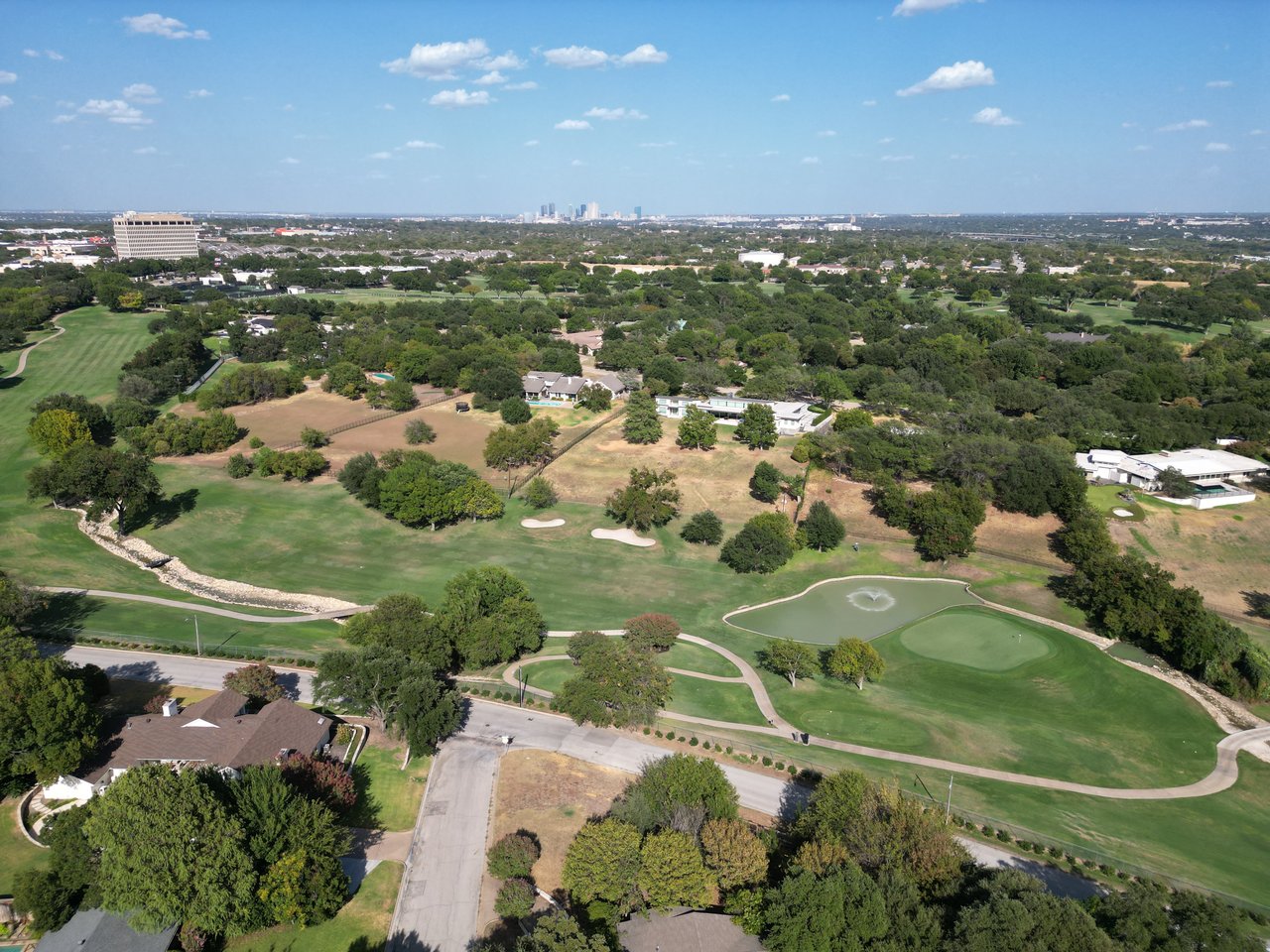
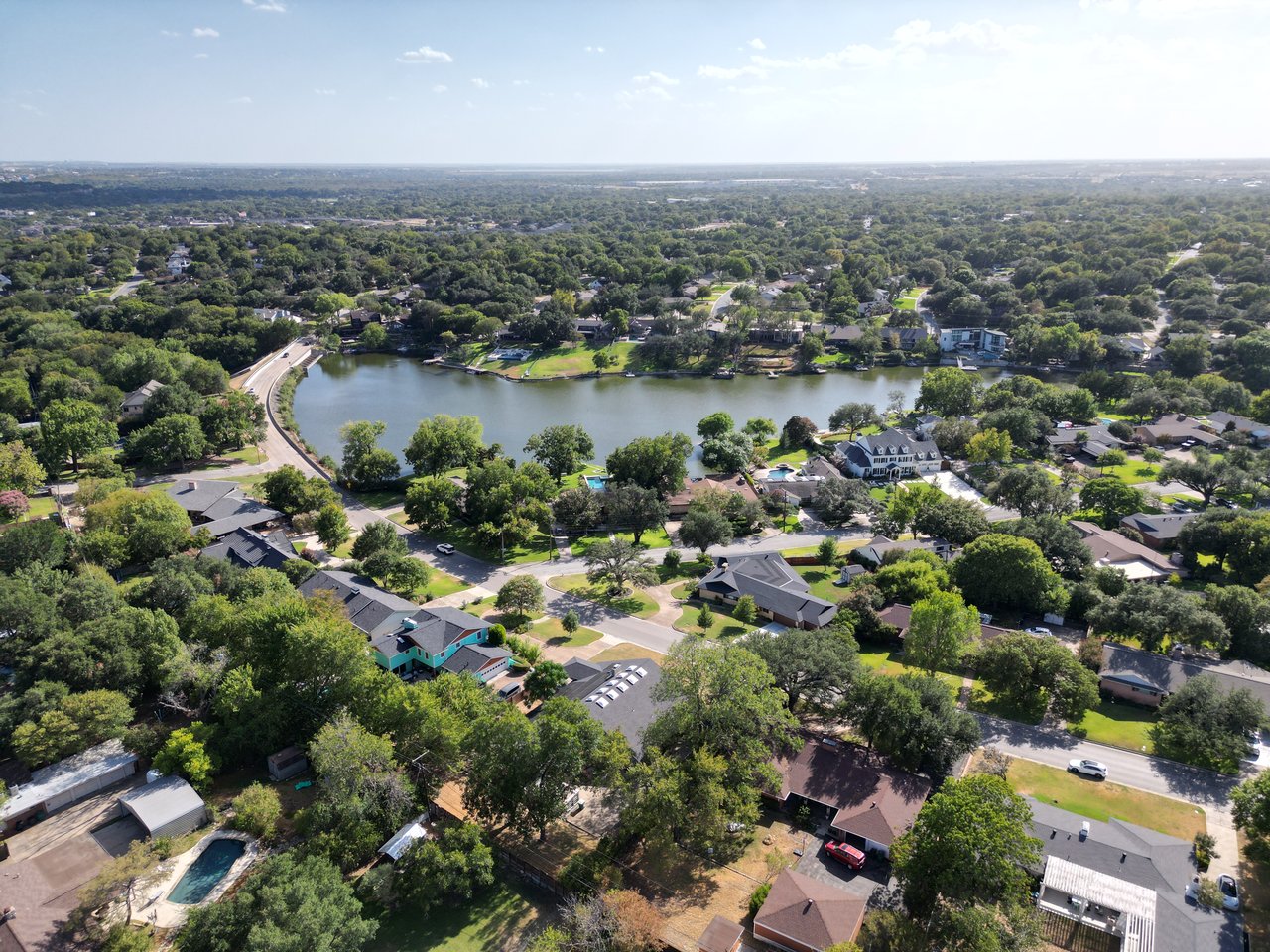
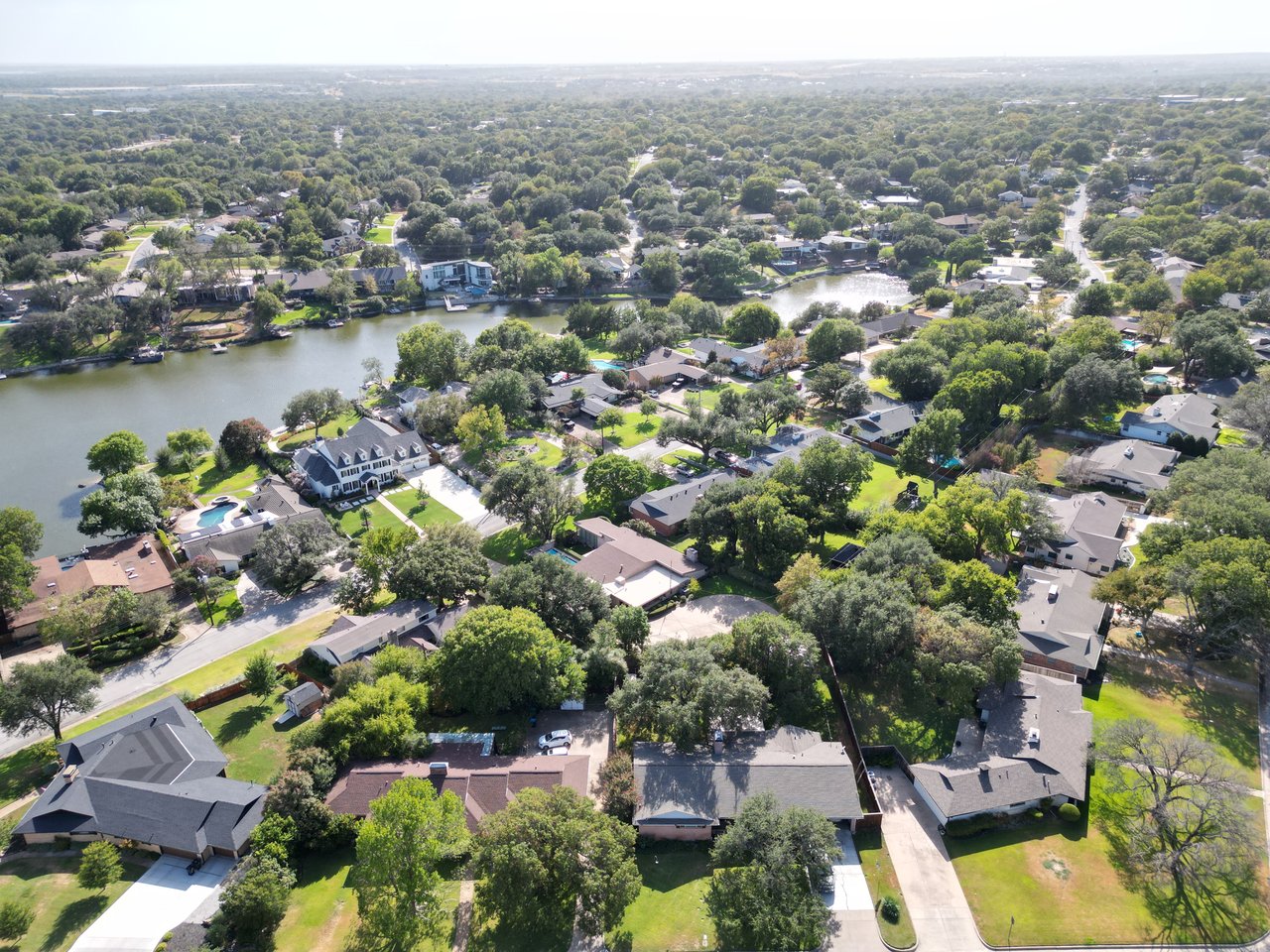
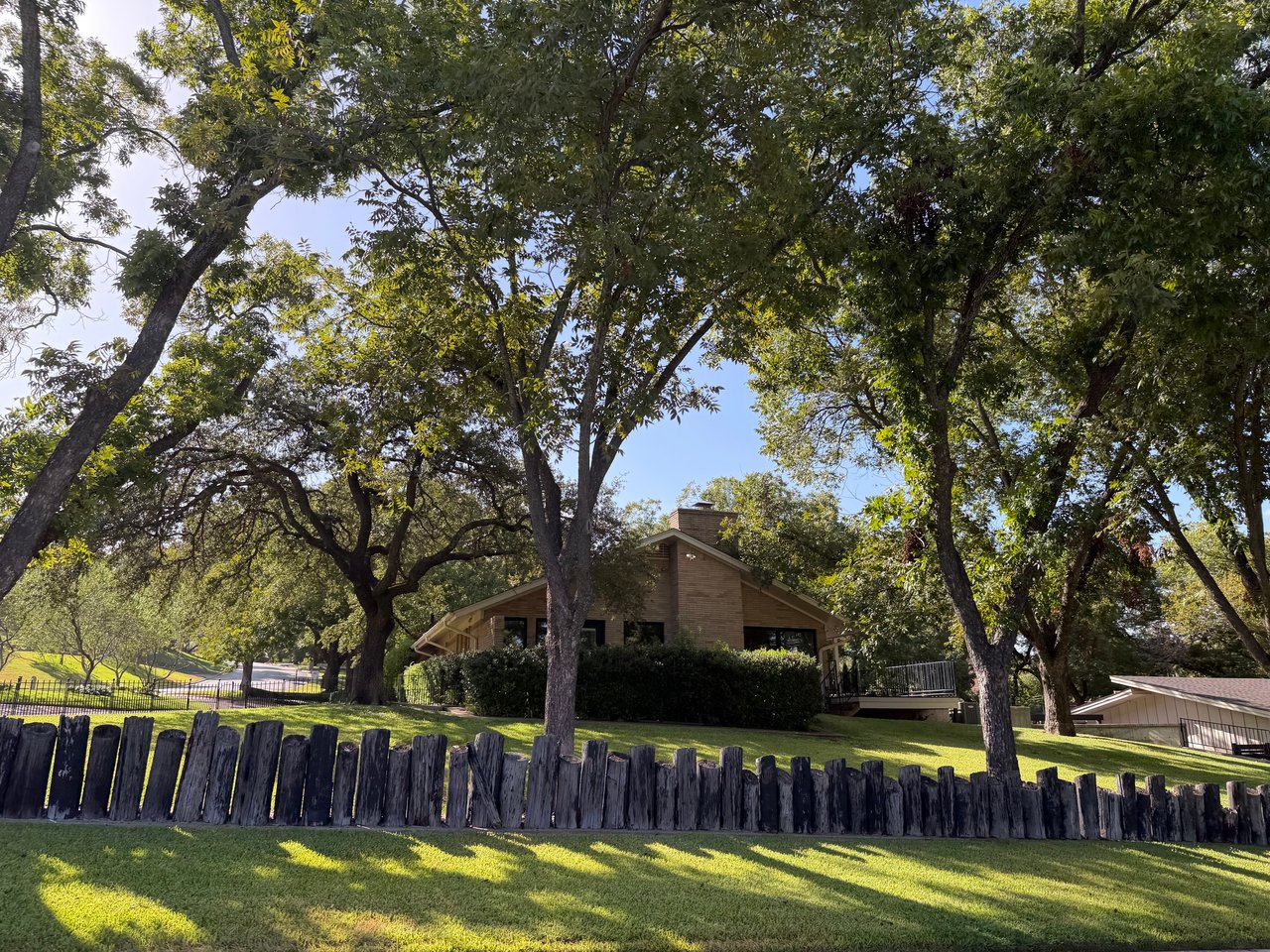
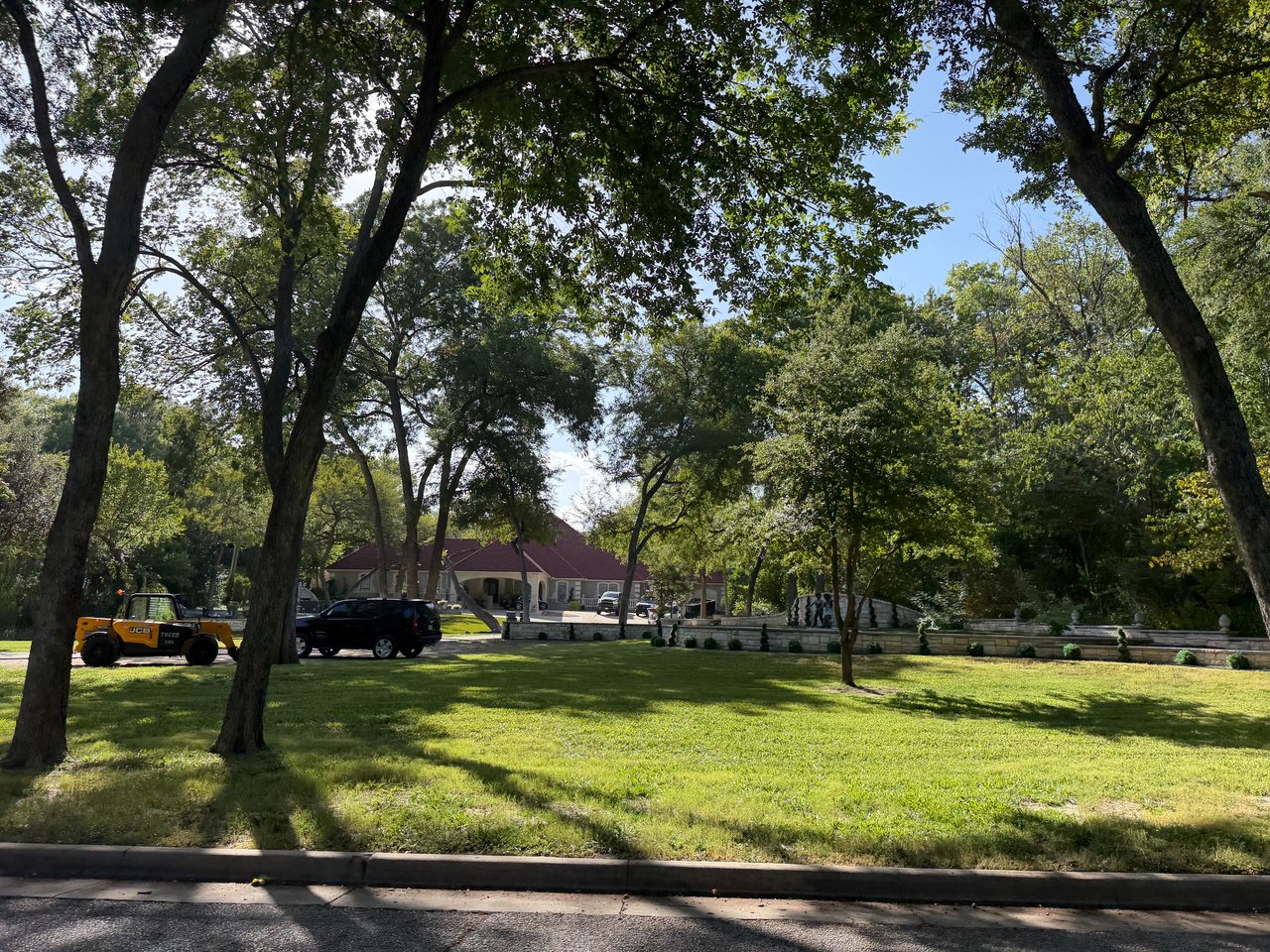
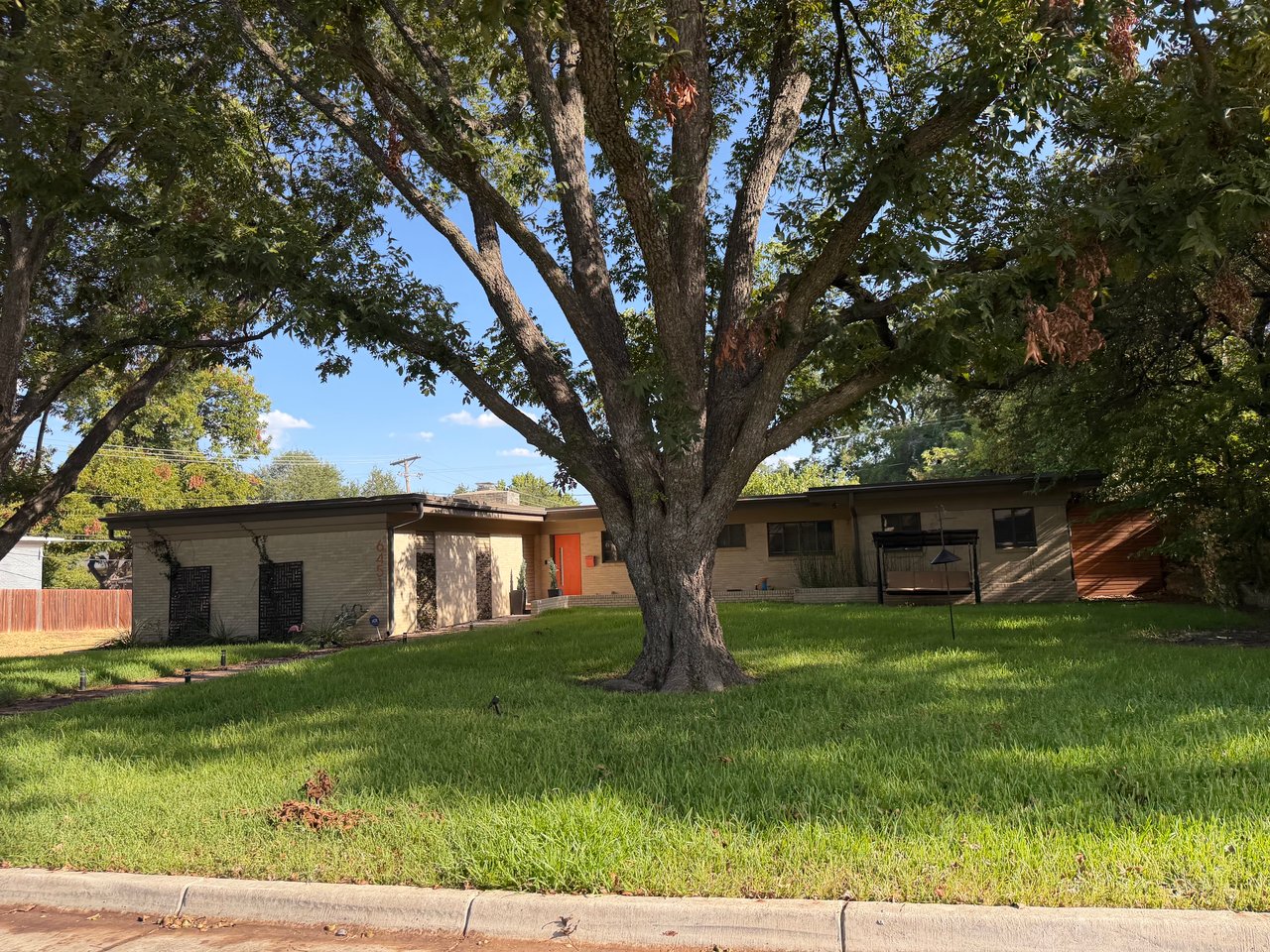
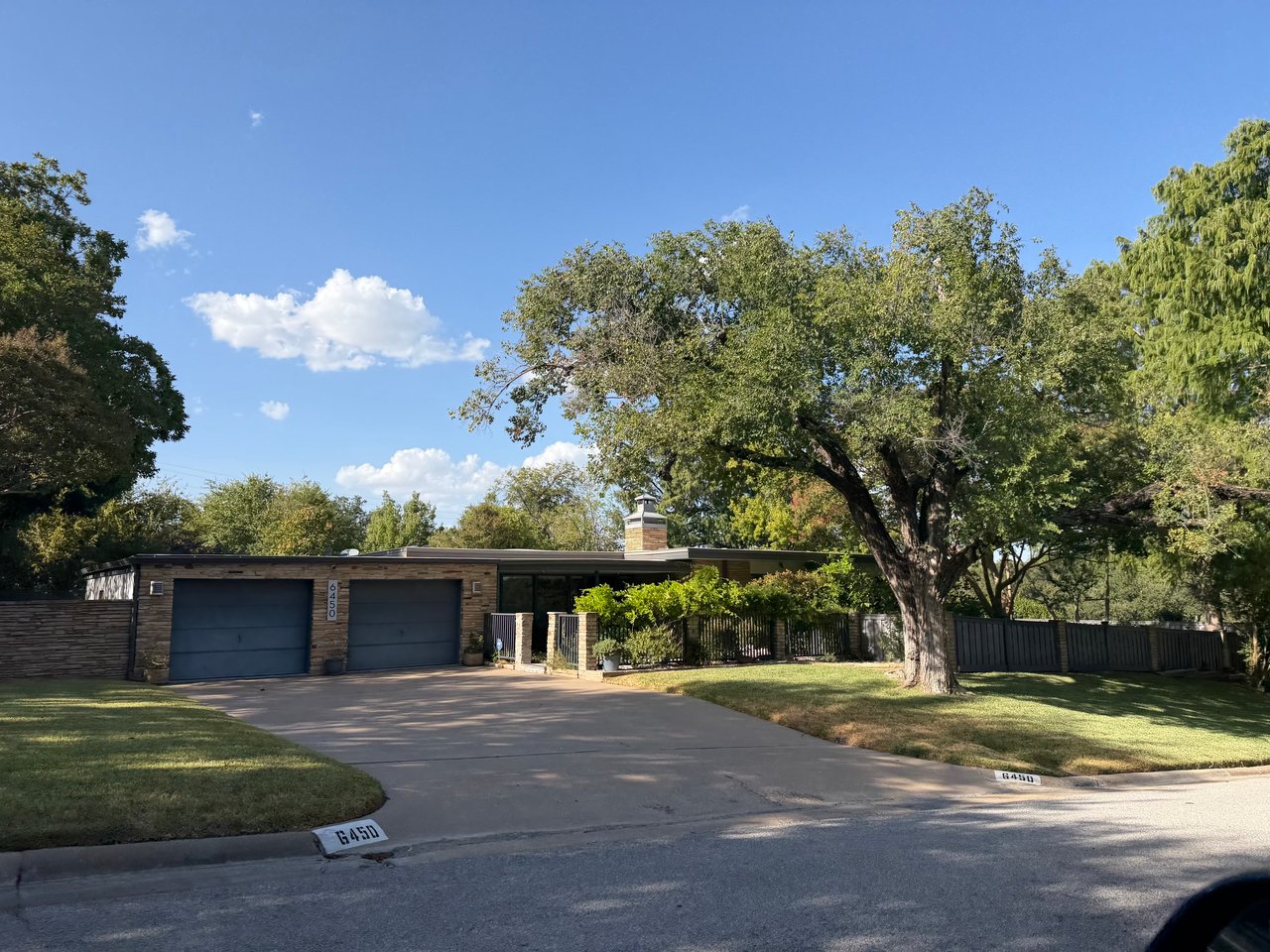
Ridglea is west Fort Worth's mid-century heart — the neighborhoods running south of Camp Bowie Boulevard, about six miles from downtown. Ranch and traditional homes built mostly in the early 1950s on wide, wooded lots, with Ridglea Hills Elementary, Ridglea Hills Park and Luther Lake inside the neighborhood, and the Camp Bowie brick-street corridor, Ridglea Village and the Cultural District minutes away.
It's one of the last places in Fort Worth where you can buy a substantial lot this close in. That turns out to be the entire story of what homes here are worth.
I'm a Fort Worth broker and a Certified Residential Appraiser, and I sold a home here this year. What follows is what three years of sales actually show.
“Ridglea” is several markets
The name spans a handful of subdivisions that don't behave alike. Over the three years ending September 2026 — 323 listings, 196 closed:
- Ridglea Hills — the largest by far. 111 sales, median $491,000 on 2,153 square feet, $246 per foot, median lot 13,765 sf, built 1954, 17 days on market.
- Ridglea Addition — 62 sales, median $612,500 on 2,461 square feet, $252 per foot, similar lots and vintage, 28 days.
- Ridglea Crest — small and much newer. 6 sales, median $887,500, built around 2000, and fast: 6 days.
- Ridglea Place — not the same product at all. Mostly townhomes built around 2004 on lots averaging under 1,400 square feet. 11 sales, median $340,000 at $171 per foot, 65 days.
Ridglea Place is the one to watch out for. Attached homes on tiny lots, twenty percent below the detached market per foot and nearly four times slower to sell — and they file under the Ridglea name. Any automated valuation for “Ridglea” blends them with 1950s houses on third-acre lots. They aren't comparable, and anyone using a neighborhood average is quietly mixing them.
The same caution applies across Camp Bowie. Ridglea North is a separate market — smaller houses, higher per-foot, different buyers — and I try not to pull comps across the boulevard if I can avoid it. Buyers shop both, but they almost always have a preference. A valuation that treats them as interchangeable is taking a shortcut I wouldn't take.
In Ridglea, you're buying land
This is the finding I'd want anyone buying or selling here to have.
Price per square foot tracks lot size, not house size.
- Lots under 11,000 sq ft: $210 per foot
- 11,000–14,000: $240
- 14,000–18,000: $256
- 18,000–30,000: $268
- Over 30,000: $297
The correlation between lot size and price per foot is 0.36. Against house size it's 0.12 — effectively nothing. In most neighborhoods the per-foot figure falls as houses get bigger, because a kitchen and a roof don't scale with square footage; I showed a subdivision where that slope ran from $239 down to $175 in two agents, two prices. Here, land is a large enough share of value to cancel it out.
Practically: a modest house on a big Ridglea lot is worth far more than its square footage suggests, and most pricing gets that backwards. The lots here run from under 11,000 square feet to nearly 70,000 — a six-fold spread inside one neighborhood — and only ten of 196 sales sat on more than 30,000.
What that looks like in practice
My own sale here this year is the cleanest illustration I can offer, so I'll give you the numbers rather than an adjective.
A 1950s home, 2,254 square feet — below the neighborhood median for its lot class — on a lot nearly three times the Ridglea median. It closed at $850,000, which was $377 per square foot.
Against 196 closed sales over three years, that's the 98th percentile on price per foot. Setting aside one duplex recorded twice, it's the highest price per square foot any single-family home in Ridglea achieved in three years. It's also the top price in its entire size-and-vintage class — of the 46 sales between 2,000 and 2,600 square feet built between 1945 and 1960, none closed higher.
It sold in one day, at 100% of original list price. Only 8 of 196 sales closed in a day or less. Only 29% got their full original asking price. Six did both.
None of that was luck. It was pricing the land instead of the house — which is what an appraiser is trained to do and what a per-foot average will never tell you.
How this market behaves
Ridglea moves fast at the median — 18 to 23 days — but that median hides a split. 29% of sales close within a week. Another 15% take more than three months. There isn't much of a middle.
And 31% of listings over three years came off the market without selling — 101 of 323, cancelled or expired. Those listings sat a median of 87 days at a median asking price of $579,000, well above the $505,577 median close. Notably their per-foot ask, $233, was below the $244 that sales cleared. They were larger houses carrying larger total numbers, in a part of the market where the buyer pool is thinner.
These are seventy-year-old houses held a long time, by owners with real equity and no deadline. When the number doesn't come, they'd rather stay than chase it.
Which is the same lesson from the other direction: in Ridglea, square footage is not what carries a price. Land is.
Current conditions are healthy. 22 active listings against 75 sales in the past year is about 3.5 months of supply — balanced. And sellers are doing better each year: the share of original list price received has climbed from 95.4% in 2024 to 96.3% in 2025 to 97.4% in 2026, with the median close up from $483,500 to around $536,000.
What the market is actually doing
Ridglea has 196 closed sales over three years, which is enough to measure properly. Controlling for house size, price per square foot has moved −0.1% a year — p = 0.98. That is not a decline; it is one of the flattest readings I have on any neighborhood, and with this much data a genuine drop would be visible.
So the value is holding, and what changed is patience. Homes take longer than they did in 2022, and more listings come off the market without selling — which in a neighborhood of seventy-year tenures and substantial equity mostly reflects owners who would rather stay than cut. Sellers here still closed at 97.4% of original list in 2026.
That pattern holds across the close-in, established neighborhoods I measure — eighteen of them, and not one shows a statistically significant decline in price per foot. It does not hold further out, and I don't have to go outside my own site to show it. Walsh is down 1.81% a year. Heritage 1.32%. Eagle Mountain 1.03%. Presidio 0.92%. Beltmill 0.86%. Every one of those sits outside Loop 820; every close-in neighborhood I measure reads flat.
Citywide the same split shows up at scale: sixteen of thirty-one ZIP codes are declining and exactly one is rising. The dividing line runs at roughly nine miles from downtown, and beyond it better than a third of people who bought in the last three years and needed to sell took a loss — against about one in six inside. My Fort Worth market report has the ZIP-by-ZIP numbers and the repeat-sale analysis behind that.
Ridglea is six miles out. That is the reason for the reading above, and it's worth knowing that it's a reason rather than a guarantee.
Schools, taxes and the practical stuff
All 323 listings are Fort Worth ISD, with Ridglea Hills Elementary inside the neighborhood. Confirm the campus assignment for a specific address with the district.
Property taxes follow the ordinary Fort Worth pattern — Fort Worth ISD, city, county, hospital, college and water district, a combined rate near 2.19% — with no PID and no MUD. The infrastructure here was paid for seventy years ago.
About a quarter of homes have a pool. There's no mandatory HOA across most of Ridglea; the Ridglea Hills Neighborhood Association is a voluntary organization serving more than 1,300 families.
What I look at in a Ridglea house
- The lot, first. Size, shape, trees, grade and what backs it. This is the value driver here, not a tiebreaker.
- What the renovation actually touched. These are seventy-year-old houses. New counters over original wiring, galvanized supply lines and a slab that's never been looked at is a different asset from one where the expensive invisible work was done. Ask for permits, not photographs.
- Foundation and drainage. Mid-century slabs and pier-and-beam on North Texas clay, with mature trees pulling moisture out from under them.
- Additions and their permits. Common here, and not all of them were approved. An appraiser treats unpermitted square footage differently than a listing does.
- Whether the floor plan has been opened up. Original 1950s layouts are compartmentalized, and buyers price that honestly. It's also the single most common renovation, which means the ones that haven't been done are competing against ones that have.
What to have looked at in a 1950s Ridglea house
Sixty-eight percent of Ridglea sales are houses built before 1960, and another 21% between 1960 and 1977. That is a narrow, consistent vintage, which is convenient for comparables and means the inspection list is largely the same house to house.
Four things I'd want looked at, none of which are visible on a walkthrough:
- Supply lines. Galvanized pipe was standard in this era. It corrodes closed from the inside and announces itself as falling water pressure, usually years after you'd have wanted to know. Many Ridglea houses have been repiped; plenty haven't.
- The sewer line. Cast iron of this vintage deteriorates from the inside. A camera down the line costs a couple of hundred dollars and occasionally saves five figures. On a seventy-year-old house I'd treat it as routine rather than optional.
- The electrical panel. Brand and age, not just whether the lights work. Some panels from the mid-century era have documented problems and are worth identifying before you own them.
- The slab or pier-and-beam, and the drainage around it. North Texas clay plus mature trees pulling moisture out from underneath is the defining local issue, and Ridglea has both in abundance.
None of this should put you off a Ridglea house. It is the ordinary cost of buying seventy-year-old construction on a lot you couldn't otherwise get this close in, and the previous owner may well have handled all of it. The point is to find out which, and to price accordingly.
Build year tells you what is likely, not what is there. Houses get repiped, panels get replaced, and sewer lines get lined — plenty have been. The point is knowing what to ask about and what to have looked at, not assuming the worst.
What's worth doing before you list
These are seventy-year-old houses, and the question of how much to fix first comes up in nearly every conversation I have here.
The order matters more than the amount. A Ridglea house has to be financeable before anything cosmetic is worth spending on — roof, foundation, systems — and those do not earn a premium; they keep the house eligible for a mortgage and keep the buyer pool intact. After that come the FHA and VA condition items an appraiser will call out anyway: peeling exterior paint, rotted wood, deferred maintenance. Only then does the presentation money start working.
I tested fourteen common improvements against 33,000 Fort Worth closings in what to fix before you list, and in what order — three of them measured at zero, and the one that looked worst in the data turned out not to mean what it appeared to.
The Ridglea qualifier is the same one that runs through this whole page: if your value is in the lot, spending heavily on the house is competing against something you already own.
If you're selling in Ridglea
Start with the good news, because it's the part that matters: a Ridglea home positioned on its land rather than its square footage still moves quickly and closes near asking. Nearly three in ten sales go under contract inside a week, and the share of original list price received has climbed three years running, to 97.4% so far in 2026.
About a third of listings over three years came off the market instead. They weren't the ones asking too much per foot — their per-foot asks were below what sales cleared. They were larger houses priced off square footage rather than land, and their owners chose to stay put rather than meet a different number.
What works: comparables drawn from your actual lot class, a defensible accounting of what the land contributes, and a list price within a few percent of the clearing level on day one. With 29% of sales closing inside a week, the first weekend is a larger share of your negotiation than it is almost anywhere else in Fort Worth.
Buying or selling in Ridglea
I hold a Texas broker's license and a Certified Residential Appraiser certification, and I sold a home in this neighborhood this year at the highest price per square foot Ridglea has produced in three years — in one day, at full asking price. That happened because the land was priced correctly, not because the market was generous.
If you own a house here on a lot most people would undervalue, that's the conversation I'd like to have.
Call or text (682) 207-4310, or send me a note.
Sales figures are medians from NTREIS listings and closed sales for the three years ending September 2026, reported in aggregate. Tax rates, school assignments and market conditions change — confirm current figures for a specific property before relying on them.