Solar Pays Only If You Own It
Buyer Resources
Buyer Resources
A seller told me last month that the panels on his roof cost $31,000 and he expected to get most of it back.
He owned them outright, which turned out to be the only part of that sentence the market agrees with.
I pulled 989 closings with solar out of 89,302 across Dallas–Fort Worth and compared each solar house against its own neighbors in the same subdivision. The answer splits clean down the middle, and the dividing line is not the panels. It's who owns them.
Panels owned outright | +3.3% | about $12,500 |
Panels leased | +0.2% | nothing measurable |
Listing doesn't say | −0.1% | nothing measurable |
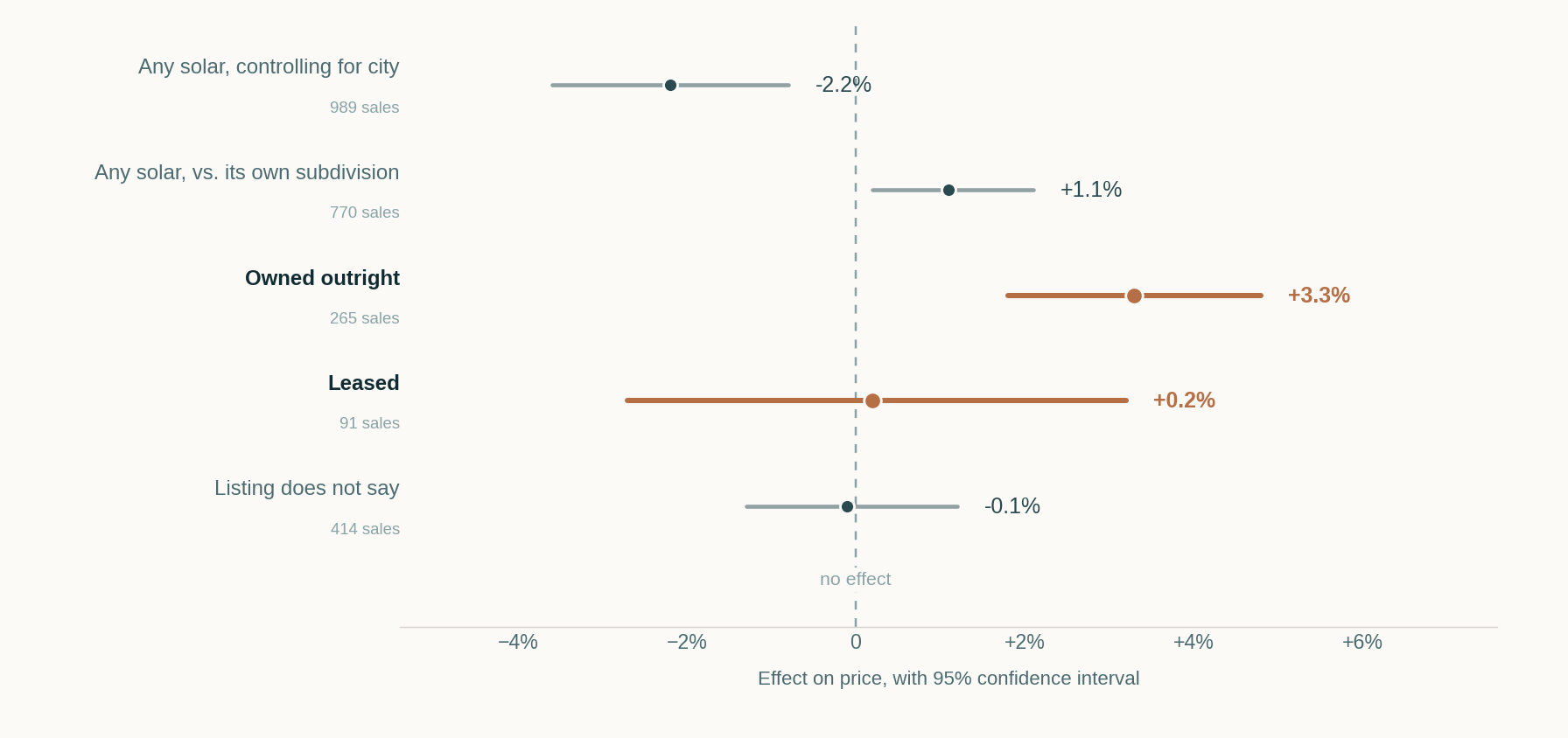
The same rooftop, three different answers depending on who owns it.
Look at that third row again, because it's the one you can do something about today.
414 closings — the largest of the three groups — listed "Solar" and said nothing about ownership. Those houses priced like leases. Not like the owned ones.
Some of them genuinely were leases that nobody tagged. But the tagged split runs about three owned to one leased, so it's unlikely all 414 were leased. The more plausible reading is simpler: a buyer who can't tell whether the panels convey free and clear or come with a monthly payment assumes the payment.
"Solar — owned outright, no lien, conveys with the property" is a sentence that appears to be worth about three percent. The same panels described as "Solar" appear to be worth nothing.
If you own your panels and your listing doesn't say so in those words, that's the cheapest three percent available to you.
I bought a house for a client on Fair Oaks Drive in North Richland Hills in 2024. It had solar panels, owned outright and paid off.
The structured solar field on that listing was blank. The panels turn up in exactly two places: buried inside the heating field as "Active Solar," and in the middle of a remarks paragraph, lowercase, between a note about the HVAC and a note about the garage — "the home also features paid off solar panels that significantly reduce the electric bill."
So: the +3.3% version of solar, described in a way that no filtered search, no data pull and no appraiser's grid was ever going to catch. It closed at $360,000 against $369,900.
Compare that with a listing of my own on Dolce Vita Drive in west Fort Worth, where the same field reads "Solar, Owned" — four words, in the box buyers can actually filter on.
Same feature. One of them is legible to the market and one of them isn't.
Owned panels are part of the house. They convey, they lower the electric bill, there's nothing further to pay.
A lease or a power purchase agreement is a different animal entirely. The panels belong to somebody else. Your buyer inherits an obligation — a monthly payment, often with an annual escalator, running years out — in exchange for power they'd otherwise buy from a retailer. Whether that nets to anything depends on the rate, the escalator, the remaining term and the buyout.
And then there's the friction that has nothing to do with value at all. The lease has to be assumed, which means your buyer qualifying with the provider. There's frequently a UCC filing against the property that has to be cleared at closing. I've watched both of those add two weeks to a timeline and cost a deal outright.
So the feature costs the seller real money every month and returns, as far as this data can tell, nothing.
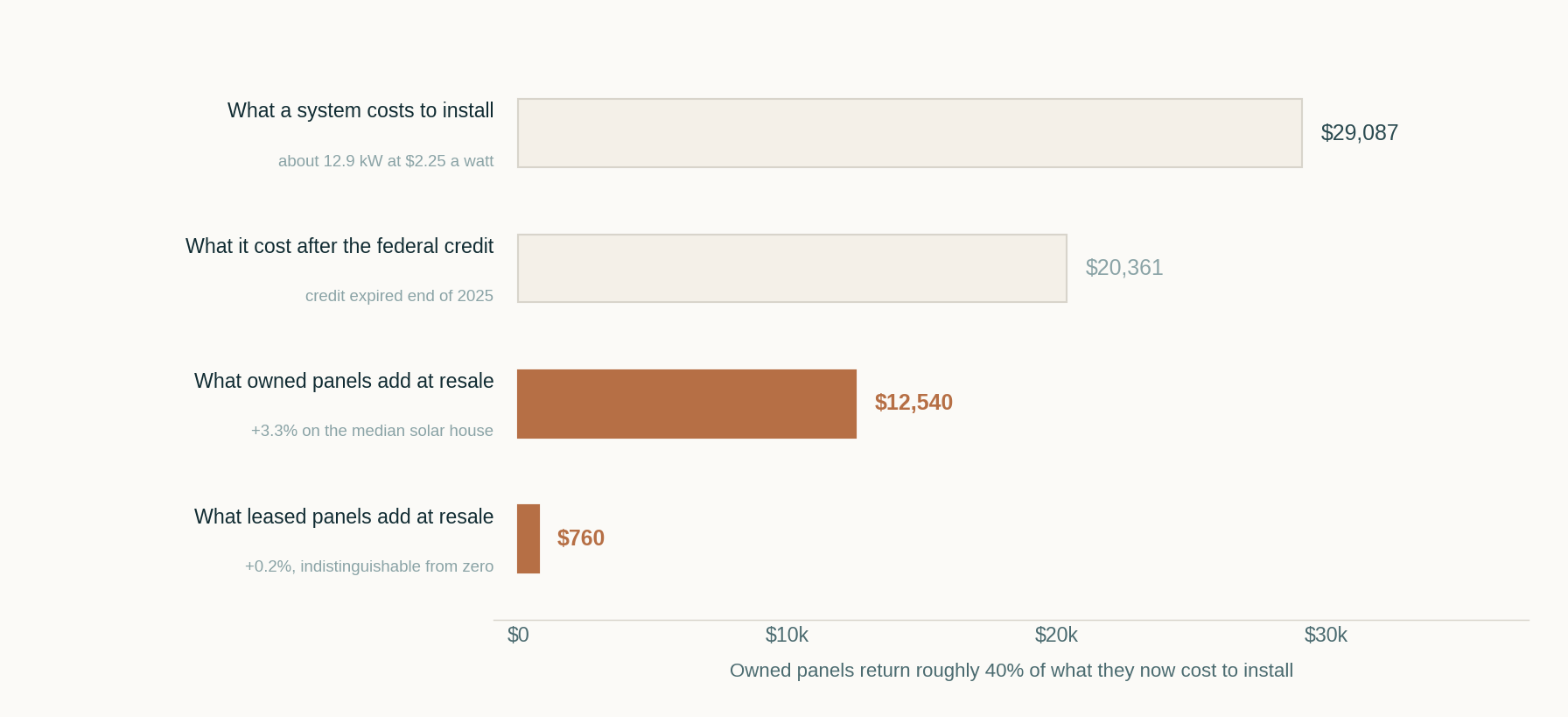
Owned panels return roughly 40% of what a system now costs. Leased panels return nothing measurable.
A typical Texas system runs about $2.25 per watt at a median size near 12.9 kW — call it $29,000 installed. Against a resale contribution around $12,500, that's roughly 40% back.
That used to look better, and here's the part a lot of people haven't caught up with: the federal residential clean energy credit expired at the end of 2025 for cash and loan purchases. A system that effectively cost around $20,000 after the credit now costs the full amount. The resale contribution didn't move.
Which means the case for solar now rests almost entirely on the electricity it displaces over the years you stay — not on anything you recover when you sell. That's still a real case. It's just a different one, and it depends on your rate and your time horizon rather than on a market premium.
One more finding worth understanding, because you'll see it quoted badly.
If you control only for city, solar homes sold 2.2% below comparable houses. Taken straight, that says panels destroy value.
They don't. That's selection. Panels cluster in particular subdivisions and price points, and comparing across a whole city is too coarse to remove it — you end up comparing a solar house in one part of town against a non-solar house in another. Narrow the comparison to the same subdivision and the sign flips positive.
It's the same trap as every feature premium you read online, running in the opposite direction from usual. Most quoted premiums are too high because the feature rides along with bigger, newer, better-located houses. This one is too low for the mirror-image reason.
Ask for the documents before you ask about the savings. Owned and paid off, owned with a solar loan and a lien, leased, or a PPA — four different situations with four different closings. The listing usually won't tell you which.
If there's a lease, get the assumption terms in writing early. Monthly payment, escalator, years remaining, buyout figure, and what the provider requires to transfer. This is a title and financing issue, not a roof issue, and it wants to be handled in the first week rather than the last.
If there's a solar loan, it's a lien. It has to be paid off at closing like any other, out of the seller's proceeds. Sellers are sometimes surprised by this.
Don't pay for the panels twice. If the panels are leased, they are not part of what you're buying, and the price shouldn't reflect them.
Owned? Say so explicitly — owned outright, no lien, conveys. Put the annual production and a recent bill in the listing if you have them. This is the only version of solar the market pays for and you want no ambiguity about which version you have.
Leased? Price the house as though the panels aren't there, because in this data they aren't. Get the transfer requirements from your provider before you list, so the first buyer who asks gets an answer the same day instead of a week later.
Thinking of adding panels before you sell? Don't. You'd recover about 40% at best, and only after the system is installed, paid off and documented. That is not a pre-listing improvement.
The technical version — confidence intervals, why the naive figure is negative, and how ownership gets established and adjusted in an appraisal — is on my appraisal site: what solar panels add, owned versus leased.
I'm a Texas broker and a Certified Residential Appraiser. On a house with panels that means I can tell you what's actually conveying, what it's worth in that subdivision, and what the lease is going to do to your closing — before you're thirty days in.
Browse active listings in this price range, or call or text (682) 207-4310, or send me a note.
Based on NTREIS closed sales of detached single-family homes across Dallas–Fort Worth, 2023 through September 2026 — 89,302 closings, 989 carrying solar generation. Premiums are measured within subdivisions containing both solar and non-solar sales, holding living area, lot size, year built and sale date constant, with standard errors clustered by subdivision. Ownership status is as entered by the listing agent and is not independently verified. Installation costs are published Texas averages, not independent estimates. Tax credit availability is a matter of federal law and should be confirmed with a tax professional. Nothing here is an appraisal or a valuation of any particular property.
 Tanglewood
 Crestwood
 Walsh Ranch
 Montserrat / Montrachet
 Bella Flora
 Edwards Ranch Riverhills
 Tavolo Park
 Ryan Place
 Fairmount
 Ridglea
 Ridglea North
 Ridgmar
 Westover Hills
Rivercrest Bluffs & River District
Westover Hills
Rivercrest Bluffs & River District
 Rivercrest, Monticello & North Hi Mount
 Mira Vista
Overton Park
Overton Woods
Westcliff
Arlington Heights
Benbrook
Ventana
Downtown
Linwood
Eagle Mountain & Marine Creek
Beltmill & Watersbend
Heritage & Alliance
Presidio & Tehama Ridge
Wedgwood
North Richland Hills
Hurst
Euless
Bedford
Grapevine
Westlake
Keller
Southlake
Colleyville
Arlington
Burleson
Crowley
Mansfield
Kennedale
Aledo
Weatherford
Azle
Granbury
Springtown
Cleburne
Joshua
Godley
Alvarado
Ponder
Krum
Waxahachie
Midlothian
Poolville
Decatur
Justin
Mira Vista
Overton Park
Overton Woods
Westcliff
Arlington Heights
Benbrook
Ventana
Downtown
Linwood
Eagle Mountain & Marine Creek
Beltmill & Watersbend
Heritage & Alliance
Presidio & Tehama Ridge
Wedgwood
North Richland Hills
Hurst
Euless
Bedford
Grapevine
Westlake
Keller
Southlake
Colleyville
Arlington
Burleson
Crowley
Mansfield
Kennedale
Aledo
Weatherford
Azle
Granbury
Springtown
Cleburne
Joshua
Godley
Alvarado
Ponder
Krum
Waxahachie
Midlothian
Poolville
Decatur
Justin
Stay up to date on the latest real estate trends.

H-E-B is coming to Chisholm Trail and Oakmont in late 2028. I measured six North Texas stores to find out what that does to home values. It doesn't — but it changes ho… Read more
Home Improvement
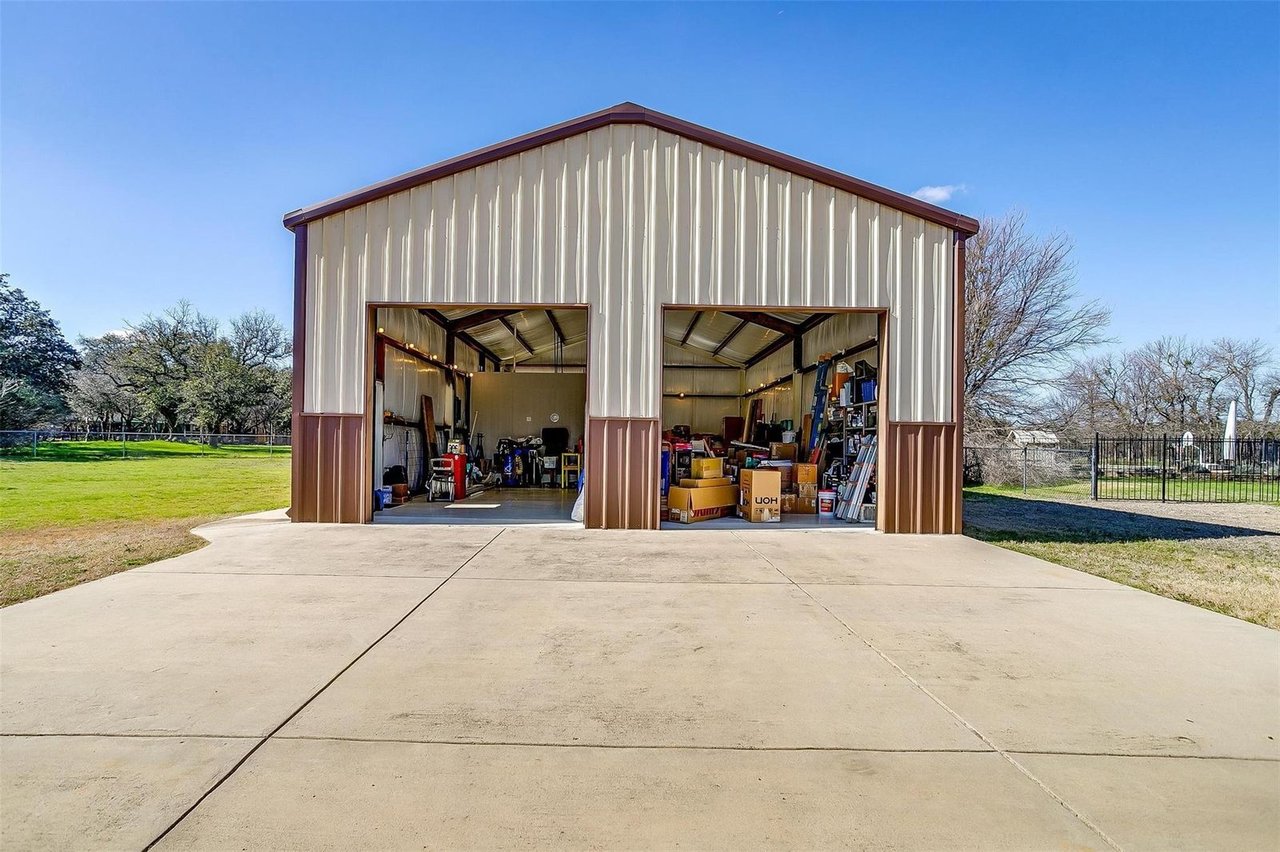
A shop with electricity adds about 6% of the sale price. The same building without power adds 2.6% — the same as a storage shed.
Home Improvement
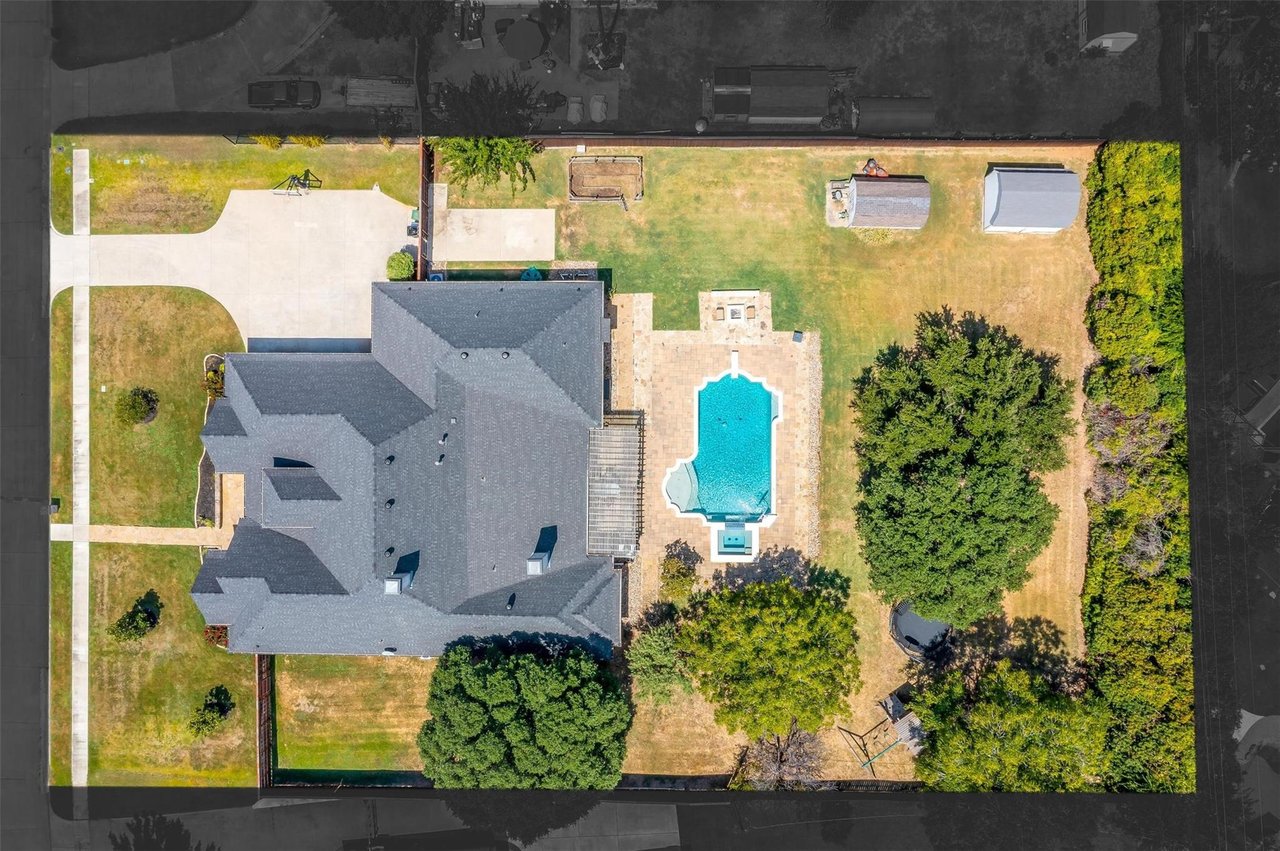
2,002 accessory units measured. Having one adds about 7% — and how big it is adds nothing, so build the smallest one that does the job.
Seller Resources
Your old days on market follow you until you've been gone 30 days — then they vanish completely. 16,465 relisted DFW houses measured.

Home Improvement
About 9% of your price almost regardless of neighborhood — half to all of what one costs to build. And they sell eight days faster.
Buyer Resources
On a new build the listed tax is the vacant lot's bill, and it roughly quadruples in year two — about $526 a month on a $450,000 house.
Buyer Resources
Owned panels add about 3%. Leased panels add nothing — and a listing that doesn't say which gets priced like a lease.
Seller Resources
Your twenty acres are not worth ten times your neighbor's two. Per-acre price falls about a quarter every time a tract doubles.
Owner Resources
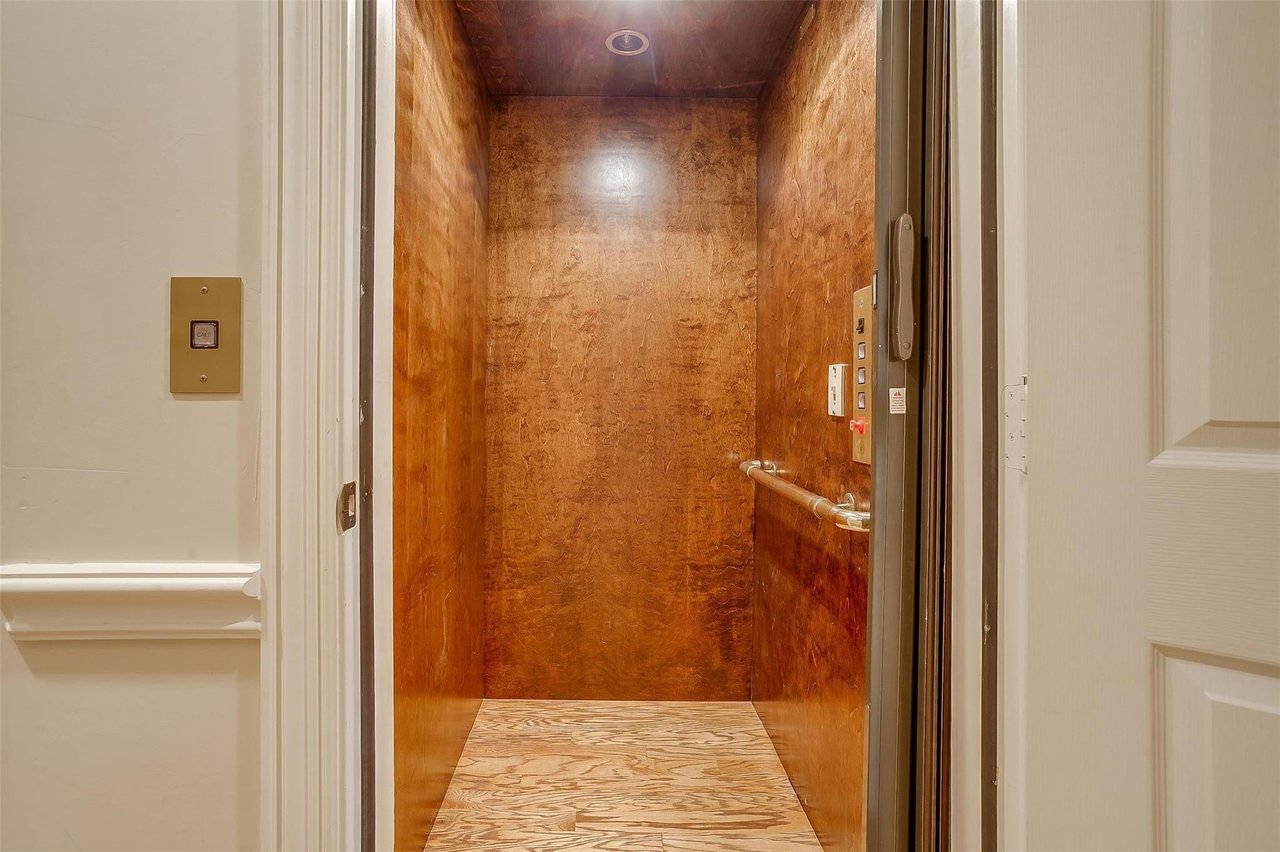
I listed one in North Richland Hills that sold in nine days at 99% of asking. The elevator wasn't why — and 121 sales out of 89,302 show why not.
I've trained three appraisers in this market, and every figure on this blog comes from closed sales I pull and model myself. The same analysis, applied to one address.