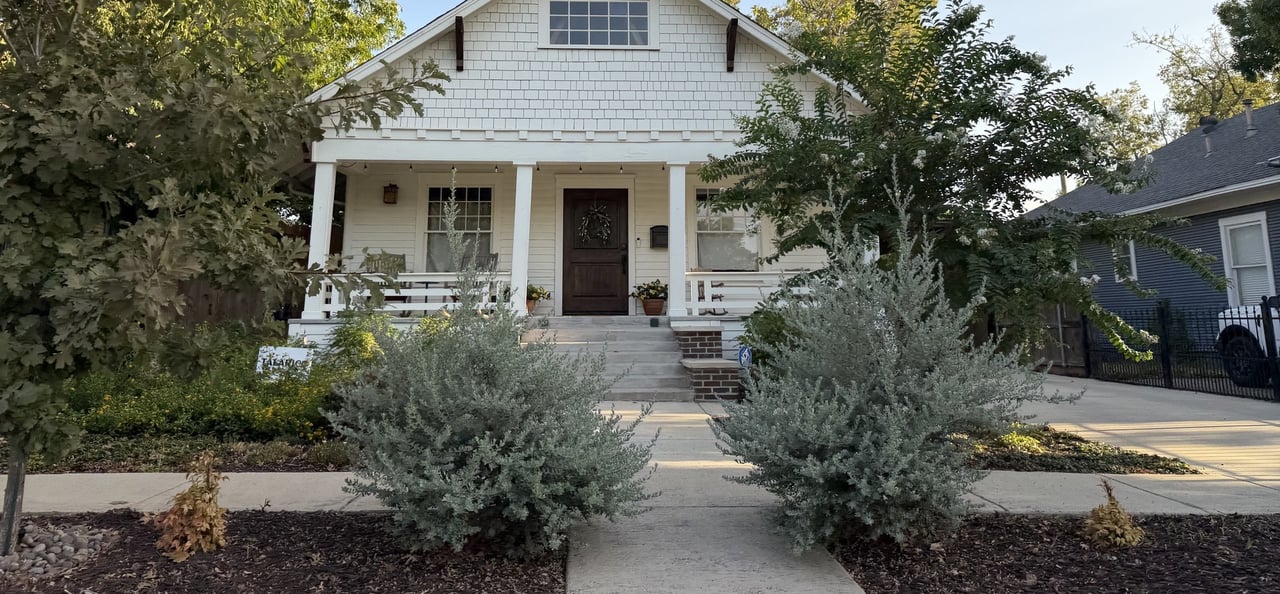
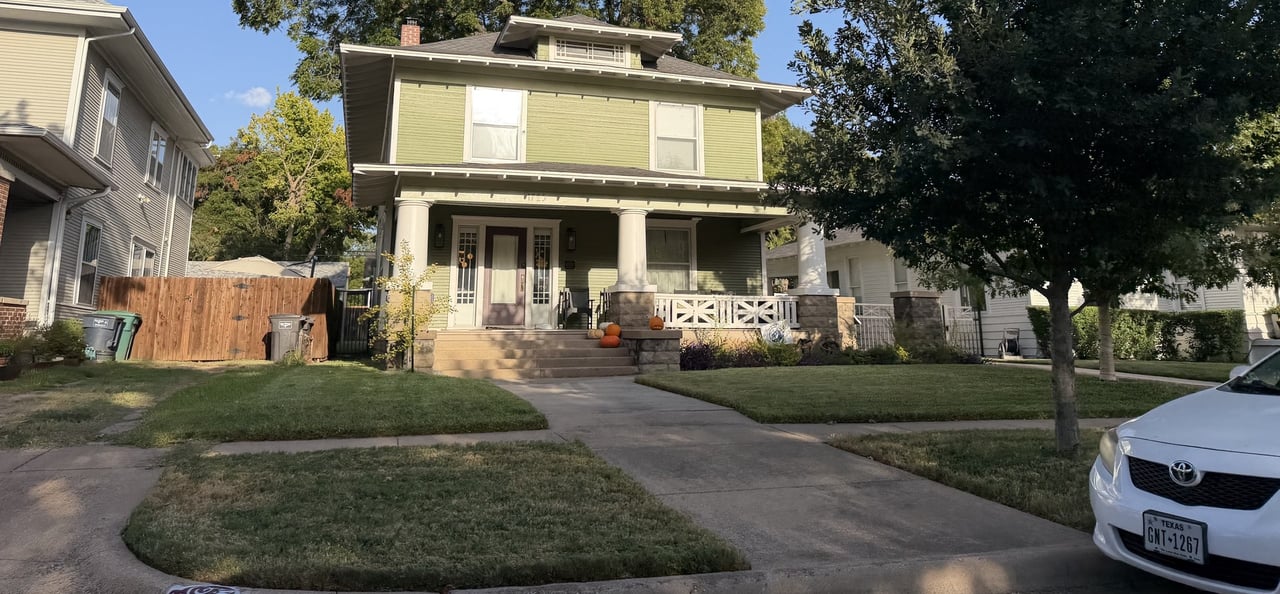
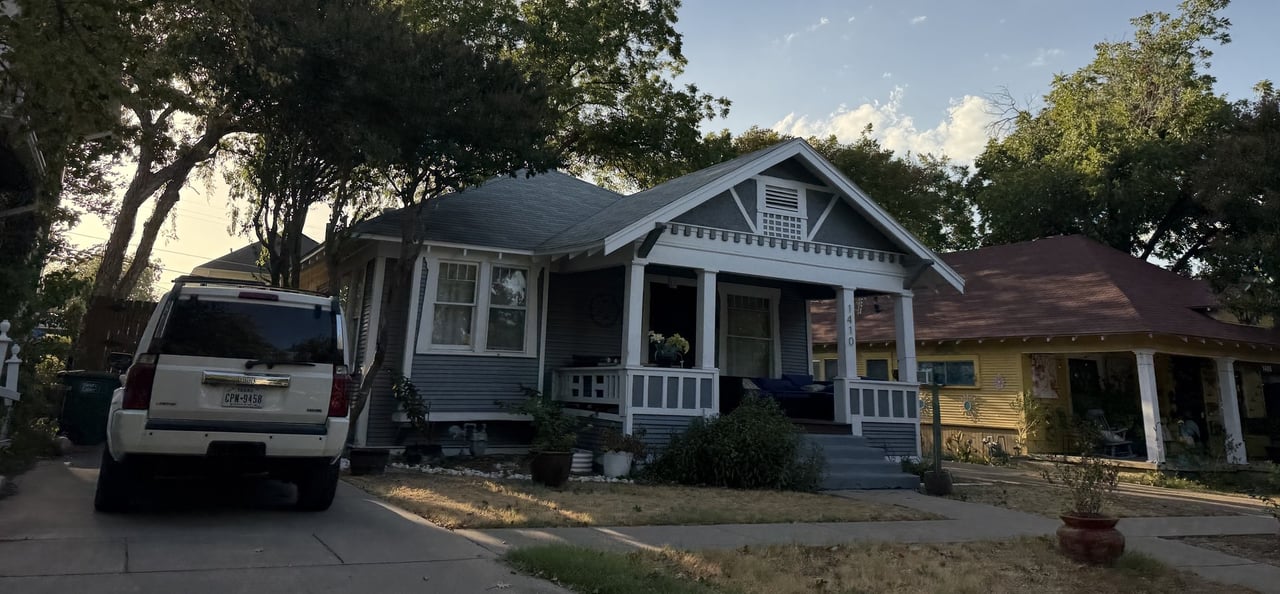
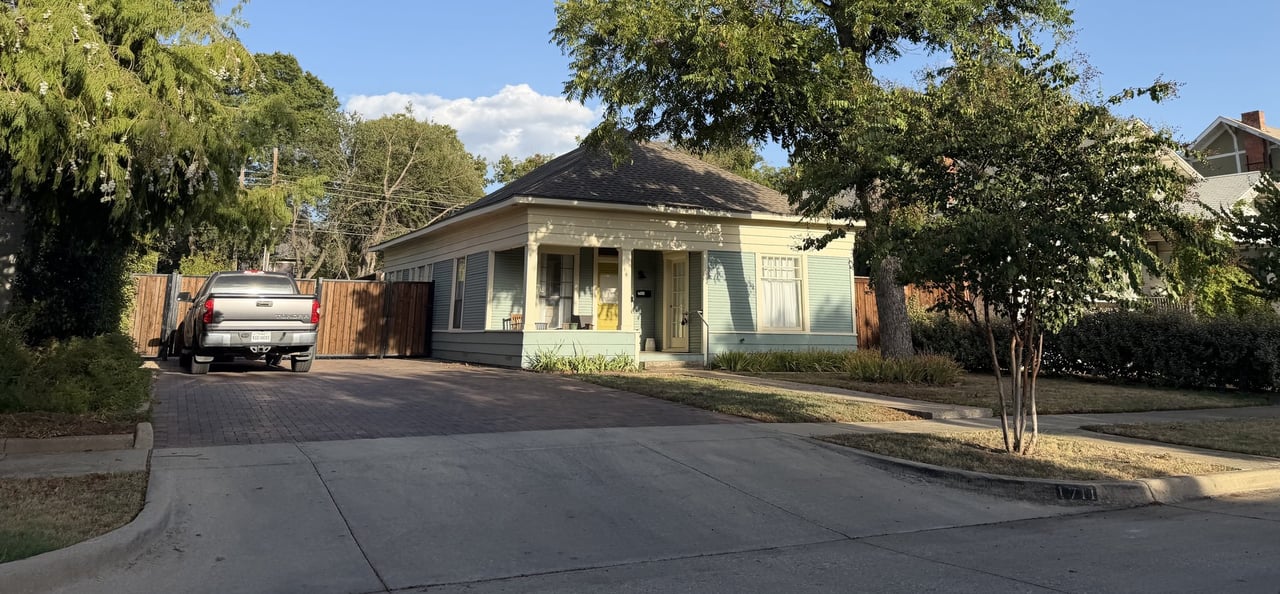
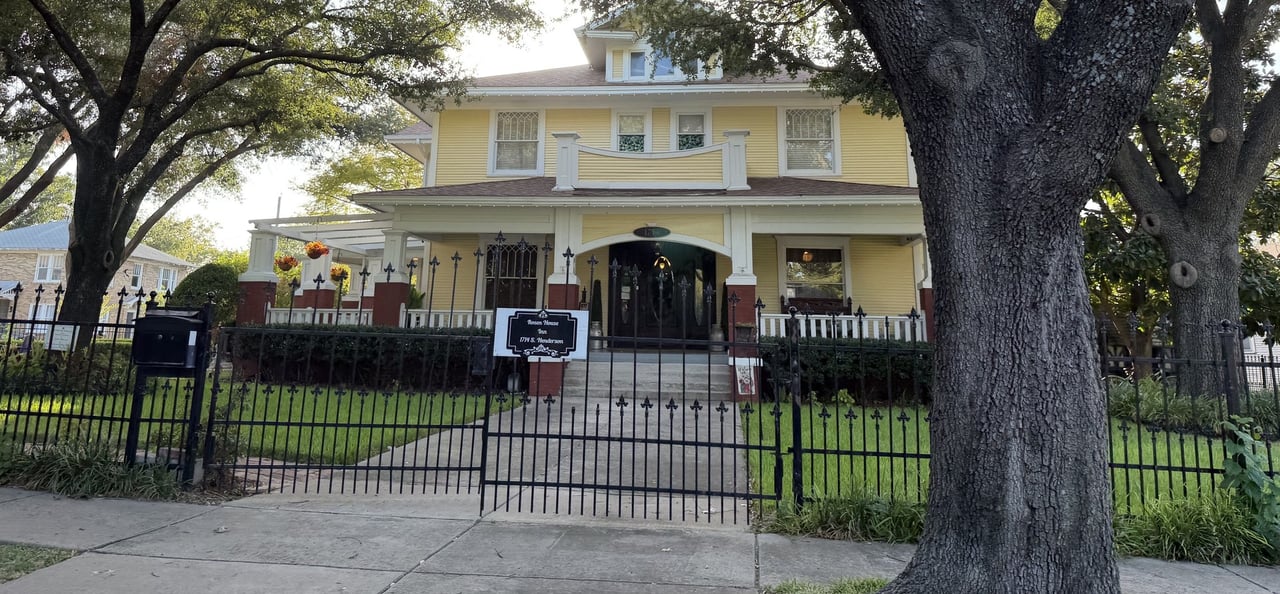
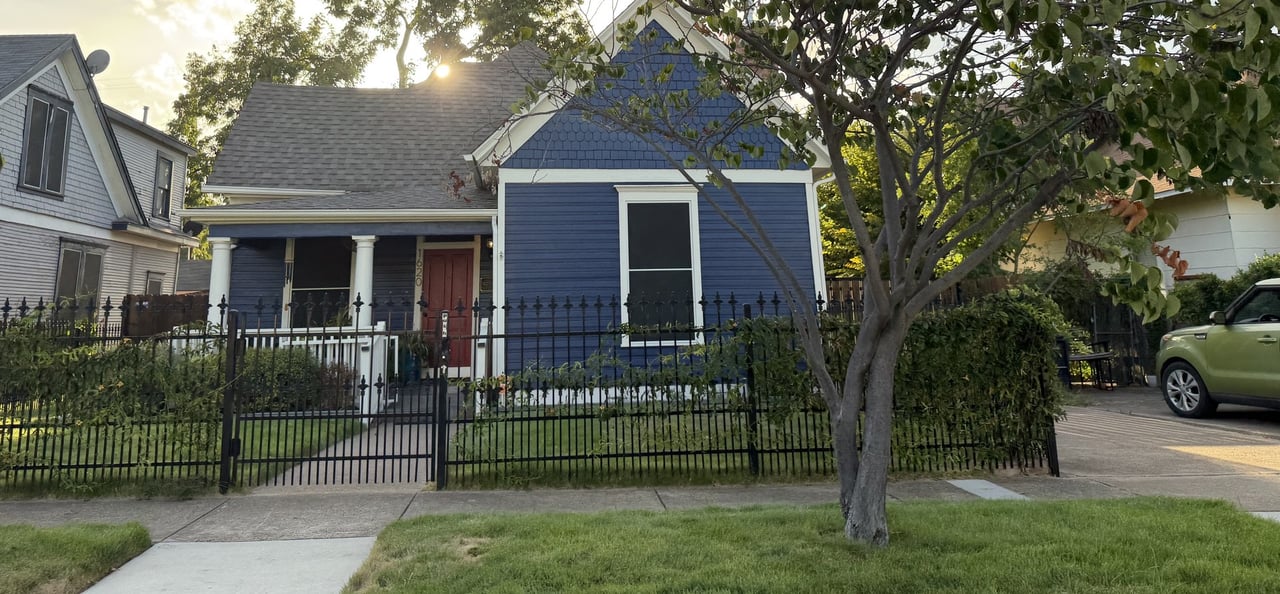
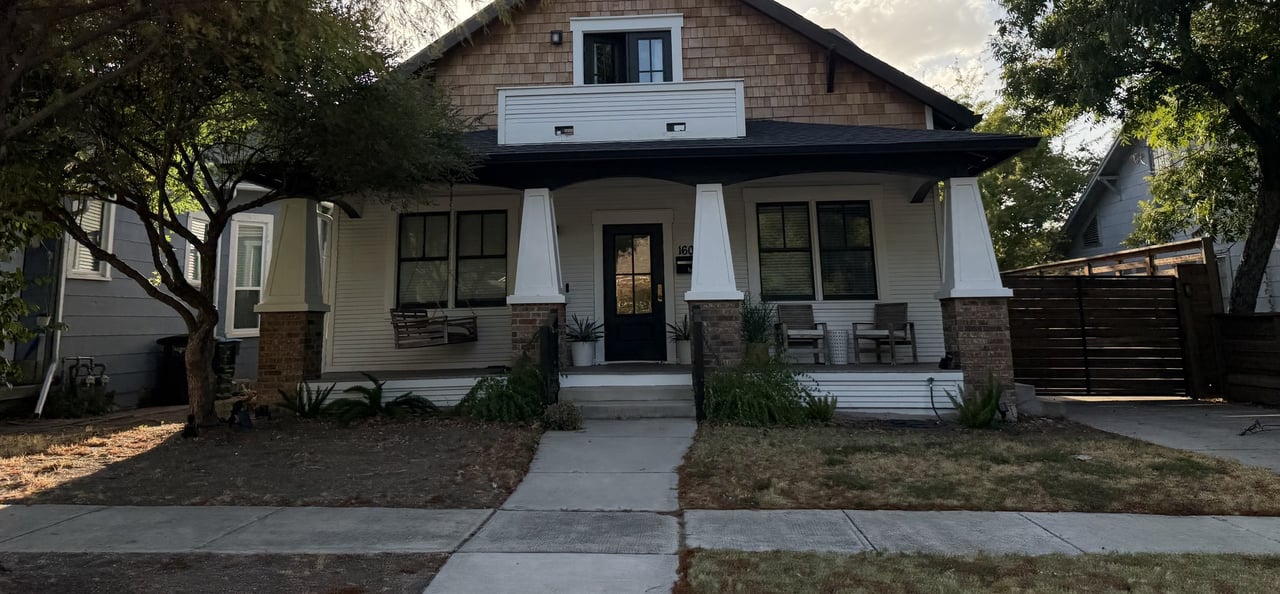
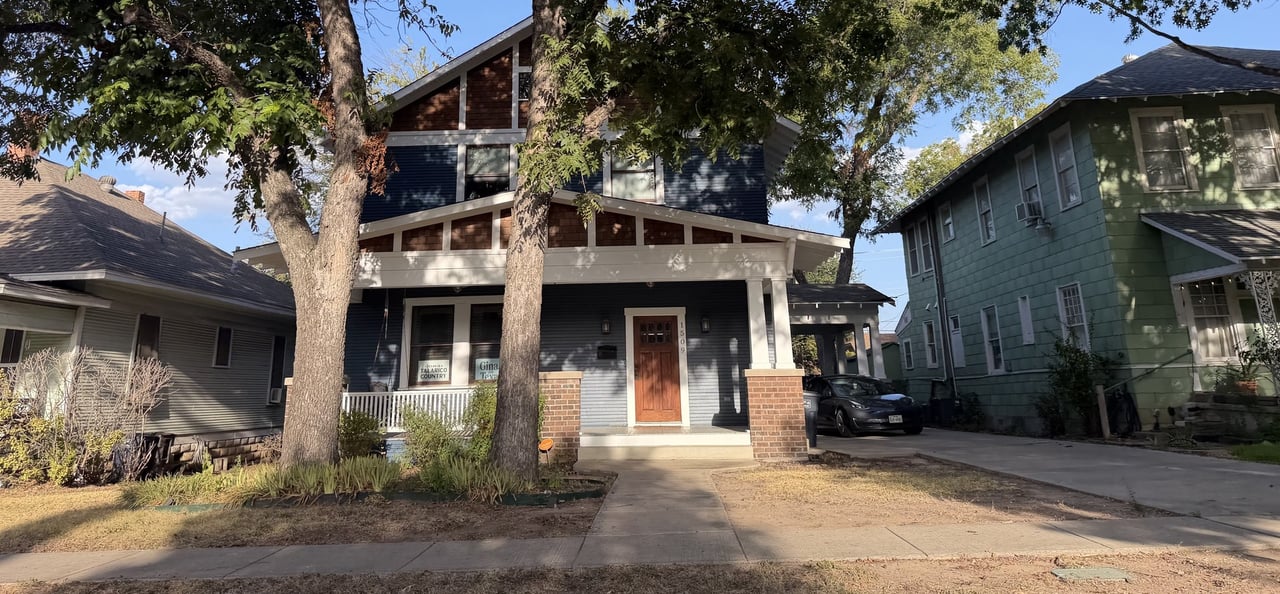
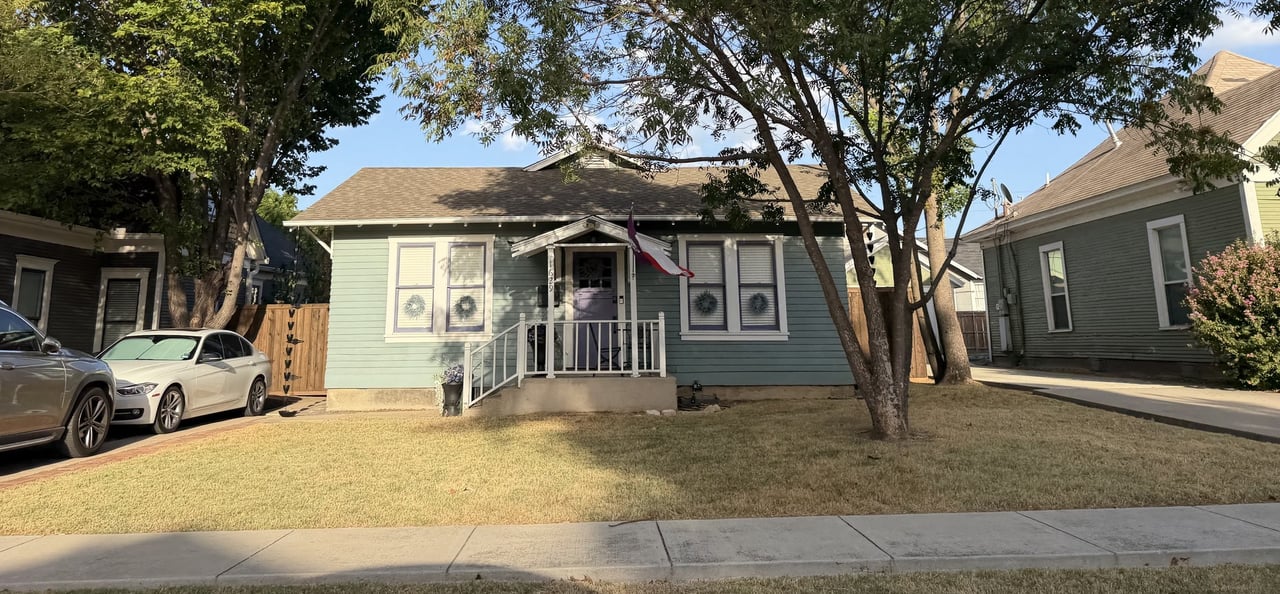
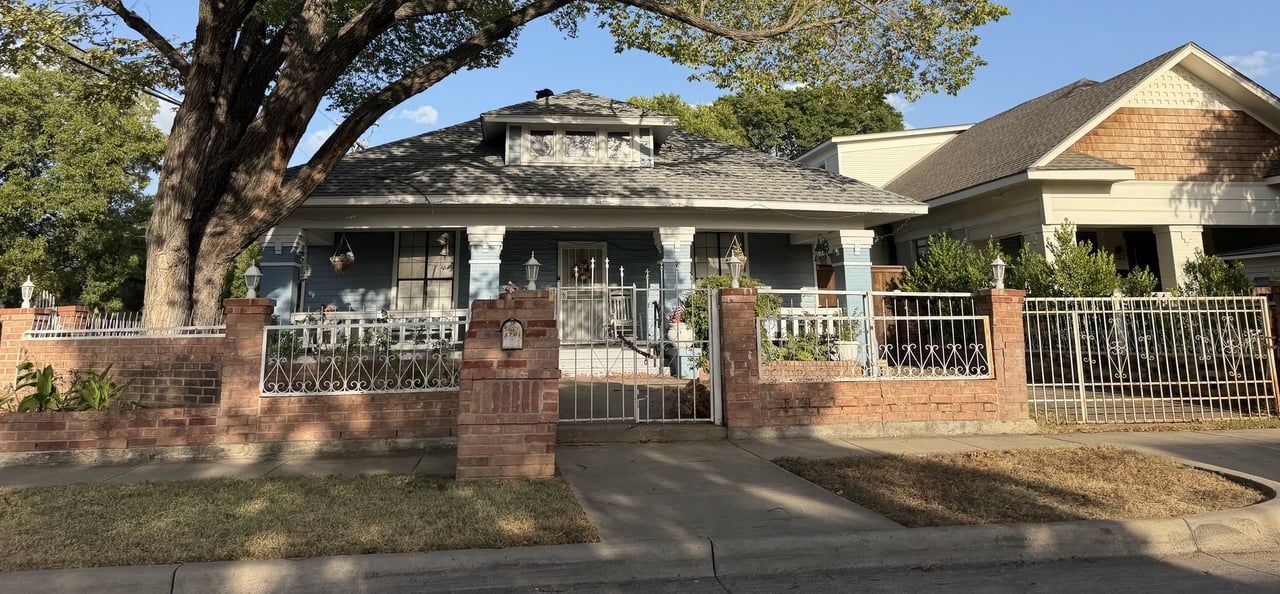
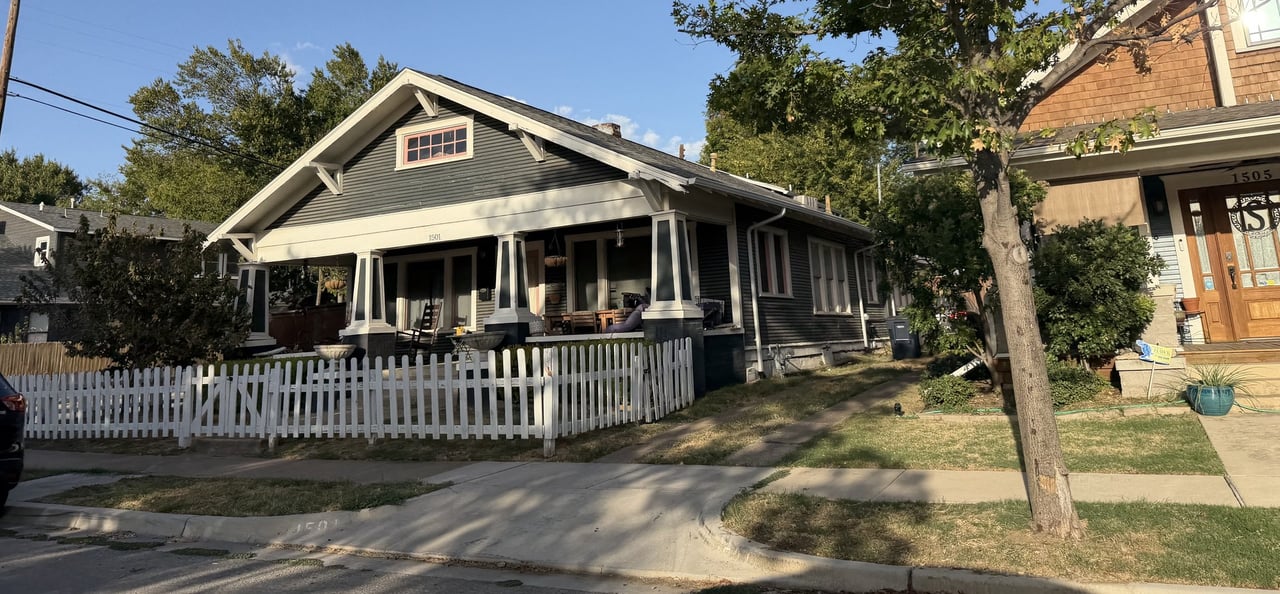
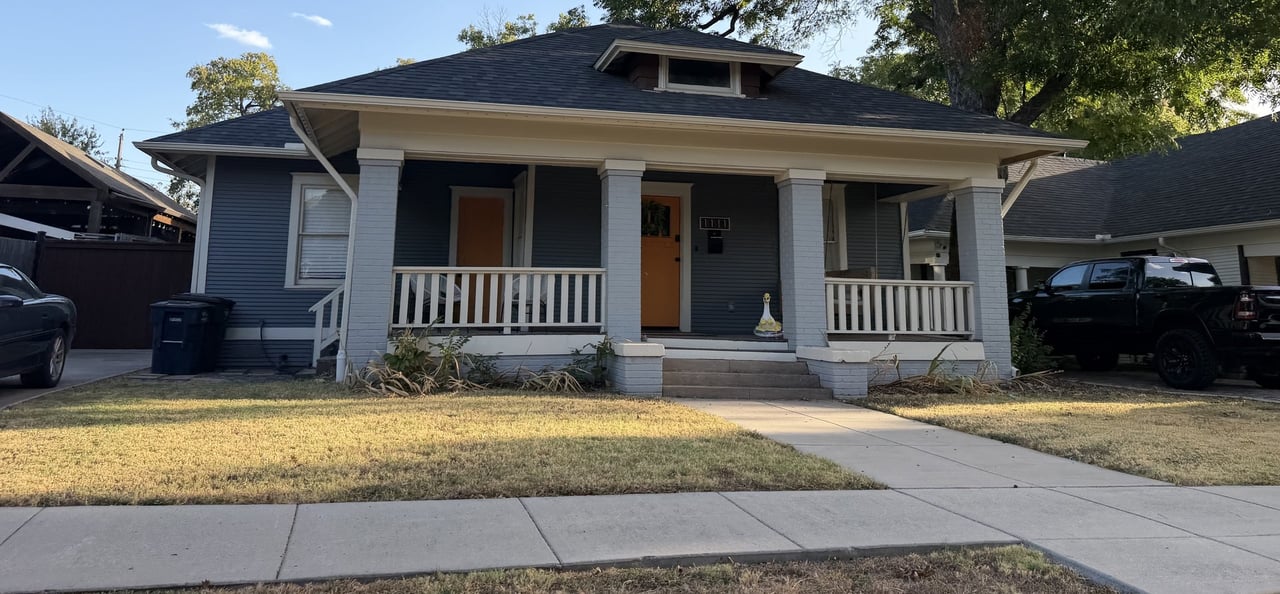
Fairmount is the largest historic district in the southwestern United States — 346 acres and more than a thousand contributing structures, just south of downtown Fort Worth. Craftsman bungalows, Queen Anne cottages, Tudor and Colonial Revival homes, most built between 1900 and 1930, on tree-lined streets with deep porches and sidewalks people actually use.
The Magnolia Avenue corridor runs along the northern edge, which is most of why the neighborhood turned around. Restaurants and coffee within walking distance of a 1920s porch, the medical district and downtown minutes away.
I'm a Fort Worth broker and a Certified Residential Appraiser, and I grew up a few blocks from here — I walked to Daggett Elementary as a kid. Here are the three things I'd want you to know before you buy or sell in Fairmount.
1. The historic designation is a trade, and you only ever hear half of it
Fairmount carries two designations. It was listed on the National Register in 1990, which is honorific and controls nothing. It is also a City of Fort Worth Historic and Cultural Landmark district, designated that October — and that one has teeth. Exterior changes require a Certificate of Appropriateness from the Historic and Cultural Landmarks Commission: windows, siding, roofing, porches, additions, demolition. Applications are due the third Monday of the month, hearings are the second.
That's the half everyone repeats, usually as a warning. Here's the half almost nobody mentions.
Because Fairmount is locally designated, owners here qualify for Fort Worth's Historic Site Tax Exemption. Spend at least 20% of your assessed improvement value on an approved rehabilitation, and the city freezes its portion of your property taxes at pre-renovation values for ten years.
The city's share is 0.67 of a combined rate near 2.19 — about 31% of the bill. On a house that goes from $300,000 to $600,000 assessed after a serious renovation, that's roughly $20,000 you keep, for paperwork on work you had to get approved anyway.
Four blocks east, in neighborhoods that are National Register only or undesignated, that exemption doesn't exist. Same houses, same renovation, different economics.
So the honest framing isn't “restriction.” It's a trade — and whether it's a good one depends on you. Renovating? It's worth real money. Buying something already restored? You inherit the review requirement without the offsetting benefit, which is a good reason to ask what the sellers already claimed. Confirm current terms with the city's preservation office for a specific address.
2. What homes here sell for
I pulled every listing in the neighborhood over the two years ending September 2026 — 238 of them, across more than forty old plat names, including the ones that came off the market without selling.
For the detached historic homes at the core, 104 closed sales:
- Median close $492,500 on 1,715 square feet — about $277 per foot
- Median lot 5,706 square feet, median year built 1924
- 38 days on market, closing at 96% of original list
The range runs $226,500 to $975,000, which is the point: this is a neighborhood of small houses with a long tail, not a neighborhood with a price. Medians have moved from $455,000 in 2024 to $495,000 in 2025 to $503,000 so far in 2026.
Two other products share the name and shouldn't be averaged in. Attached historic properties — mostly 1920s duplexes — ran a $467,500 median on 2,026 square feet, or $244 a foot. And the newer townhomes between Magnolia and Rosedale, built 2007 to 2018, closed at a $548,000 median on 2,052 square feet. Most of that strip sits outside the district: no design review, and no tax exemption. It also sells for more in total than the median 1924 bungalow.
3. Which Fairmount listings trade, and which come off
Nearly a third of listings here — 63 of 193 over two years — were cancelled or expired without selling. The usual explanation offered is that the sellers asked too much per square foot. That isn't what the numbers show.
The listings that came off asked a median of $267 a foot — below the $277 that sales actually cleared. What set them apart was size: they were bigger houses, 1,881 square feet against 1,715 for the ones that sold.
By price band it's unmistakable. Under $350,000, 79% of listings sold. Above it, about 60% — at every band up the ladder.
Fairmount's constraint isn't a per-foot ceiling. It's that the buyer pool is deepest at the small end, because people come here for a bungalow at a reachable price. If you own a large restored home in Fairmount, your competition isn't the house down the street. It's every 2,400-square-foot house within fifteen minutes of downtown — and most of those don't come with a Certificate of Appropriateness.
That's also why so many of the larger listings came off rather than came down. These are restored houses owned by people who put the work in and have the equity to show for it. When the number doesn't come, they'd rather stay than chase it.
What I look at in a house here
- What the renovation actually touched. New quartz over century-old wiring, plumbing and piers is a different asset from one where the expensive invisible work was done. Ask for permits and receipts, not photographs.
- Foundation and systems. Pier and beam on Texas clay, a hundred years in. Knob-and-tube remnants, galvanized supply, cast iron drains, HVAC retrofitted into a house built without it.
- Windows. Original wood windows are the usual sticking point with the COA process, and replacement is neither cheap nor automatic. Find out their condition before you assume.
- Additions and their permits. Nearly every house here has been added onto. Some of that work was approved; some wasn't, and an appraiser treats it differently than the listing does.
- What's within three blocks. Fairmount's edges meet commercial, institutional and industrial uses. Influences you can't cure are the biggest value variable on the south side, and the reason two similar houses eight blocks apart aren't worth the same.
What the market is actually doing
Worth addressing market conditions directly, because old-house districts attract a lot of pessimism. Across 132 closed sales in Fairmount, price per square foot has run +3.9% a year once you control for house size — a positive number, though at p = 0.21 I'd call it flat-to-rising rather than claim a confirmed trend. Either way, nothing here is falling.
That matters in a historic district, where people assume an old-house market is fragile. It isn't. I've run this test on eighteen Fort Worth neighborhoods and none of them shows a statistically significant decline in price per square foot. What changed since 2022 is time: homes take longer, and more listings come off the market without selling. In Fairmount, where a lot of owners have restored the house themselves and have no deadline, withdrawing is a real option rather than a defeat — and a well-positioned house still trades at 96% of original list.
Taxes
Combined 2025 rate around 2.19% — Fort Worth ISD 1.0291, city 0.67, county 0.1862, plus hospital, college and water district levies. No PID, no MUD: the infrastructure here was paid for a century ago. More on Fort Worth rates in what growth has done to the tax bill.
On price per foot: it declines with house size here, from $305 under 1,400 square feet to $259 above 2,400, because the lots stay the same size no matter how big the house gets. That's the normal pattern — in Walsh it flattens, in Montrachet it inverts — and I explain the mechanism in two agents, two prices.
One thing I tested and won't claim: homes marketed as being in the historic district appeared to sell for about $12 a foot less and take two weeks longer. It doesn't hold up statistically, and the field is agent-entered rather than a boundary. So I'm not going to tell you the designation costs you money.
If you're selling in Fairmount
Start with what does work: homes positioned correctly here trade, and the ones that sell close at 96% of original list. Under $350,000, 79% of listings sell.
Above that band it's closer to 60%, and the rest come off the market. Most of those owners have held a long time and have the equity to wait, so withdrawing is a real option rather than a setback — but it's a choice worth making on purpose, and the plan should account for it.
What works: comparables from your actual product — detached historic, attached historic, or new townhome, never a blend — an honest read on whether you're competing inside Fairmount or against the whole near-downtown market, and documentation of what's been done. In a neighborhood of hundred-year-old houses, proof is worth money. A buyer who can see permits, receipts and COA approvals pays more than one who's guessing.
And if you renovated and never applied for the tax exemption, find out whether you still can.
Buying or selling in Fairmount
Almost every question here is a valuation question — what the restoration was worth, what a duplex conversion did to value, whether that comparable sale is actually comparable, how much of the price is the house and how much is the block. Holding a broker's license and a Certified Residential Appraiser certification is why I can answer those with evidence instead of opinion.
I also grew up walking these streets, which isn't a credential but does mean I've been paying attention here a long time.
Call or text (682) 207-4310, or send me a note.
Sales figures are medians from NTREIS listings and closed sales for the two years ending September 2026, reported in aggregate. Tax rates, exemption programs, district boundaries and review requirements change — confirm current terms for a specific property with the City of Fort Worth before relying on them.