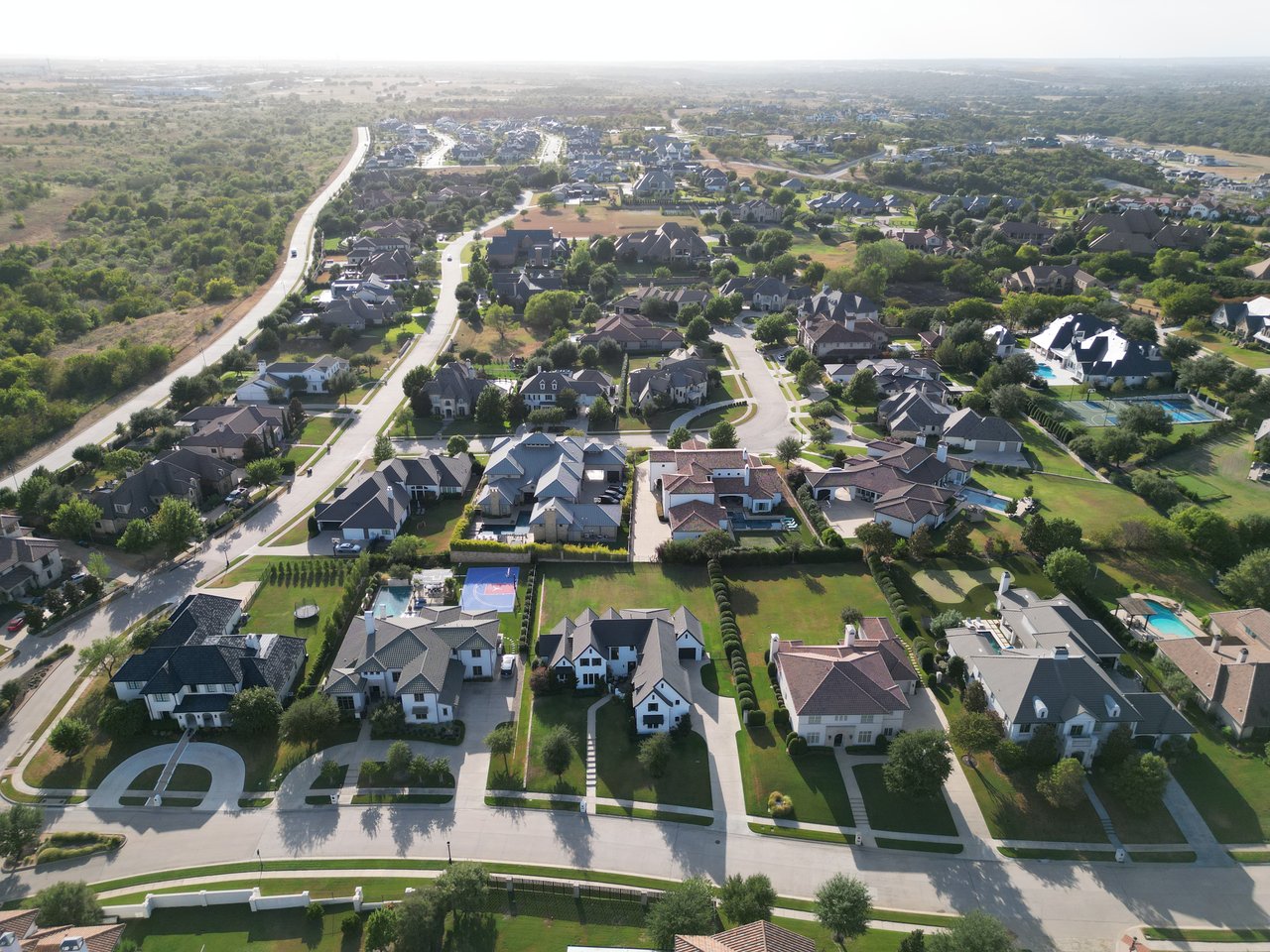
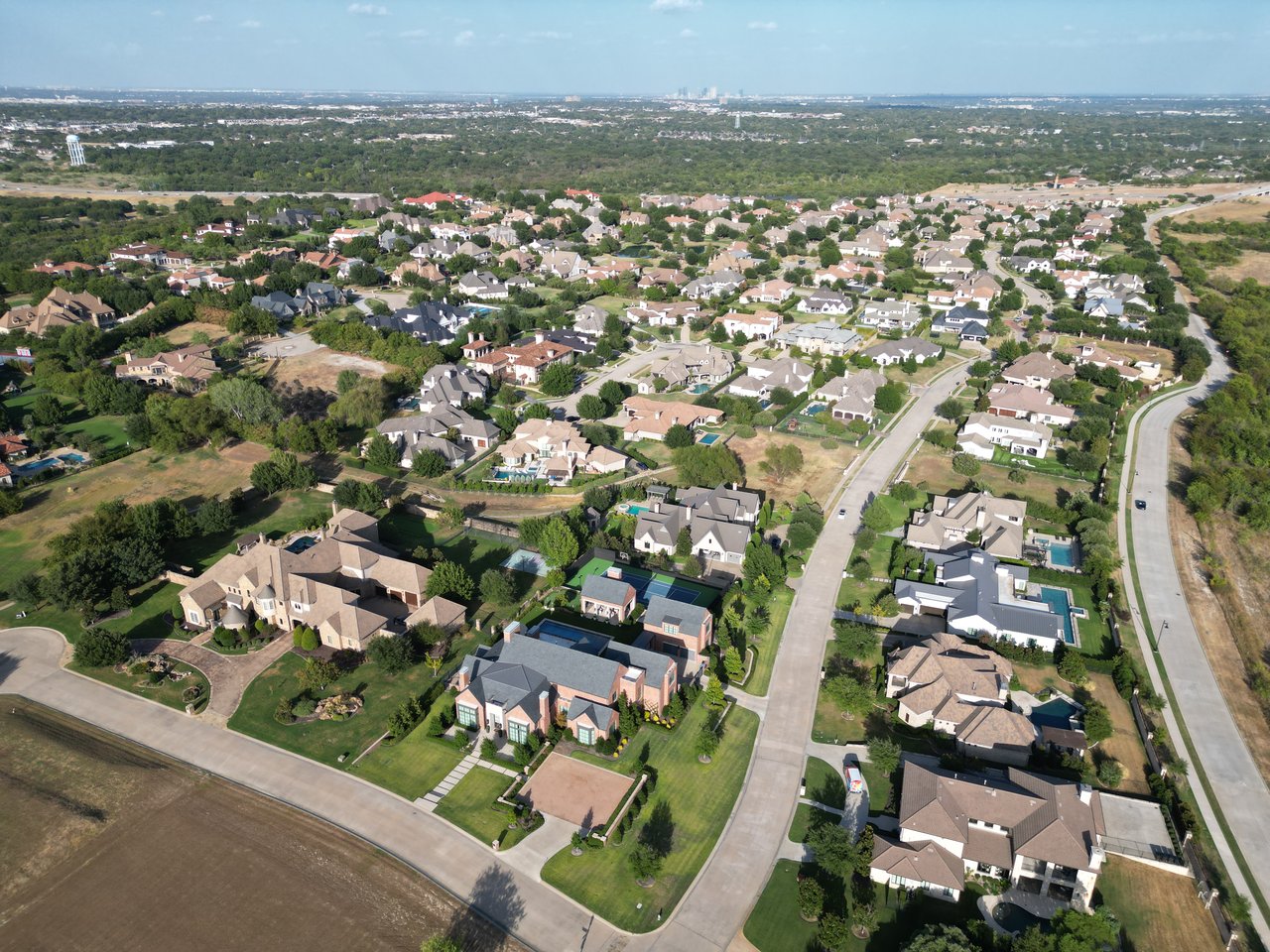
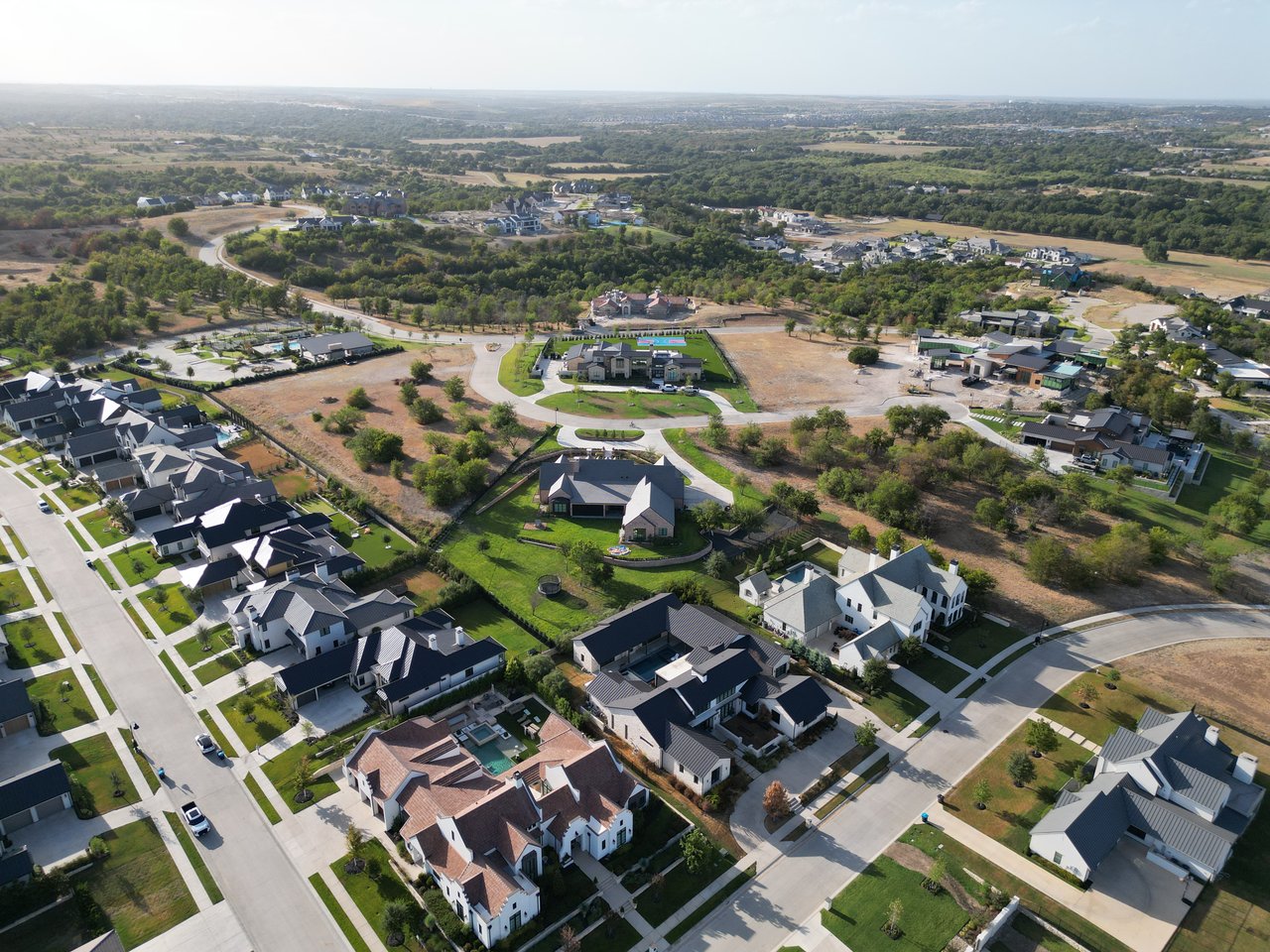
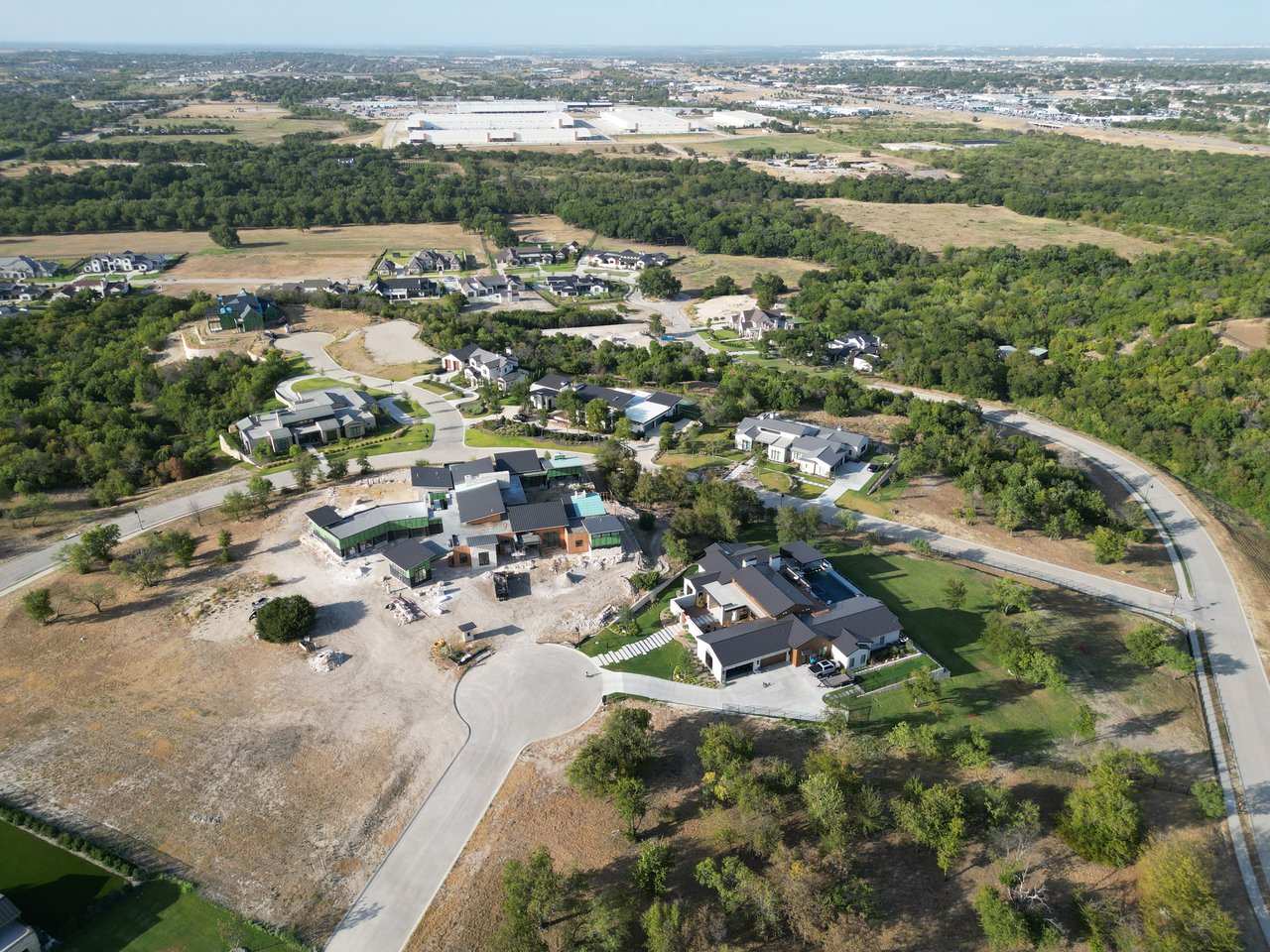
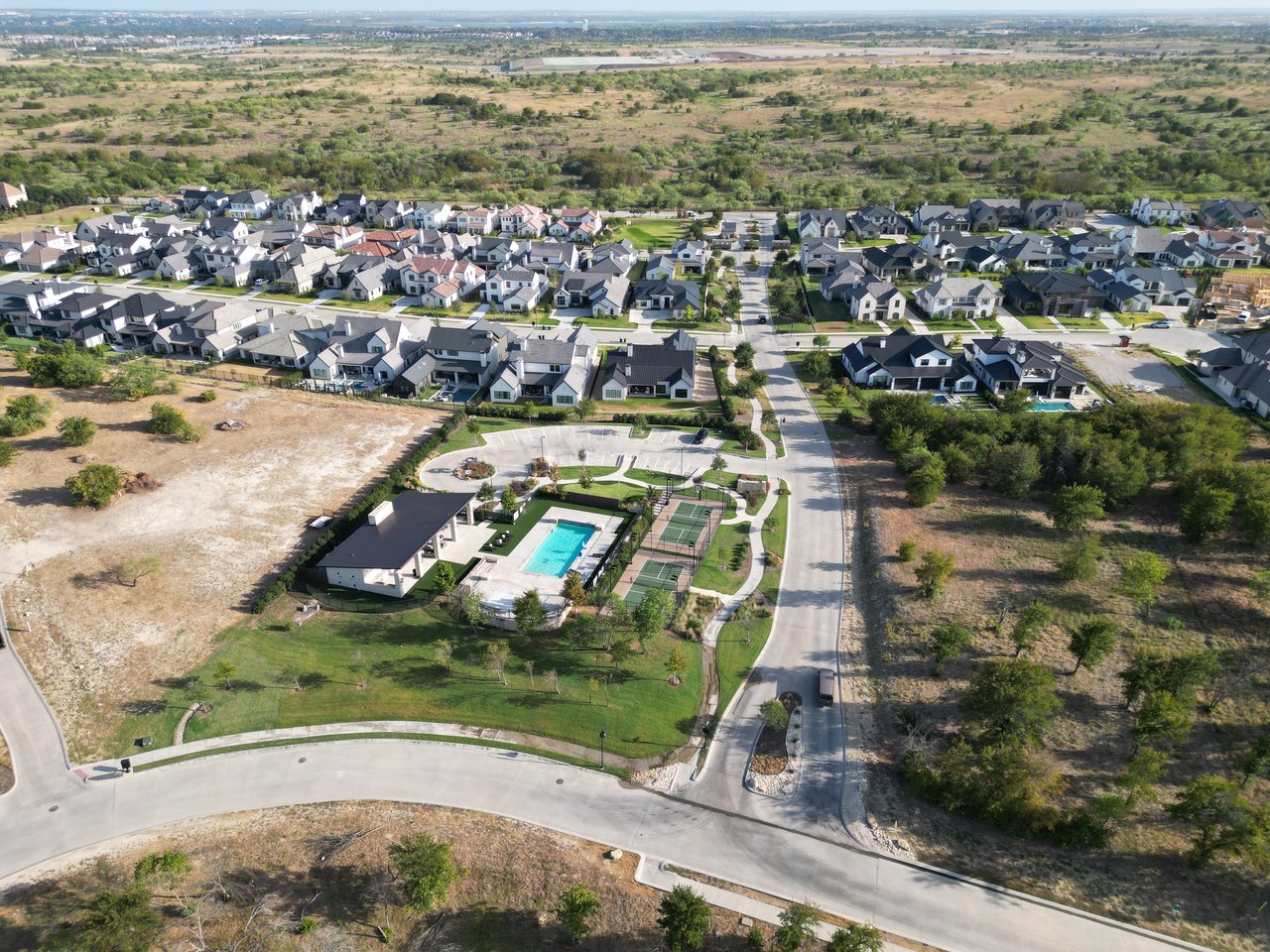
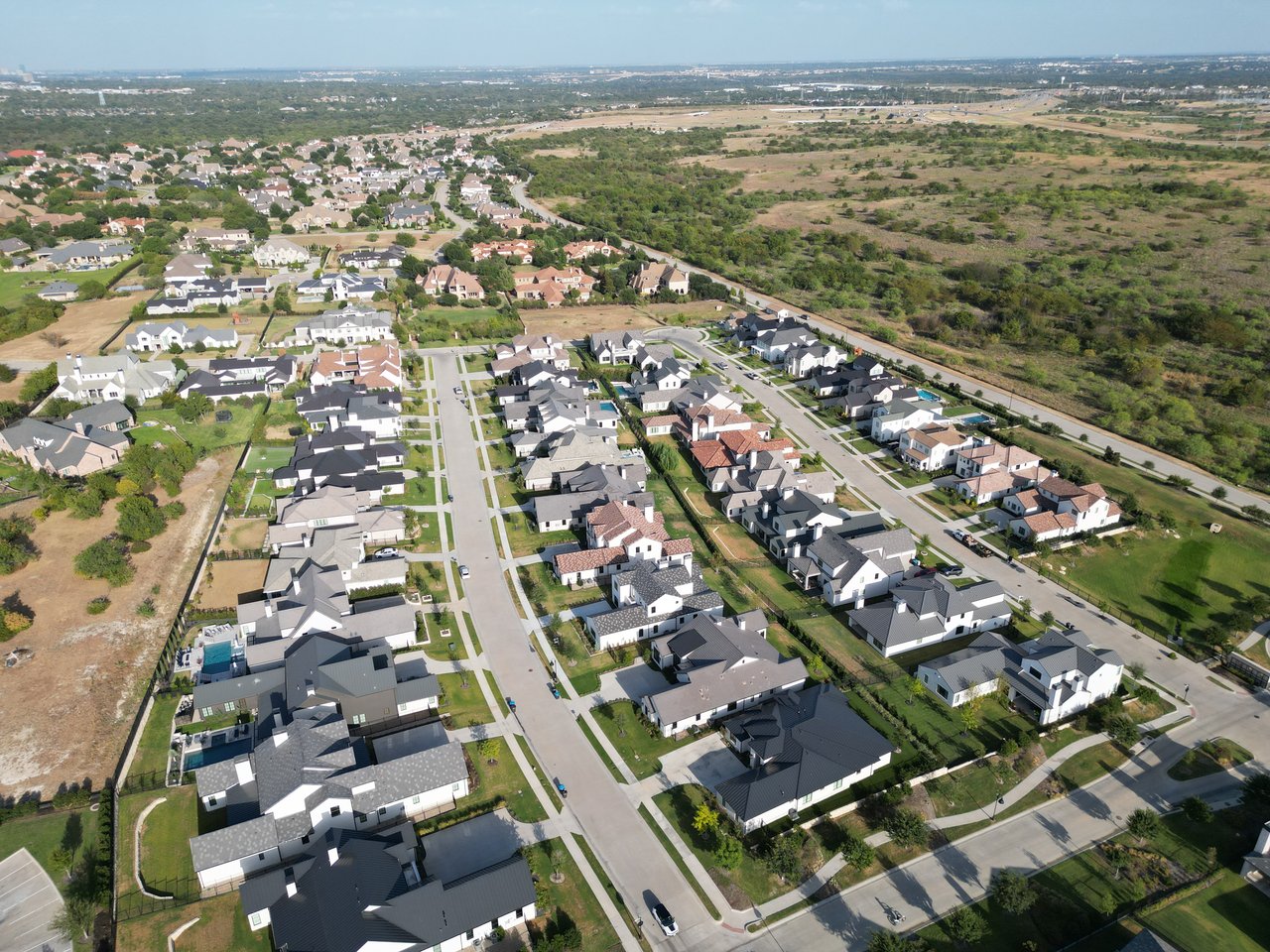
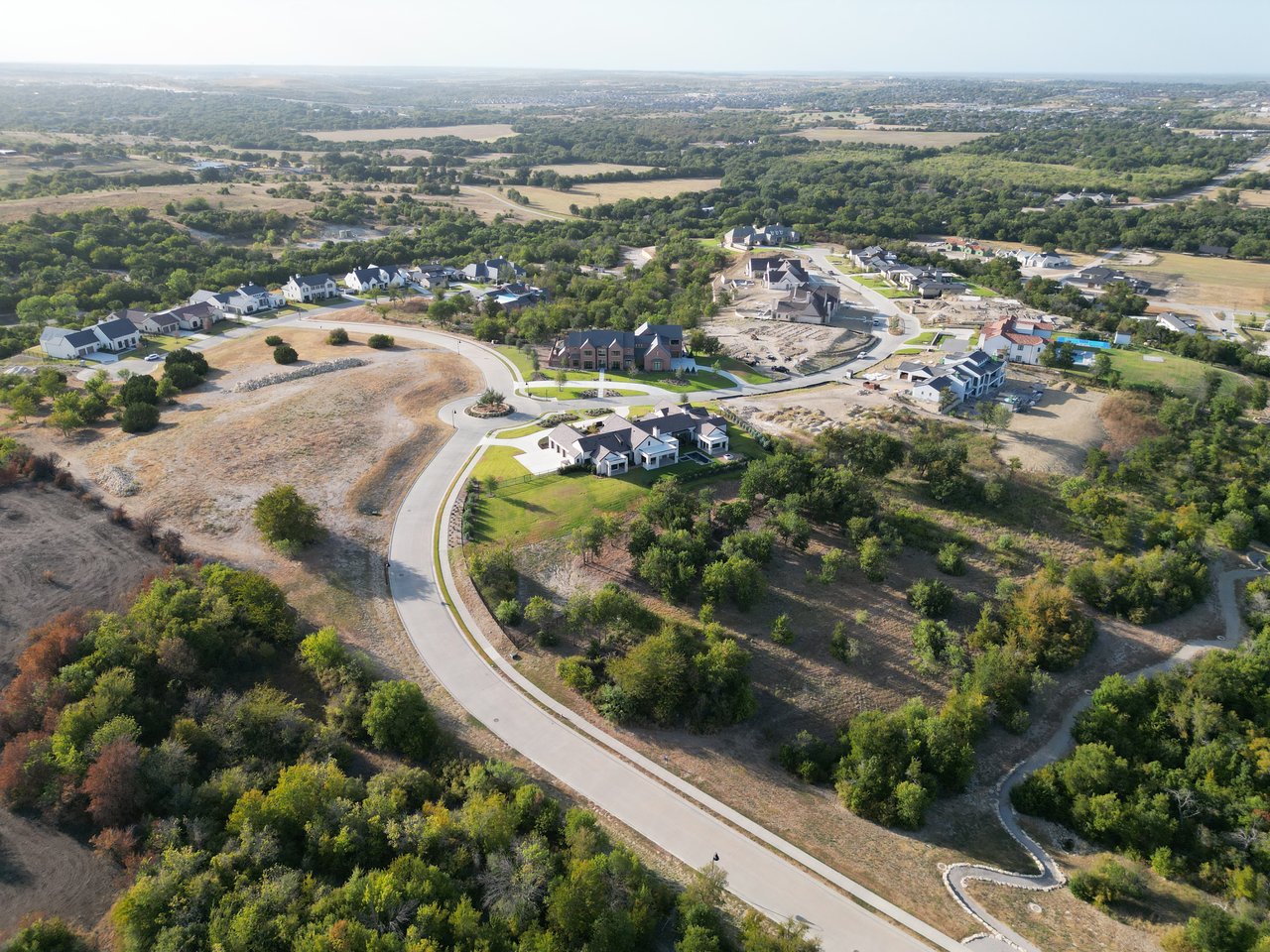
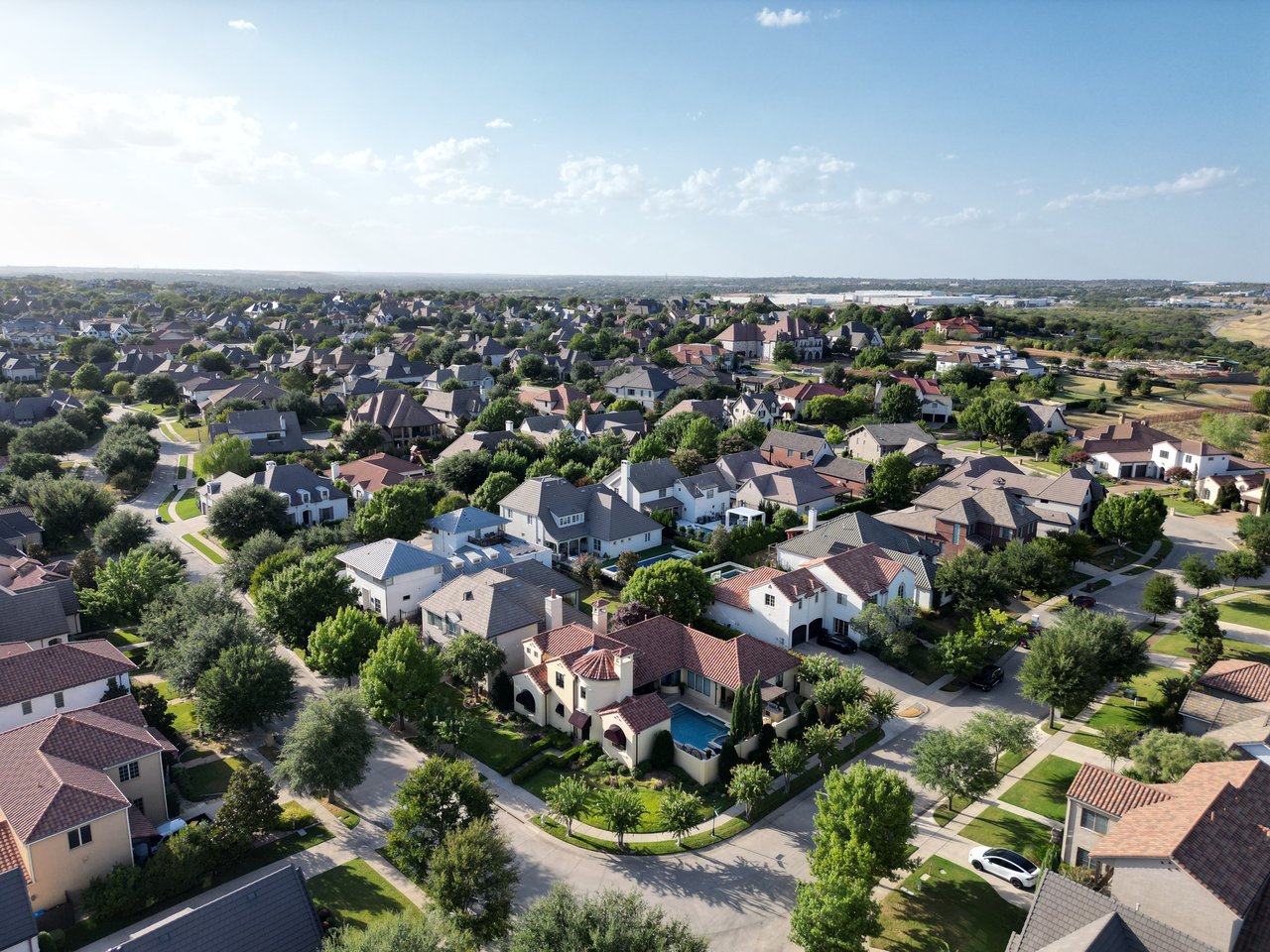
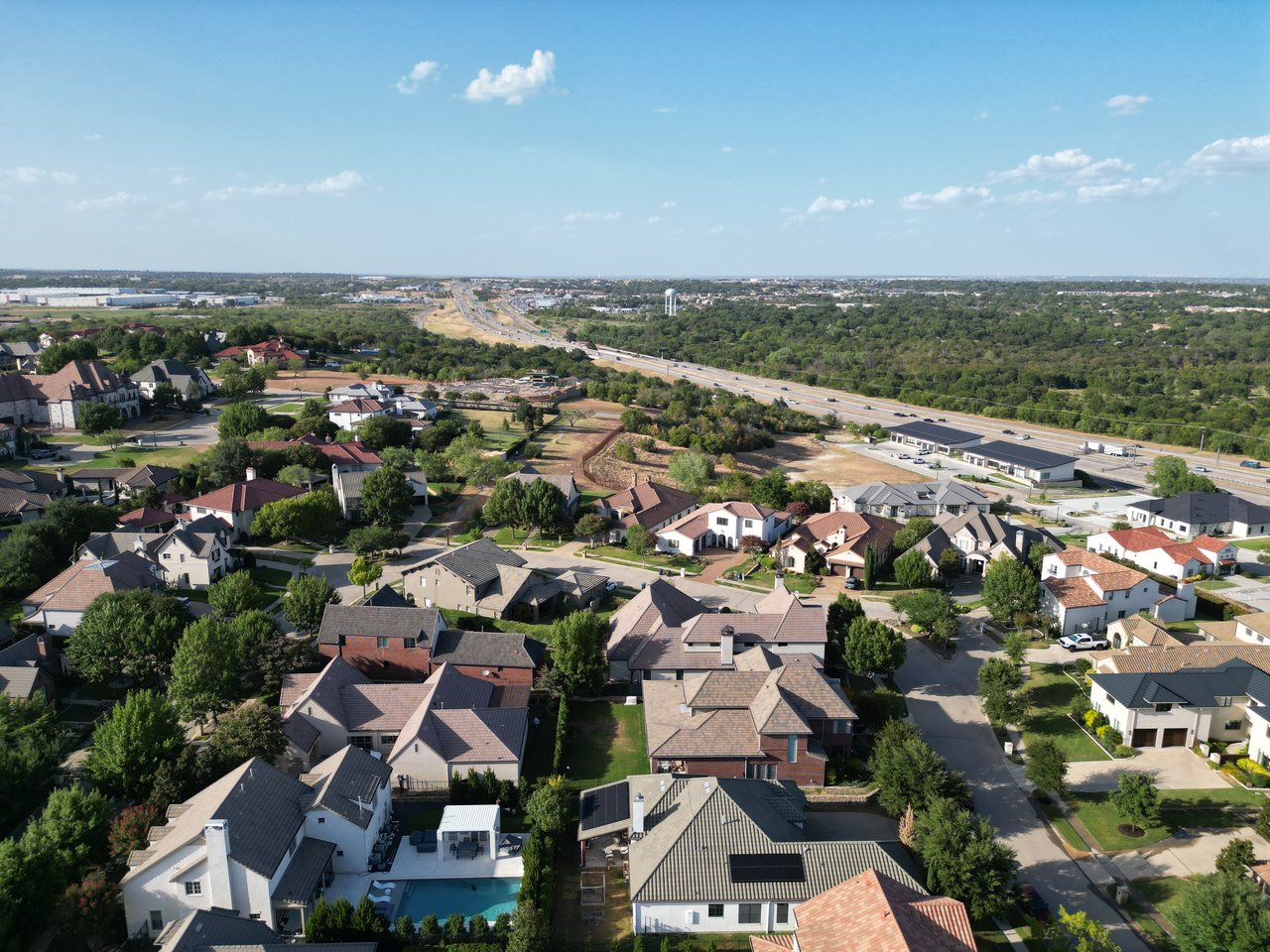
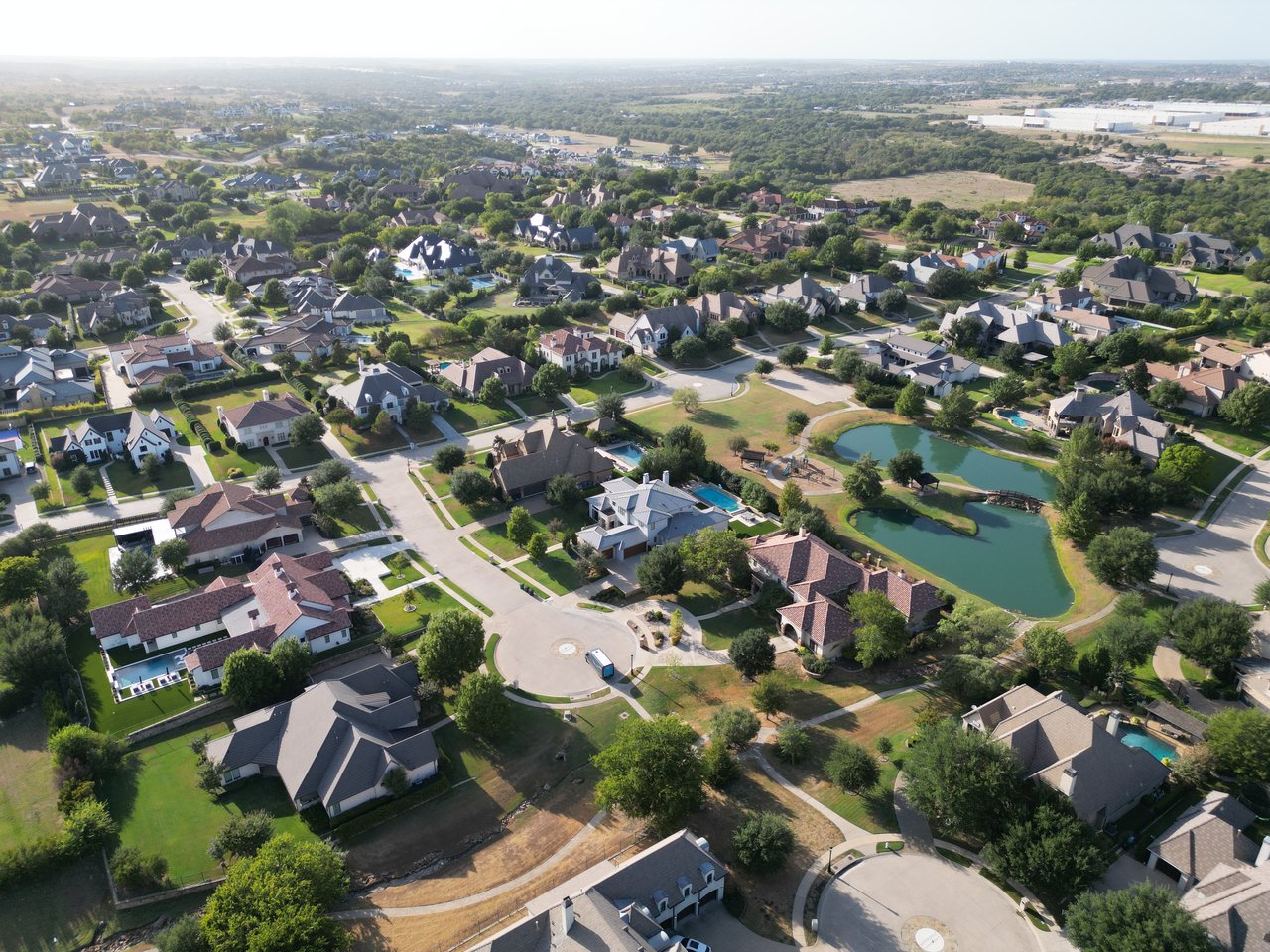
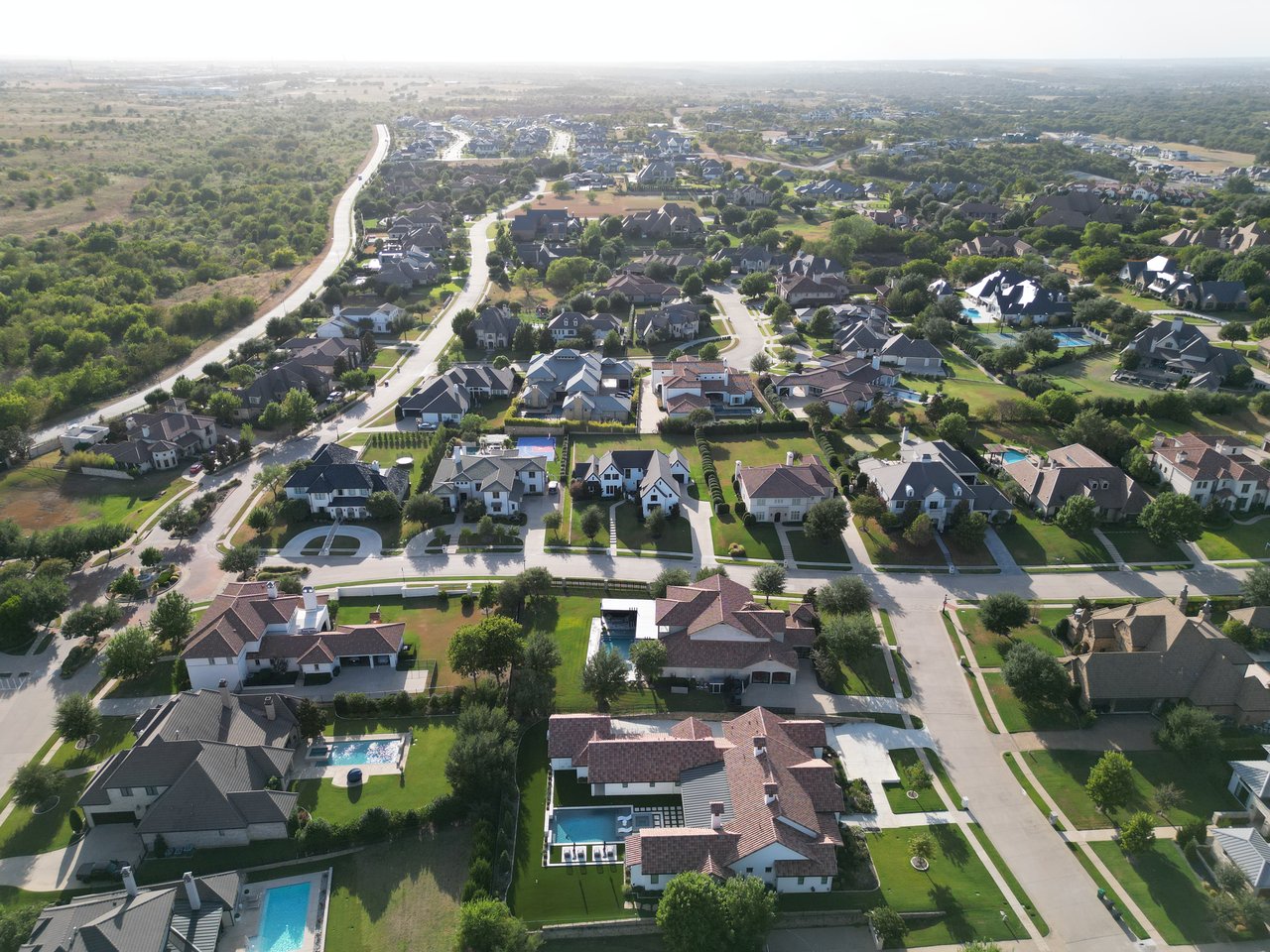
Montserrat and Montrachet are gated luxury communities on the western edge of Fort Worth, known for custom homes, dramatic topography, privacy and natural surroundings. The land here drops roughly a hundred and fifty feet from the cliff tops down to Mary's Creek, which is why the views are what they are and why no two homesites are quite the same.
The neighborhoods are adjacent, and they represent different stages of development. Both offer controlled access, substantial green space and convenient connections to I-20, I-30 and central Fort Worth — which is the trade that brings most people out here in the first place: hill-country privacy and acreage-scale lots, twenty minutes from downtown.
What most buyers don't realize is how much more than that they share.
Same developer, twenty years apart
Montserrat began development in 2003 and is essentially built out. Completed custom residences, mature landscaping, established neighborhood amenities, and the settled feel that only time produces. Its varied elevations, parks, trails and long views create meaningful differences from one property to the next — two houses of similar size and finish can be worth quite different amounts here depending on where they sit and what they look at.
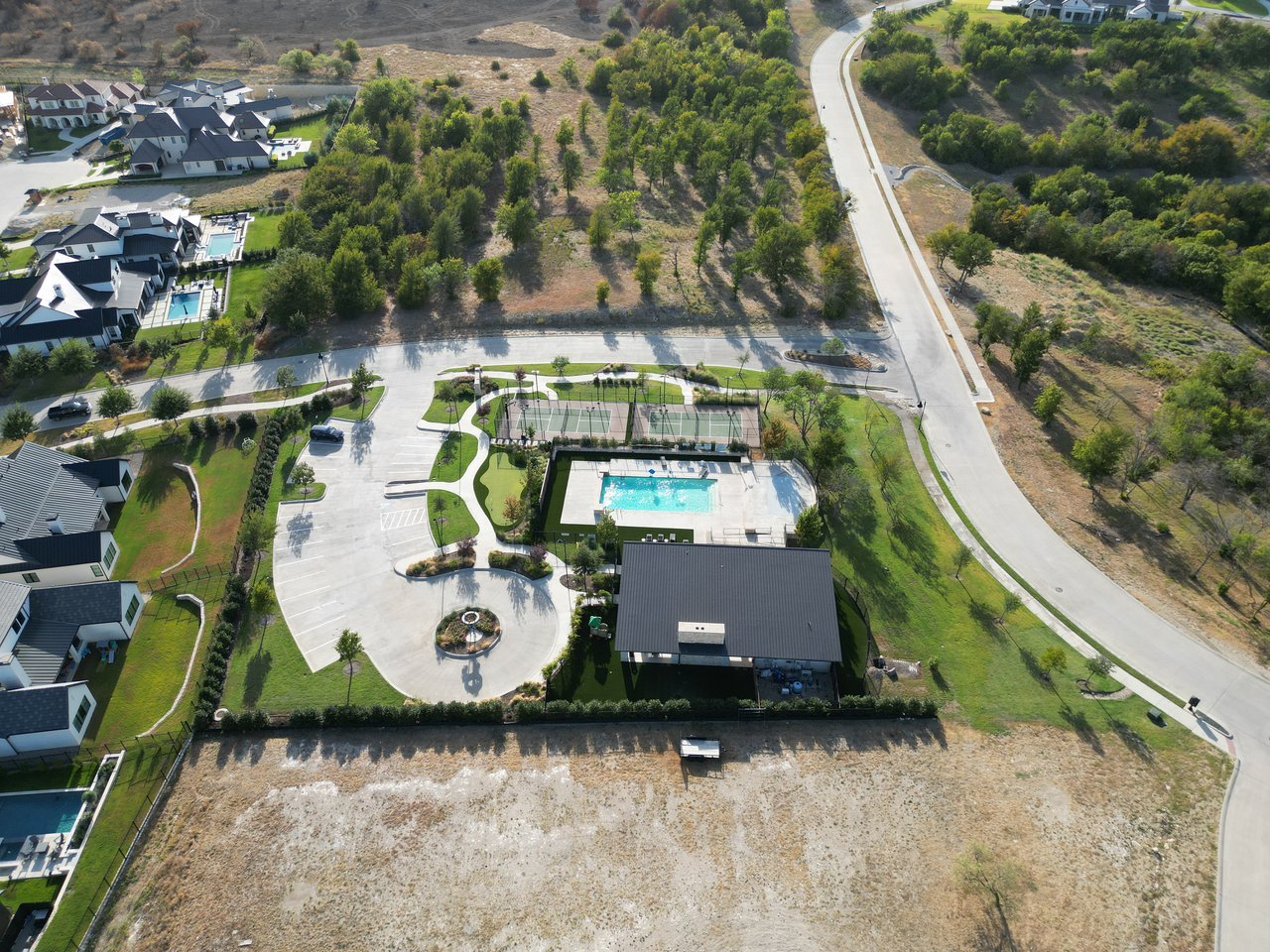
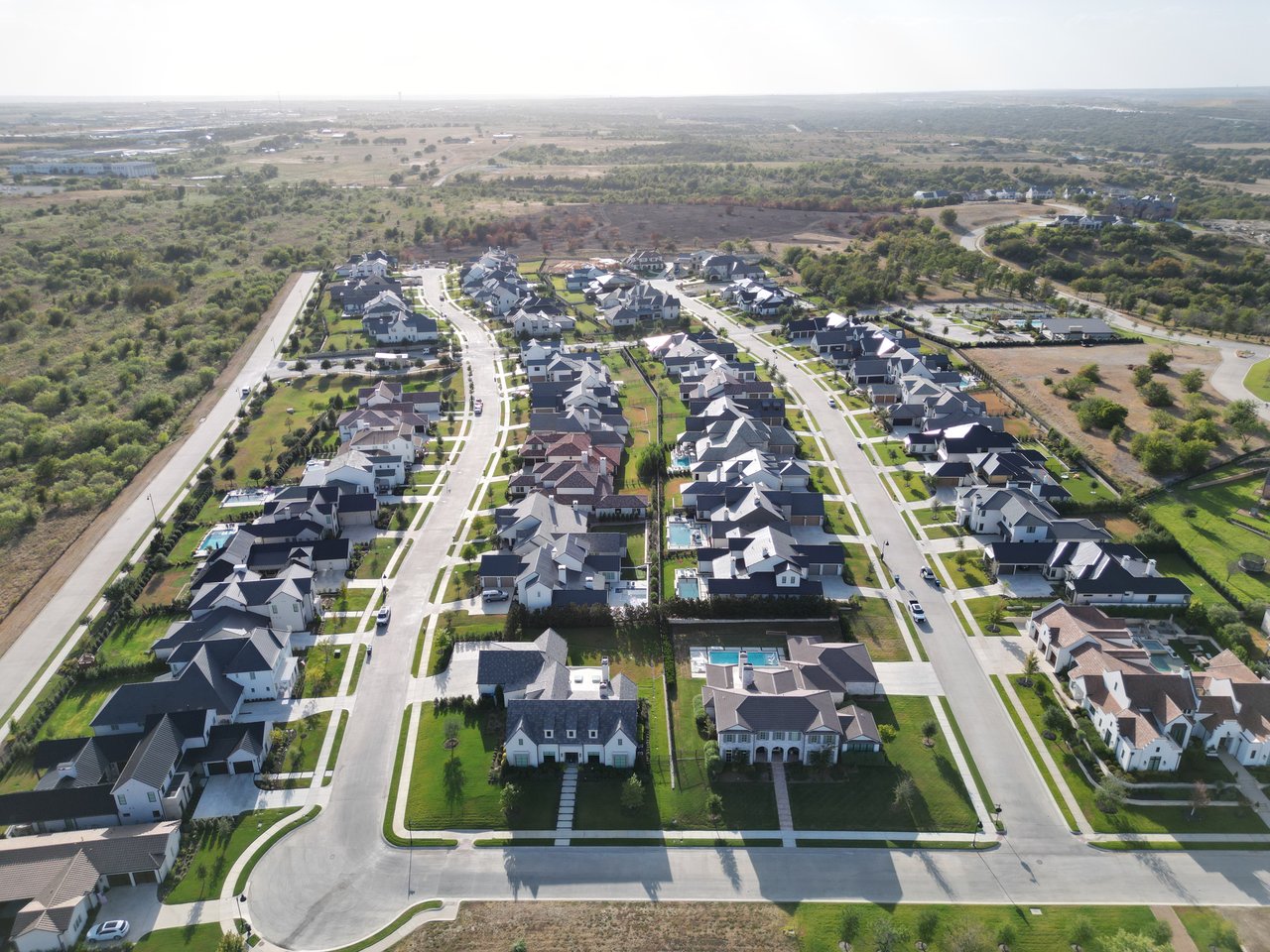
Montrachet is the sequel, on 254 acres next door, and it's developed by the same ownership — Montserrat Properties, the Siratt family. Roughly 169 homesites. A 24-hour manned guardhouse and resident entrance off FM 2871. More than fifty acres of parks and green space, miles of hiking and biking trails, a 75-year-old pecan orchard with a pavilion, a box canyon, Mary's Creek running through it, and a resort-style amenity center with a pool, cabana, firepit, putting green, pickleball and bocce. Every home clears a design review before it's built.
So this isn't two competing developments. It's one developer's second act on the land next door, which is exactly why comparing them is so useful: most of the variables that usually confound a comparison — developer, location, terrain, market, buyer pool — are held constant. What's left is mostly the difference between a finished community and one still being built.
I'm a Fort Worth broker and a Certified Residential Appraiser. Here's what the sales actually show.
What the numbers say
I pulled every listing in both communities over the two years ending September 2026 — including the ones that came off the market without selling — and ran them separately.
- Montserrat: 25 closed sales. Median close $1,650,000, median 4,754 square feet, median lot 0.53 acre, median $355 per foot, median 41 days on market.
- Montrachet: 32 closed sales. Median close $1,760,000, median 4,593 square feet, median lot 0.27 acre, median $398 per foot, median 90 days on market.
Read that as a single sentence: Montrachet costs about twelve percent more per square foot, on roughly half the land, and takes more than twice as long to sell.
That is not a criticism of Montrachet. It is what new construction looks like from the outside, everywhere. A new home carries a premium for being new — current design, nothing deferred, warranty coverage — and the market charges for it in two currencies: price per foot, and time. The builder or seller of a new home is usually waiting longer for a buyer, and pricing accordingly.
The land difference is the more consequential half of it, and it's a median, not a rule. Montrachet's homesites run from about a quarter acre to more than an acre and a half; Montserrat's closed sales ranged from 0.19 to a full acre. But the typical Montrachet home that has sold so far sits on half the ground of the typical Montserrat home — because the sections that have built out first are the smaller-lot sections.
The finding I'd want a buyer to have
Here's something I did not expect, and it changes how you should read any per-foot number in Montrachet.
In Montrachet, price per square foot goes up with lot size — steeply.
- Homes on lots under a third of an acre: median $376 per foot
- A third to two-thirds of an acre: median $439
- Over an acre: median $642
The correlation between lot size and price per foot in the closed sales is 0.86, which for a residential dataset is very strong. Montserrat shows the same slope more gently — $330 a foot under a third of an acre, $444 over two-thirds.
This runs against how price per foot normally behaves, and I've written about the normal case elsewhere. In most Fort Worth subdivisions, larger homes carry a lower price per foot, because a kitchen and a roof and a foundation don't scale with size — in one subdivision I analyzed, that slope ran from $239 down to $175. In Walsh, where the homesite scales with the house, the slope is essentially flat.
Montrachet is the third case: the land is such a large share of the value that it overwhelms the construction-cost effect entirely. A quarter-acre lot and a one-acre lot in here are not the same product, and averaging them produces a number that describes neither.
Practically: if anyone hands you a price per foot for “Montrachet,” ask what lot size it came from. The honest answer determines whether it's useful or actively misleading.
Three neighborhoods inside one subdivision name
This is the structural reason for that slope, and it's the thing the MLS will not tell you.
Montrachet is planned as three distinct residential areas: The Terrace, the cliff-side view lots; The Grove, large trees and ranchette-scale homesites; and The Park, smaller lots on tighter streets. Homesites have been offered from roughly $230,000 to $2 million.
An eight-to-one spread in land value inside one community. And in the MLS, all three file under the same subdivision name — which means every automated valuation, every Zestimate, and every per-foot average for “Montrachet” blends a quarter-acre Park lot with a multi-acre Terrace homesite.
Montserrat has its own version of this, if less extreme: varied elevations, parks and trails mean that lot position, view and orientation create real and permanent differences between otherwise comparable houses. Its closed sales over two years ran from $825,000 to nearly $2.9 million, and from $215 to $489 a foot. That is not one market either.
What the market is actually doing
Worth setting the context, because these two are among the few neighborhoods where I can demonstrate a rising market rather than assert one. Across 57 closed sales, price per square foot has risen 9.2% a year once you control for house size — and, importantly, for which of the two communities the sale was in, since Montrachet prices higher than Montserrat and a shifting mix could otherwise manufacture a trend that isn't there. It survives that control at p = 0.016. Both communities rose.
For context, among the eighteen Fort Worth neighborhoods I measure, none shows a statistically significant decline in price per foot, and only four can show a confirmed rise. These are two of them. What changed since 2022 is time on market, not value — and with ten to sixteen sales a year here, the opening number still carries most of the weight.
The tax situation, which catches people
The combined 2025 rate here runs about 2.16% — Fort Worth ISD at 1.0291, City of Fort Worth at 0.67, Tarrant County at 0.1862, plus hospital and college district levies. There is no PID assessment, which is worth knowing: Walsh, west of here, runs about 2.69% once its PID is counted, and Bella Flora runs about 1.73%.
But the rate is not the trap. The trap is the assessment.
A new-construction homesite sits on the tax roll at land value only until the improvement is captured. I've looked at parcels in here carrying an assessed value of about $157,000 and an annual tax bill under $3,500 — while the finished home on that lot was listed north of $1.6 million. Across Montrachet's closed sales, reported annual tax figures ranged from roughly $4,000 to over $40,000, and that ten-fold spread is almost entirely land-only parcels versus fully assessed ones.
Once that home is on the roll at market value, at 2.16%, the bill is roughly $37,000 a year. If your lender escrowed off the land-only figure, your payment does not go up by a little. I wrote about exactly this — the escrow jump, and what to do about it — in the first year in a new build, and about what Fort Worth's growth has done to tax bills more generally.
Ask your lender to escrow off the expected assessed value, not the current one. It is a five-minute conversation that prevents a five-figure surprise.
Schools
Every listing I reviewed in both communities — all of them — is assigned to Fort Worth ISD.
I mention it because buyers shopping the west side often assume anything out this direction is Aledo ISD, and here it simply isn't. That's a difference worth understanding rather than discovering. Verify the specific campus assignment for any address with the district before you write an offer; boundaries move.
HOA, access and what you're paying for
Montrachet dues run about $5,500 a year. Montserrat's cluster mostly around $4,800, with some sections lower.
Both communities have controlled access; Montrachet's is a 24-hour manned guardhouse with patrols. Montrachet's dues also carry a much larger amenity load relative to its current household count — a resort-style amenity center with pool, cabana, firepit, putting green, pickleball and bocce, plus fifty-plus acres of parks and trail maintenance. Some of that is the ordinary cost of a community still filling in, where fewer households are carrying a fully built amenity package.
If you're building in Montrachet
Buying a homesite is a different transaction from buying a house, and the costs that surprise people are the ones between those two things:
- Site preparation. This is dramatic terrain. A view lot on The Terrace may require retaining, engineered foundation work, and significant excavation before a slab is poured. Get a builder's site-cost estimate on the specific lot before you buy the lot, not after.
- Architectural review. Design guidelines govern what you can build. Confirm your plan and your builder clear review before you're committed to either.
- Your builder's contract. Custom and semi-custom builder agreements carry the same provisions I've written about in what's actually in a builder's contract — completion timing, allowance structure, change-order pricing, tax proration and warranty terms. Read those before the plan selection, not after.
- Construction timeline, and what it costs you. Carry costs, rate locks and a rent-or-sell decision on your current home all run on the builder's schedule.
- What gets built next to you. In a community still under construction, ask what is planned for the lots you can see from your future back yard, and when.
Pricing a custom home when there are no comparables
Custom luxury properties are difficult to compare, because differences in land, views, construction quality, amenities and design substantially influence value. That's true everywhere. Here it shows up in how many listings come off the market without trading.
Over the past two years, roughly a third of Montserrat listings and forty percent of Montrachet listings came off the market without selling — cancelled or expired. In Montrachet the upper quartile of closed sales spent more than 160 days on the market before closing, and the homes currently sitting longest are concentrated in the smallest-lot tier — the segment with the most competing inventory and the least land to differentiate it.
That number reads worse than it is. At this price point the owner usually holds substantial equity and has no deadline, so when a listing doesn't produce the number, the house comes off the market rather than down in price. Withdrawing is an option these owners can afford, and a lot of them take it. It is not the same thing as a house nobody wanted.
What it does mean is that the list price carries real weight. With ten to sixteen closed sales a year in each community, there is not much evidence to argue with, and a number set by construction cost or by feel can take months to test.
What helps: comparables drawn from the right tier — the right community, the right lot class, the right view exposure — a defensible accounting of what the land and the view actually contribute, and a realistic read on the competing new inventory. That is appraisal work, and it is most of what I do here.
Buying, building or selling in Montserrat or Montrachet
Holding both a Texas broker's license and a Certified Residential Appraiser certification is the reason I'm useful in communities like these. Nearly every question here — what the lot is worth, what the view is worth, what the finish level is worth, whether that sale down the street is actually a comparable — is a valuation question wearing a real estate hat.
For sellers, that means pricing, preparation and marketing strategy grounded in market evidence rather than hope. For buyers and for anyone considering building, it means a clear read on the homesite, the builder, the improvements, the land and the long-term resale position before you're committed.
If you're early, that's the right time to call.
Call or text (682) 207-4310, or send me a note.
Sales figures are medians from NTREIS listings and closed sales for the two years ending September 2026, reported in aggregate. Tax rates, HOA dues, lot pricing and school assignments change — confirm current figures for a specific property before relying on them.