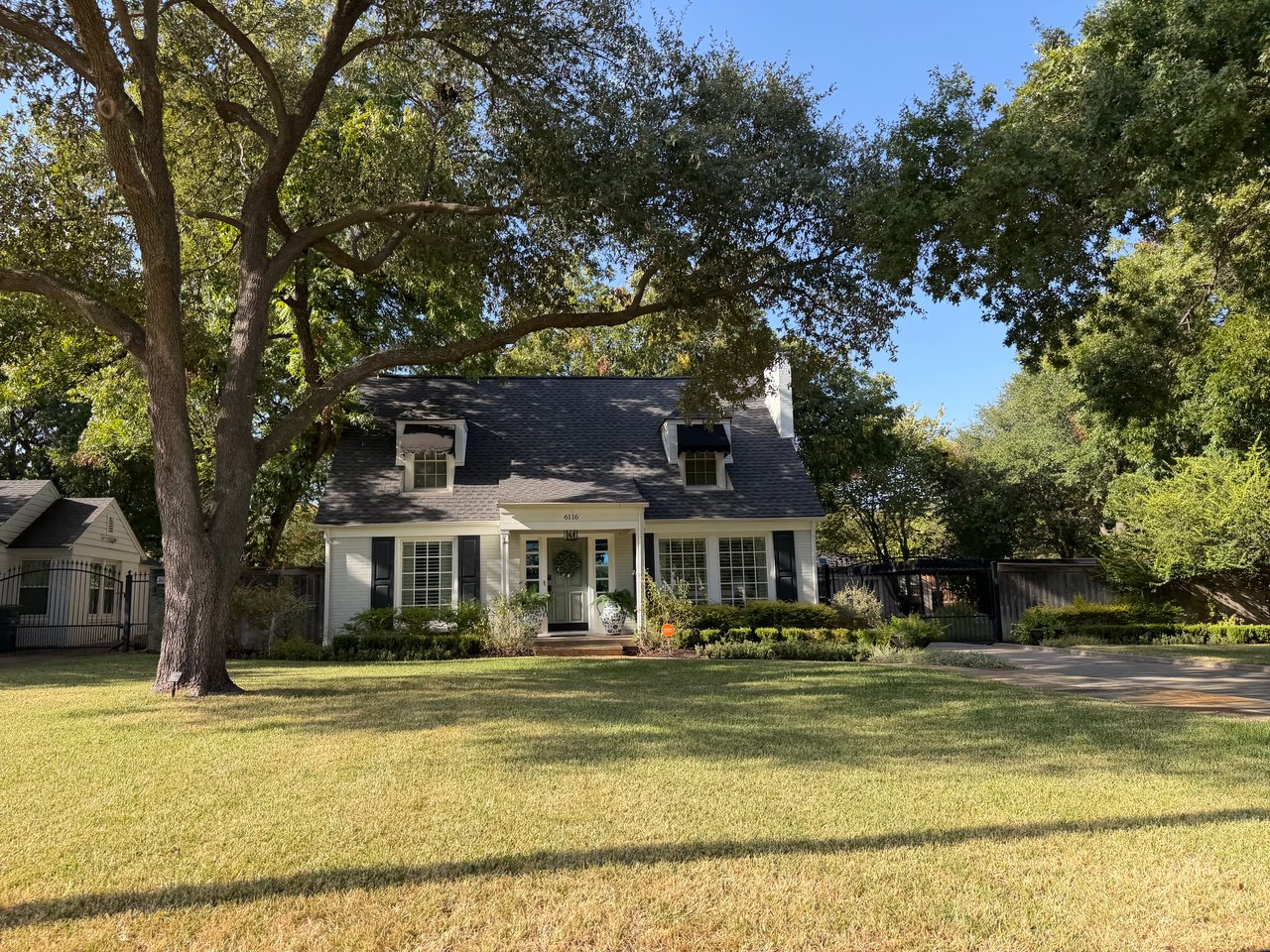
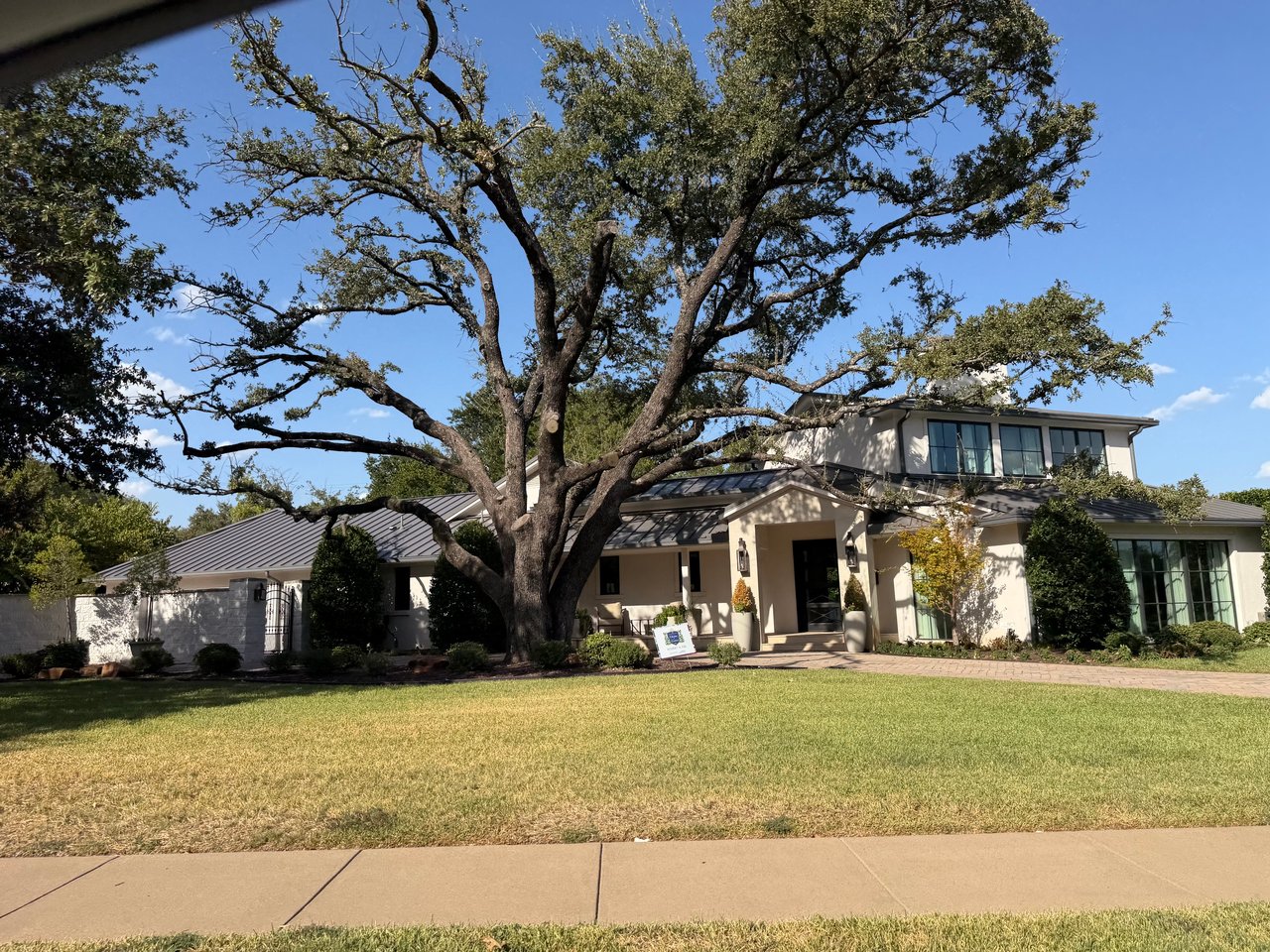
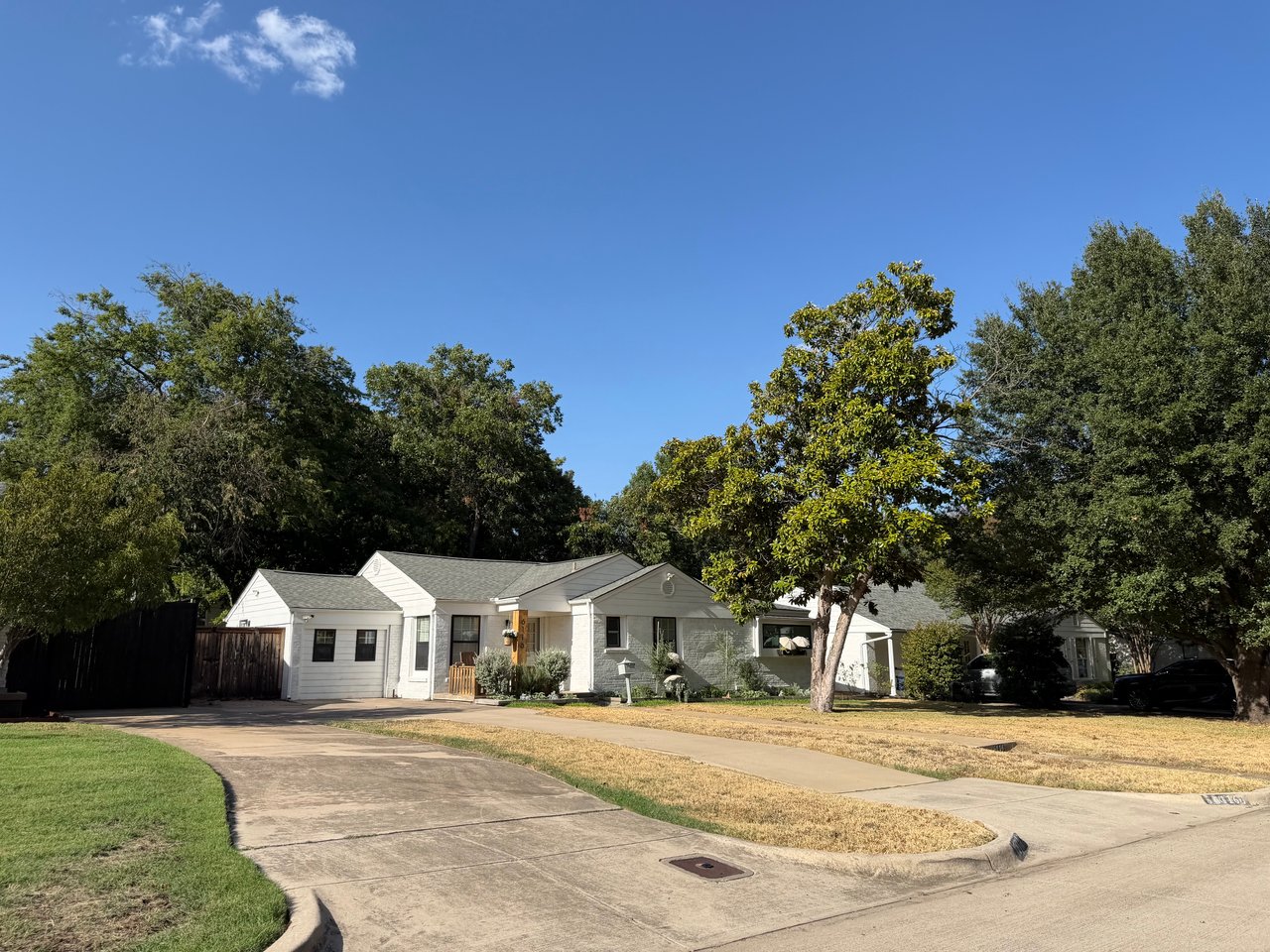
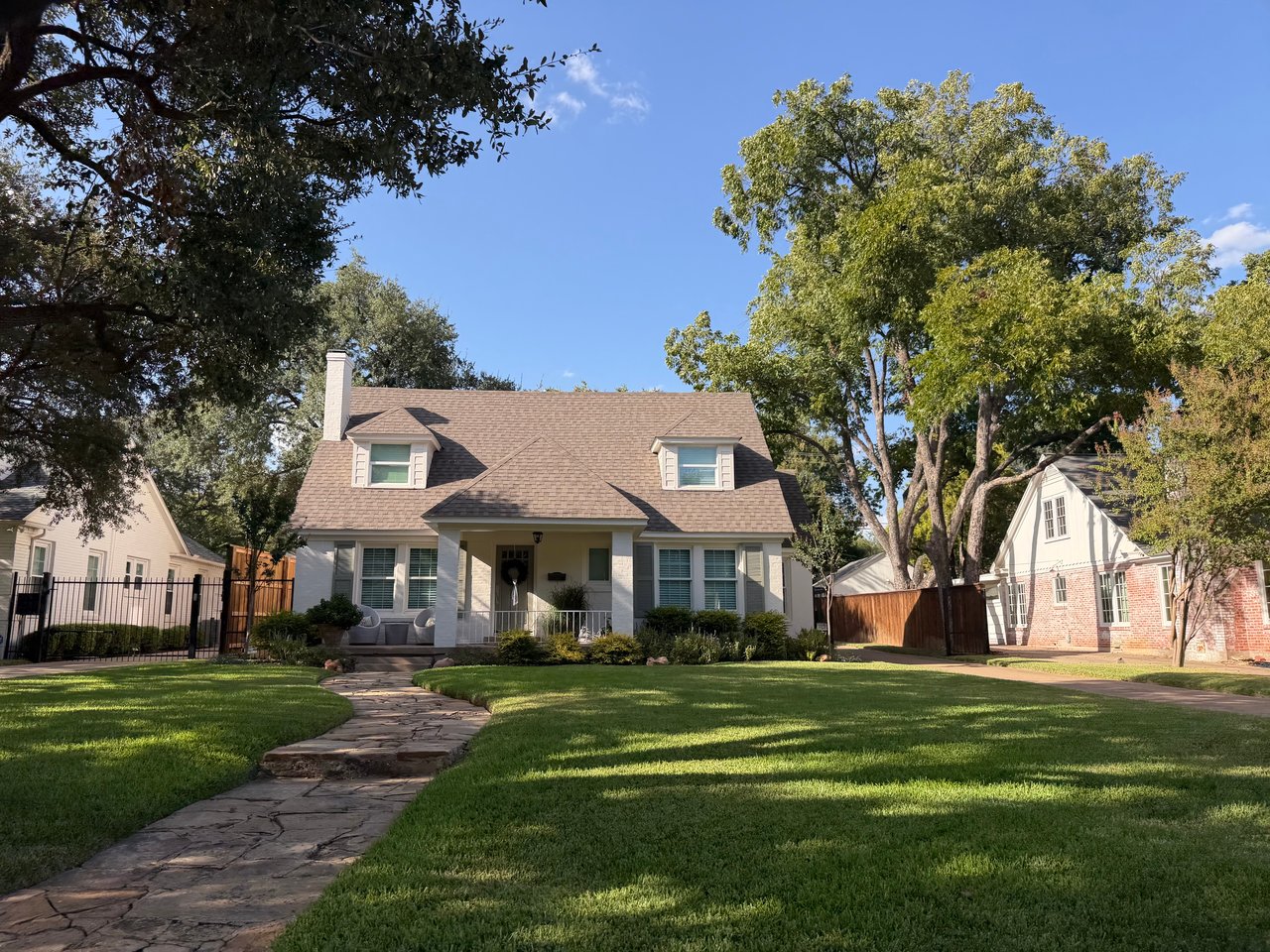
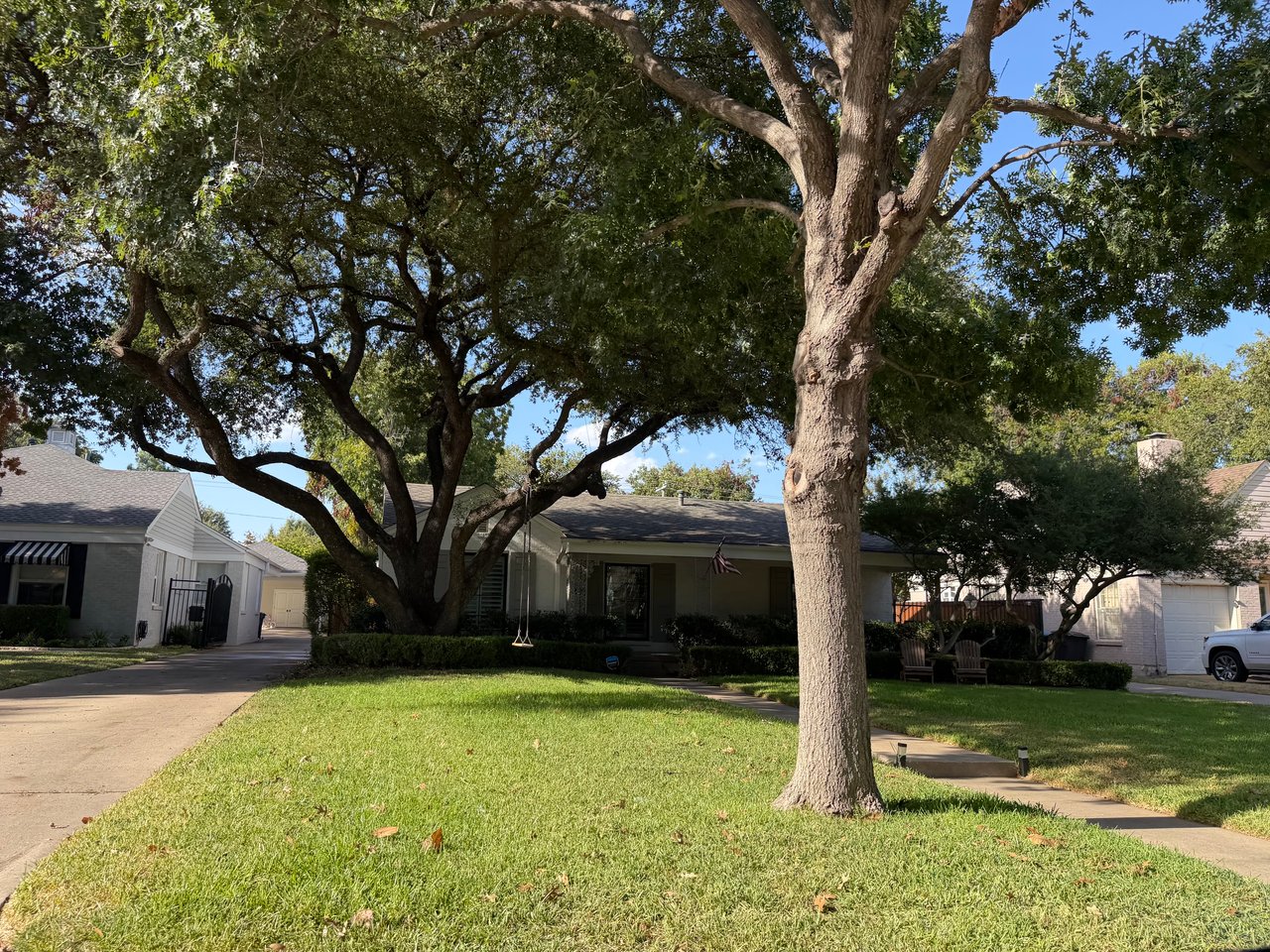
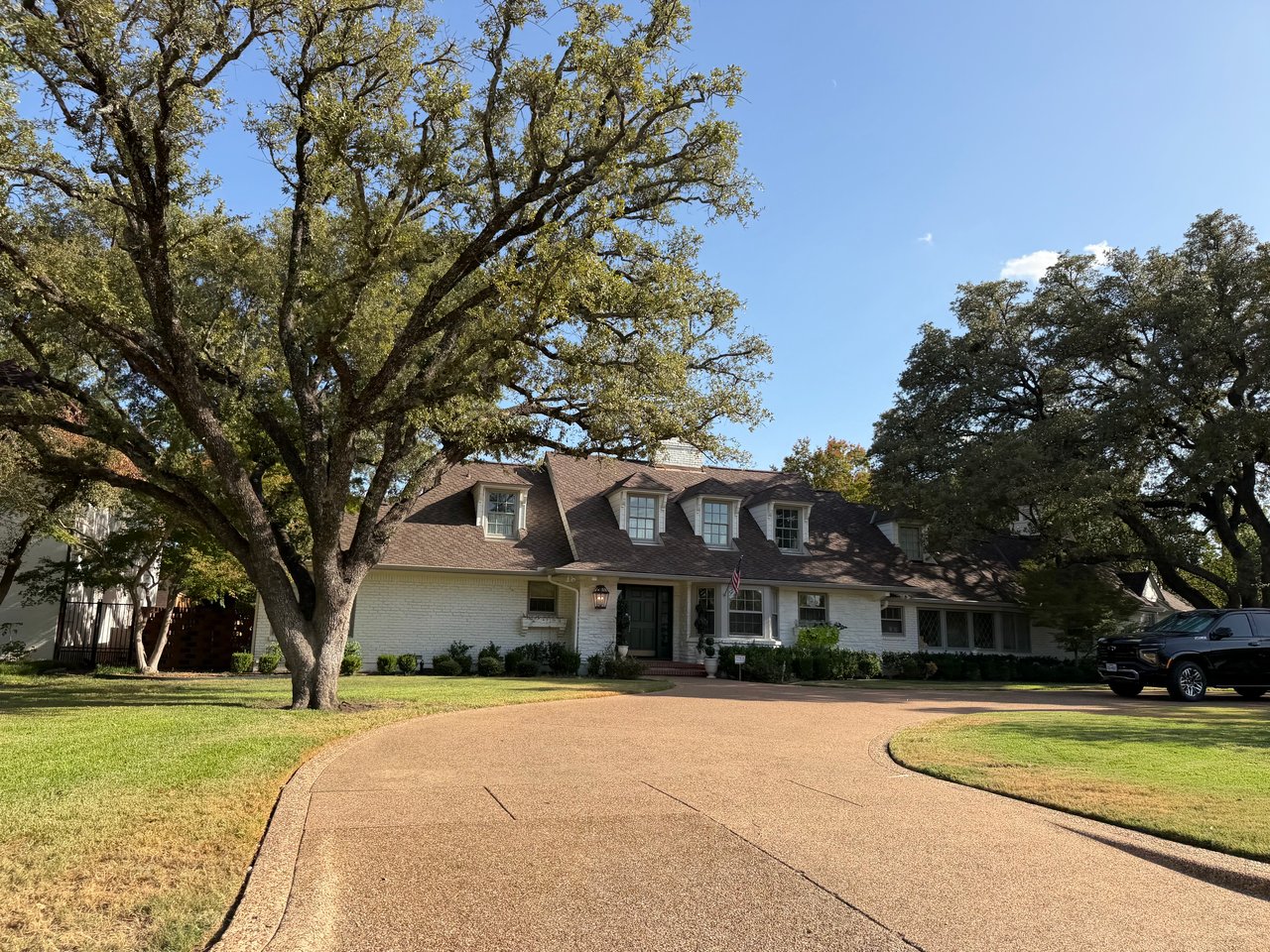
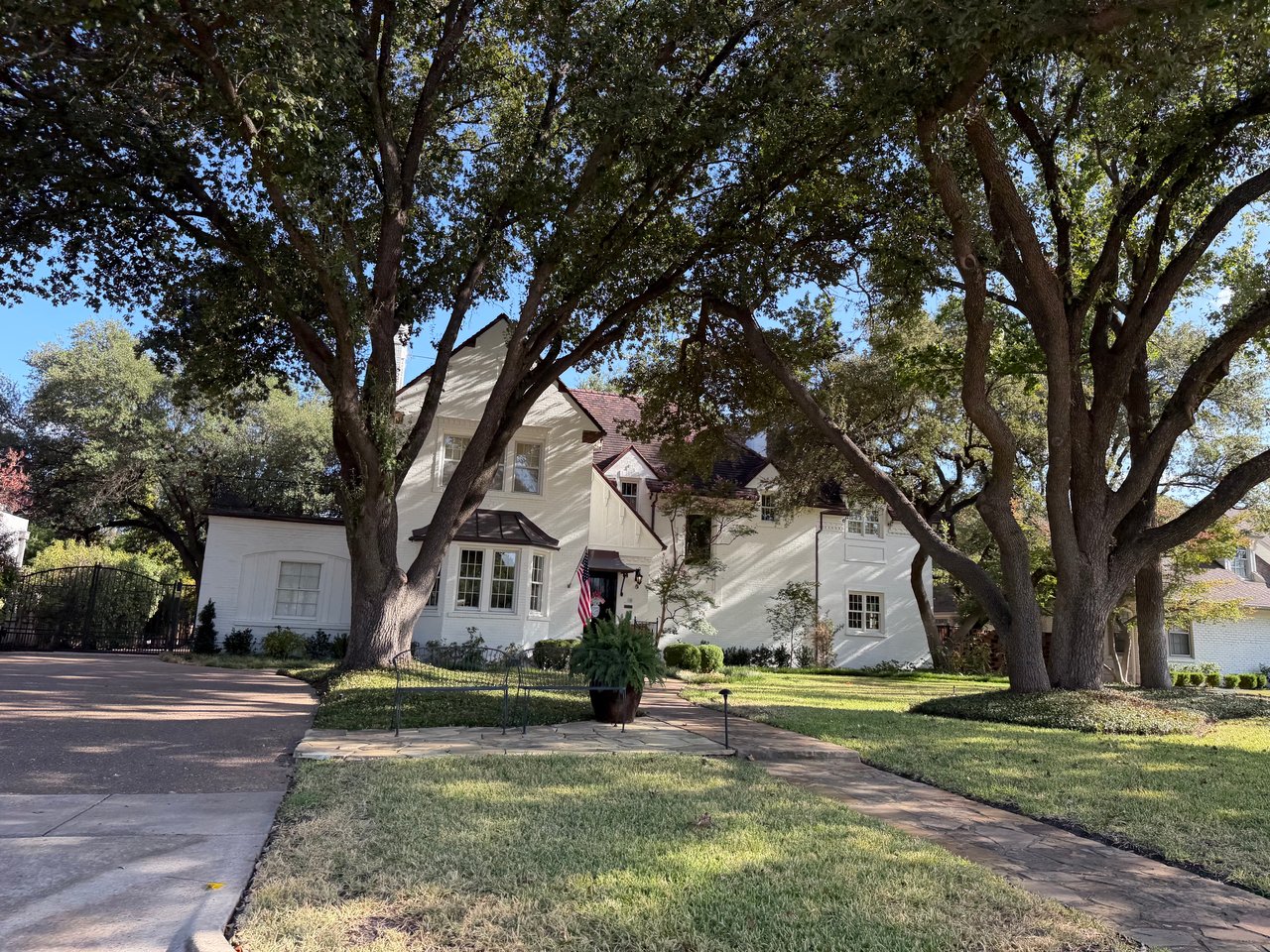
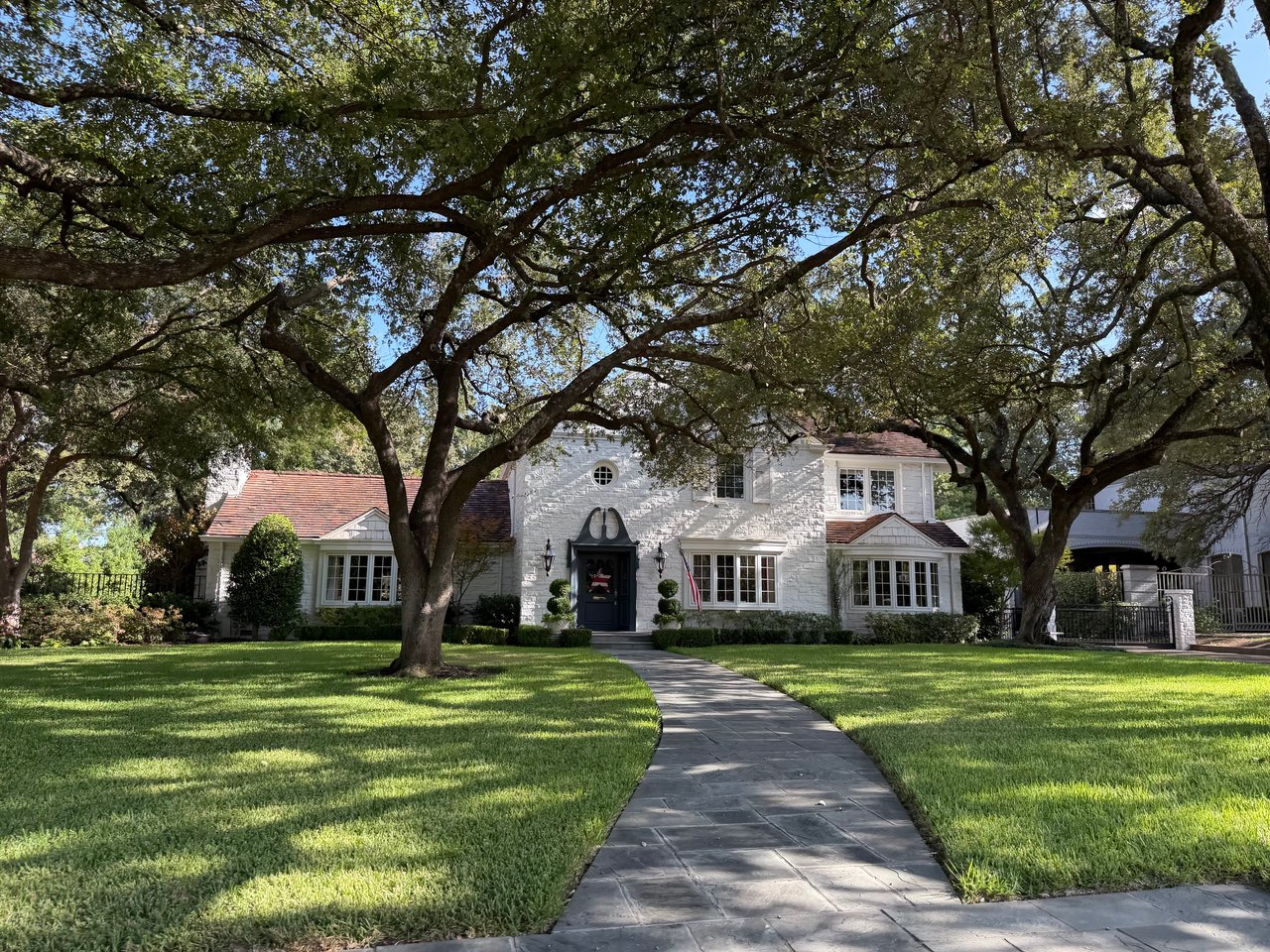
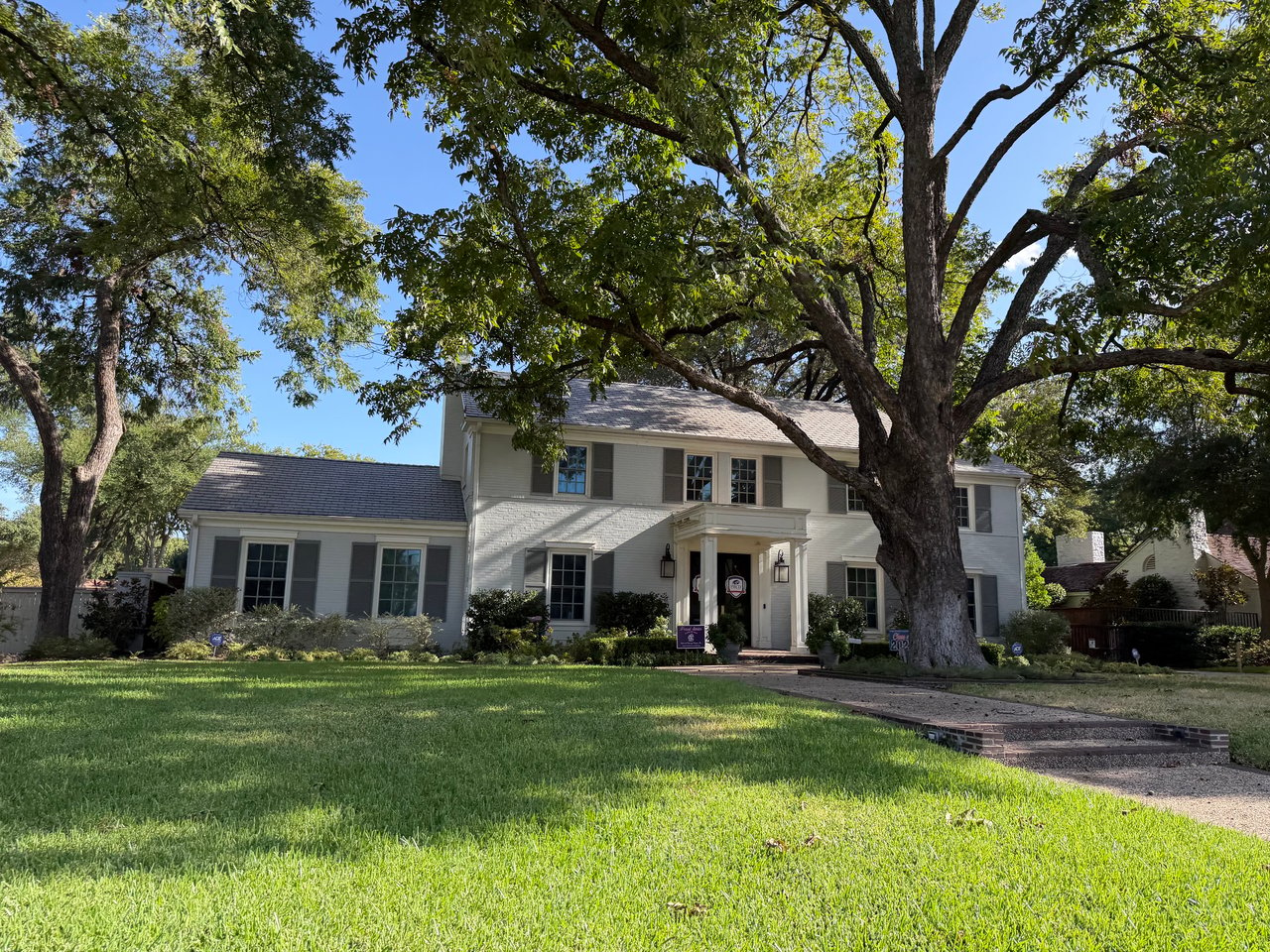
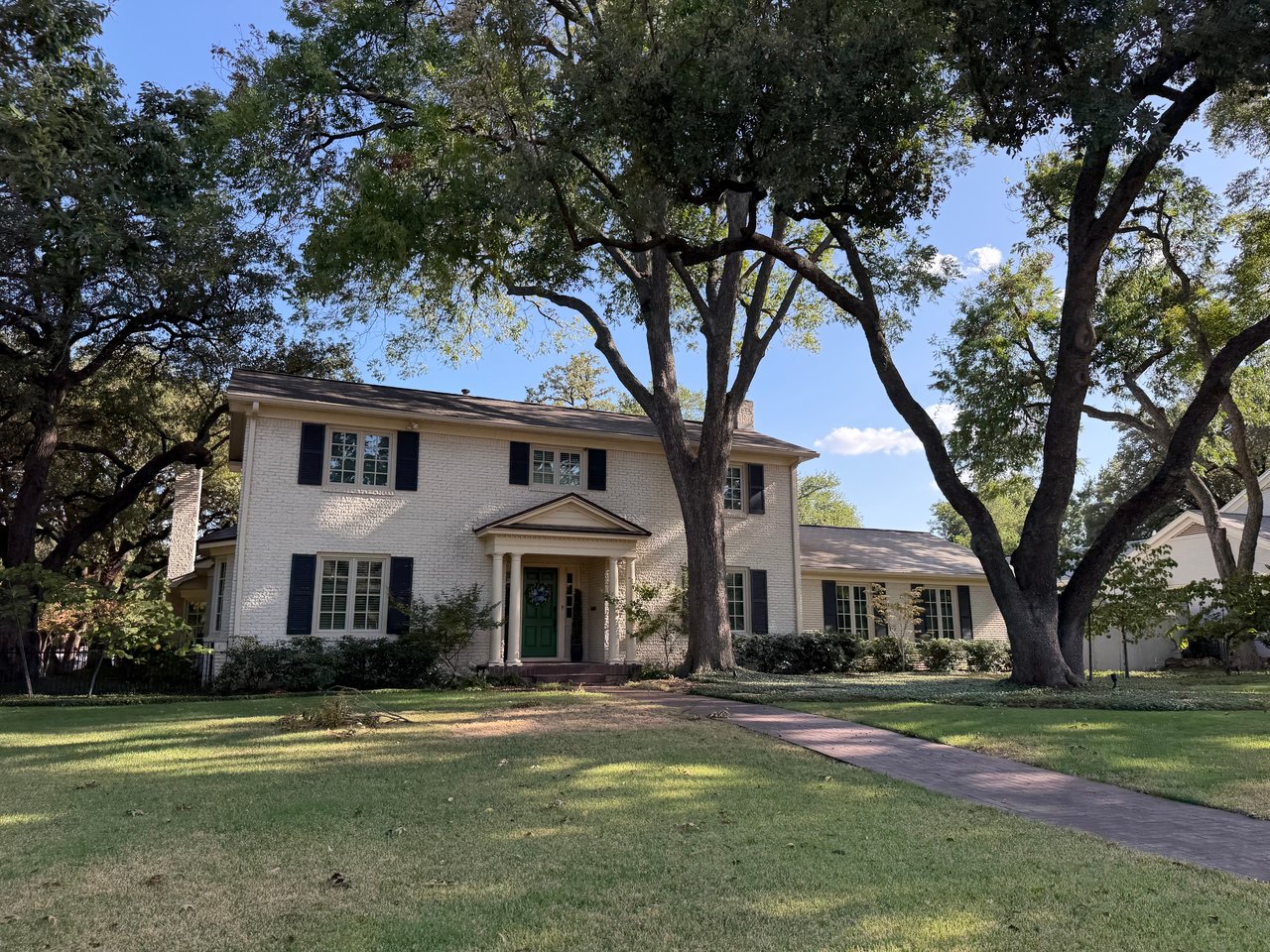
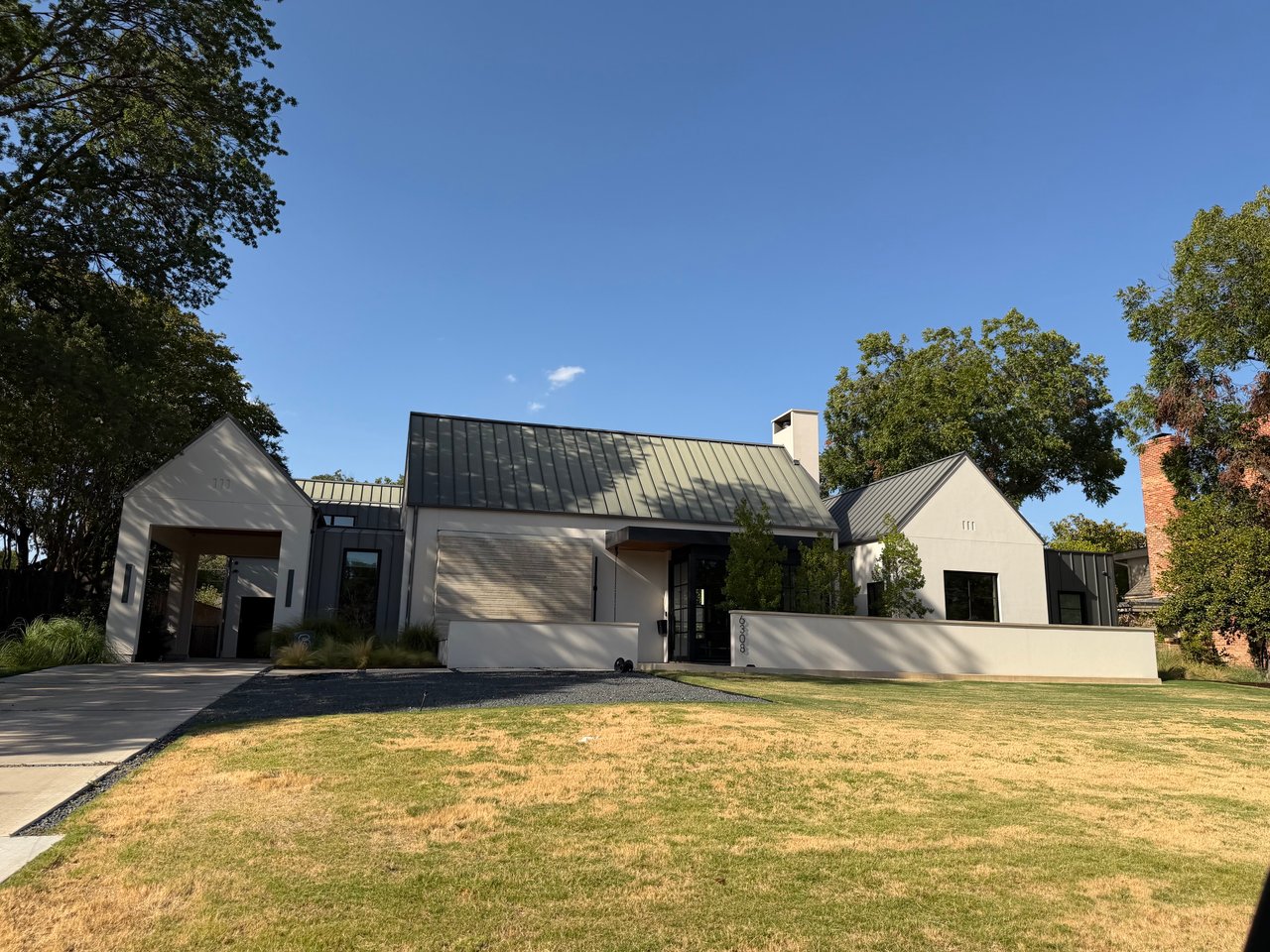
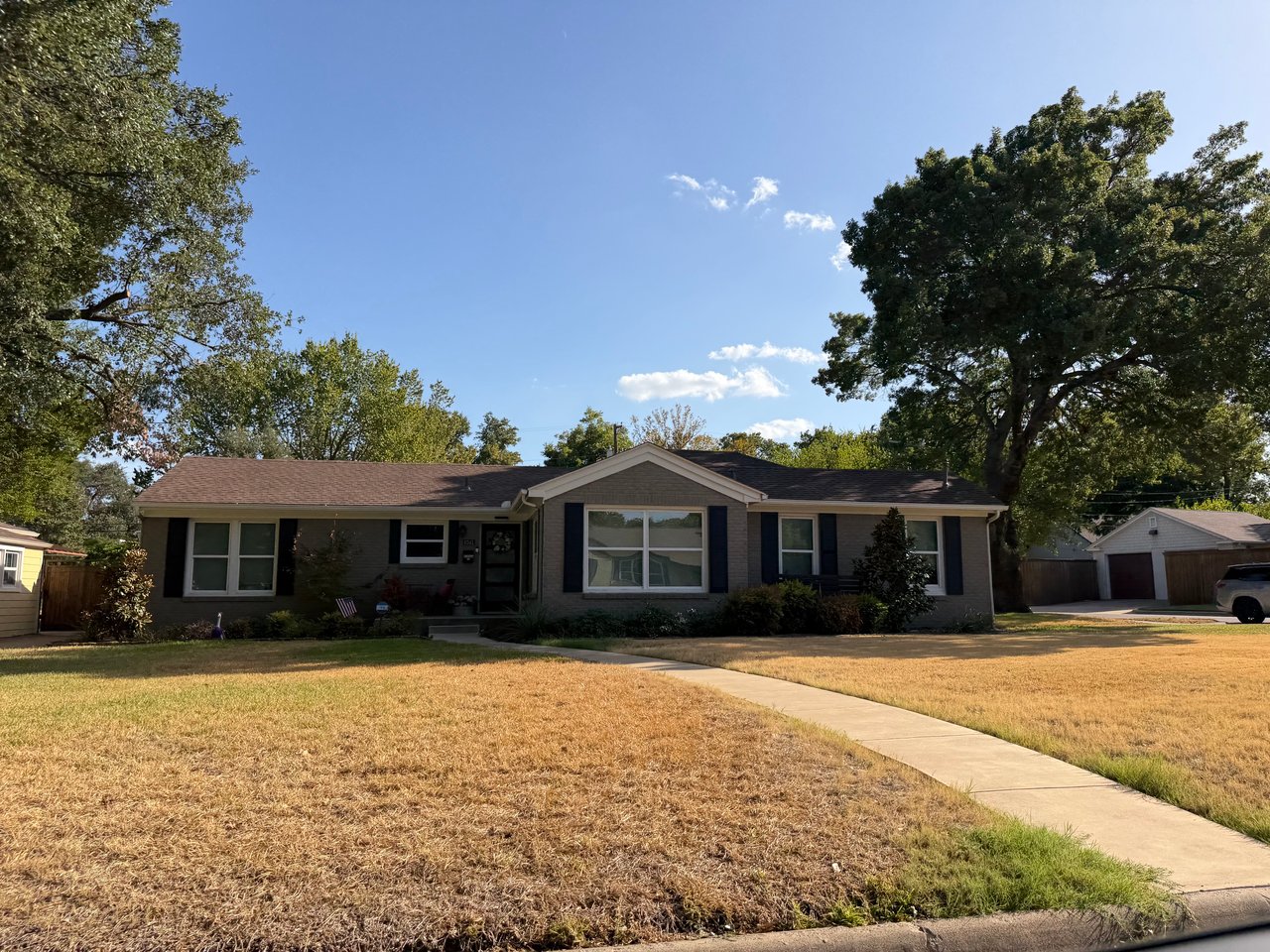
Ridglea North is the pocket between Camp Bowie Boulevard and Interstate 30 on Fort Worth's west side — 1940s homes about six miles from downtown, walkable to the Camp Bowie brick-street corridor, the Ridglea Theater and Ridglea Village. At its center is Morris E. Berney Park, which functions as the neighborhood's living room: the Fourth of July parade, National Night Out, Cocoa & Carols and movie nights all happen there. People here talk about that park the way other neighborhoods talk about an amenity center, except nobody pays dues for it.
It's also two markets in one, which the median closing price of $452,250 conceals entirely. Homes here have sold anywhere from $208,500 to $2,364,000, and the reason is the ground they sit on.
I bought my first house here.
An appraisal I've never forgotten
The house was on Calmont Avenue, facing the highway. I paid $105,000 for it.
The appraisal came back at $155,000.
My first reaction wasn't relief — it was that something was obviously wrong. So I read the report. It never mentioned that the house faced a highway. Every comparable sale in it came from the interior streets. Not one shared my location.
The single most obvious fact about that property — the thing you noticed before you got out of the car — was absent from the document that was supposed to determine what it was worth.
I'm a Certified Residential Appraiser now, and that report isn't why. But it's a large part of why I take the work as seriously as I do. I saw early what a poor one looks like, and I've never wanted to hand someone a report that isn't credible or isn't supported — one that leaves out a material fact to reach a number, or comes in high to make a seller feel good, or hits the contract price because that's how you keep getting work from a lender.
An appraisal is supposed to tell you what something is worth, not what you'd like to hear. Those are different jobs, and only one of them is useful to you.
Years later, I can finally put a number on what that appraiser left out.
What highway frontage actually costs in Ridglea North
I pulled every listing in Ridglea North over the three years ending September 2026 — 152 of them, 102 closed — and separated the homes fronting I-30 on Calmont from the interior streets.
- Interior streets: 92 sales, median $263 per square foot, median 19 days on market
- Calmont, facing the highway: 5 sales, median $207 per square foot, median 34 days
That's a 21% discount for the location, and it holds up statistically even at that sample size (p = 0.002).
Compare like with like and the gap doesn't move. Among homes between 1,100 and 1,900 square feet: interior streets cleared $268 a foot in a median of 12 days. Highway-facing homes cleared $213 a foot in 58 days. Same size, same era, same neighborhood, same schools. Twenty-one percent less, and nearly five times as long to sell.
The listings that came off the market show the same gap. Nine of the 15 highway-facing listings — 60% — were cancelled, expired or withdrawn. On the interior streets that figure is 23%.
So the honest answer to what my appraiser missed is roughly a fifth of the value, plus a tripling of marketing time and a much better-than-even chance the house comes off the market rather than trades.
This has a name in appraisal: external obsolescence — a loss in value caused by something outside the property line that the owner cannot cure. You can remodel the kitchen. You cannot move the interstate. It's the most consequential and most frequently ignored adjustment in residential valuation, and it's the reason two houses that look identical on paper aren't worth the same.
Camp Bowie frontage is the milder version
The neighborhood's southern edge fronts Camp Bowie Boulevard — a busy arterial, but an attractive one, and not an interstate.
Those homes closed at a median of $241 per foot, about 8% below the interior streets, in a median of 60 days. And they gave up the most at the table: a median of 82% of original list price, against 96% for the neighborhood as a whole.
Two different roads, two different adjustments. Which is the point — location influence isn't a yes-or-no box. It's a gradient, and getting it right requires actually looking.
The lots are not all small — and that's the other half of the story
Ridglea North gets described as compact, and the typical lot is: a median of 8,756 square feet. But that median hides a real high end. Nearly a third of sales sat on more than 10,000 square feet, 15% on more than 13,000, and the largest ran to 34,412 — about eight-tenths of an acre.
And value climbs right alongside it:
- Under 7,000 sq ft: $243 per foot
- 7,000–9,000: $256
- 9,000–12,000: $263
- 12,000–20,000: $279 — median close $866,500
- Over 20,000: $313 — median close $1,725,000
So the same neighborhood that produces a $270,000 cottage on the highway also produces seven-figure houses on large interior lots, and both are genuinely Ridglea North. A buyer who has only seen the median has seen neither.
It's the same pattern as the rest of west Fort Worth and the reverse of the usual rule: land drives the per-foot number here, in both directions. Frontage on I-30 takes 21% off. Two-tenths of an acre more than your neighbor adds it back and then some. The highway discount and the large-lot premium aren't separate findings — they're the same finding, which is that location and land do most of the work in this neighborhood and square footage does less than people assume.
The rest of the market
Away from the frontage streets, Ridglea North moves quickly:
- Median close $452,250 on 1,792 square feet — about $258 per foot
- Median year built 1943
- Median 20 days on market at 96% of original list
Values have climbed steadily — median close from $399,900 in 2023 to roughly $485,000 in 2026 — though per-foot values eased slightly in 2026 and sellers are receiving a bit less of their original asking price than a year ago. Normal cooling, not a reversal.
What the market is actually doing
On market conditions, because they get tangled up with the highway discount above. Across 102 closed sales in Ridglea North, price per square foot has run +1.3% a year once you control for house size — at p = 0.59, that reads as flat, but flat is the point. Nothing here is falling.
That's worth holding alongside the highway discount described above, because the two get confused. The 21% frontage discount is a permanent feature of location, not a sign of a weakening market — it was there before 2022 and it will be there after. Nor is it a local problem — across eighteen Fort Worth neighborhoods I measure, none shows a statistically significant decline in price per square foot. What changed is that homes take longer and more owners withdraw rather than cut, which on streets where people have held for decades is an affordable choice rather than a forced one.
Schools, taxes and the practical stuff
All 152 listings are Fort Worth ISD. Confirm the campus assignment for a specific address with the district.
Property taxes follow the ordinary Fort Worth pattern — Fort Worth ISD, city, county, hospital, college and water district, a combined rate near 2.19% — with no PID and no MUD. Infrastructure here was paid for eighty years ago.
What I look at in a Ridglea North house
- What's on the other side of the back fence, and how loud it is at 7am. The highway and the boulevard are the obvious ones; alleys, commercial parking and multifamily backing a lot matter too.
- What the renovation actually touched. These are eighty-year-old houses. New finishes over original wiring, galvanized supply and a foundation nobody has looked at is a different asset from one where the expensive invisible work was done. Ask for permits, not photographs.
- Foundation and drainage. Pier and beam and early slabs on North Texas clay, with mature trees pulling moisture out from underneath.
- Additions and their permits. Common on small 1940s houses, and not all of them were approved. Unpermitted square footage is treated differently by an appraiser than by a listing.
- Whether the price already reflects the location. If you're buying on a frontage street, the discount should be in the price you pay — and you should expect to grant it again when you sell.
If you own on a frontage street
This page exists mostly for you.
Lead with the part that gets left out: the homes that sold on Calmont did sell, at 96% of original list. Priced for what they are, these houses trade like the rest of the neighborhood.
The ones that came off the market were, as a group, asking closer to what the interior streets bring — which is the same blind spot my own appraisal had, seen from the other direction. I'm describing what they asked, not diagnosing why they didn't sell.
And if the number you'd need isn't the number the street supports, staying is a perfectly good answer. Most owners here have been in the house a long time and hold real equity. Nobody is required to take an offer to prove a point.
Buying or selling in Ridglea North
I hold a Texas broker's license and a Certified Residential Appraiser certification, and I've been on the receiving end of a valuation that ignored the most important thing about my own house.
That's what I'm actually useful for here: telling you what the location is worth, in dollars, out of the sales rather than out of an opinion — whether you're buying on one of these streets, selling on one, or trying to work out why the number someone gave you doesn't match what you see out the front window.
Call or text (682) 207-4310, or send me a note.
Sales figures are medians from NTREIS listings and closed sales for the three years ending September 2026, reported in aggregate. Frontage-street samples are small and reported as such. Tax rates, school assignments and market conditions change — confirm current figures for a specific property before relying on them.