The First Year in a New Build
New Construction
New Construction
Everything written about new construction is written for people who haven’t bought yet. Once you close, the advice stops, the sales counselor you spent a year texting moves to the next community, and you’re on your own with a warranty booklet nobody has read.
So this one is for owners. If you already have the keys — whether you closed last month or last year — here is what actually matters, roughly in the order it comes at you. (If you haven’t signed yet, read the companion piece on what’s in the builder’s contract first — it’s a much cheaper place to learn most of this.)
I’ve been on both sides of this. I’m a Certified Residential Appraiser and a broker, and I’ve also bought a new home myself and had to fix things the builder wasn’t going to fix. Some of what follows I learned the expensive way.
This is the first thing that will happen to you, and it’s the one that catches nearly everyone.
Texas appraises property as of January 1. If your house wasn’t finished on that date — or wasn’t there at all — your first tax bill was based on a bare lot or a partial build. Your lender set up your escrow account using that number, or using the builder’s estimate, and your monthly payment reflects it.
The following January, the appraisal district puts the finished house on the roll at full market value for the first time. Your payment does not drift upward. It steps.
Two practical consequences:
You will get an escrow shortage notice. Not only does your monthly tax portion go up, but your lender under-collected for the prior period and will spread the shortfall across the next twelve months on top of the new higher amount. That’s why the jump feels disproportionate — you’re paying the new number plus catching up on the old one. You can usually pay the shortage in a lump sum instead, which keeps the ongoing payment lower. Call and ask; most lenders won’t volunteer the option.
File your homestead exemption. I still find owners — usually people who bought recently — who never filed. It’s free, it’s the single largest thing most homeowners can do about their bill, and the school district exemption rose to $140,000 of market value under the 2025 package Texas voters approved that November. If you’re 65 or older or disabled, you reach $200,000 once the additional exemption layers on. Filing also starts the clock on the 10% annual cap on homestead assessed-value increases, which matters more every year you stay.
A meaningful share of my phone calls are homeowners asking for help protesting, and new construction is one of the best protest candidates there is.
Here’s why. The district is valuing your house for the first time, often from the plan, the permit, the builder’s reported cost, and a mass-appraisal model. They haven’t been inside. They don’t know that the lot backs to the detention pond, that your elevation is the base one, or that the phase behind you is still selling with $40,000 in incentives against your recorded price.
That last point is the one to sit with. Your recorded sale price includes the concessions the builder gave you — the rate buydown, the paid closing costs, the design credit. The district sees the gross number. An appraisal, by definition, is supposed to reflect price unaffected by sales concessions. If you paid $650,000 on paper and roughly $45,000 of that was a rate buydown the builder funded, the two numbers are not the same thing, and that is a legitimate, documentable argument.
What the appraisal review board actually responds to: your closing disclosure showing the concessions, photographs of specific conditions, repair estimates, and comparable sales — not a printout of what Zillow says and not an argument about how much your taxes went up. The deadline in Texas is generally May 15 or 30 days after your notice, whichever is later. Calendar it now.
One more thing before you file it yourself, though — because an independent appraisal is not always the right tool here, and I learned that the hard way on somebody I cared about.
Here is a story against my own interest, which is the only kind worth telling.
A friend asked me to appraise his new build for a protest. He’d paid somewhere in the $700,000s. I looked at the data and told him not to hire me.
His house was genuinely one of the nicer ones out there — larger, better finished, sitting near the top of its neighborhood. Which meant that any honest market value opinion I could sign would land at or above what the district already had. I would have taken his money to hand him a report that hurt him. So I referred him to a tax protest company instead.
They got it to $460,000.
I was not entirely surprised that it worked. I was surprised by how far it went, and it’s worth explaining why, because the mechanism is the whole reason those firms exist.
Texas gives you two separate grounds to protest on. One is that the value is too high — a market value argument, which is what almost every homeowner walks in with. The other is unequal appraisal, and it asks a completely different question: not what your house is worth, but whether you’re assessed higher than comparable properties. Under Tax Code § 41.43(b)(3), the test is whether your appraised value exceeds the median appraised value of a reasonable number of comparable properties, appropriately adjusted.
Read that carefully, because two things are missing from it. There is no mention of what you paid. And there is no floor saying the result can’t land below market value.
Then add the part that matters most: on an unequal appraisal claim the statute says the protest shall be determined in favor of the protesting party unless the appraisal district establishes otherwise. The burden sits on them, not on you.
Now put my friend’s house into that machinery. The very thing that made a market value appraisal useless to him — that his house was better and bigger than most of what surrounds it — is what made the equity route so powerful. The median assessed value of his comparables is pulled toward the neighborhood, not toward him. If the adjustments don’t fully capture how much nicer his house is, and adjustments rarely do capture that at the top of a neighborhood, the median lands a long way below what he’d sell for.
If you’ve read what I’ve written about contributory value, you’ll recognize this. It’s the same phenomenon as over-improving a house, running in the opposite direction. The quality the market won’t fully pay you for is the quality the equity remedy won’t fully adjust for — and in this one setting, that works in your favor.
This is not a loophole and it isn’t a trick. It’s the equal-and-uniform remedy the legislature wrote deliberately, on the theory that being taxed consistently with your neighbors matters as much as being taxed accurately. The reason it looks like sleight of hand is that homeowners almost never use it. They walk in arguing market value — the one ground where the district holds the best card in the deck, which is your own recent closing statement.
What this means practically. On a new build in the first couple of years, a contingency-fee protest firm is often the right call, and not because they’re better negotiators. It’s that they file on a ground most owners don’t know exists and they have the data to work it. They typically take a percentage of the first year’s savings, so your downside is capped. The fact pattern where they do best is precisely the new-construction one: a house that is nicer than its neighbors, assessed for the first time, by a district that hasn’t been inside.
Two honest caveats, because I’d rather you hear them from me.
An assessed value is not an appraisal and it is not what your house is worth. That $460,000 does not mean the house is worth $460,000 — I can tell you with some confidence that it isn’t. It won’t help you in a divorce or an estate, and no lender will lend on it. It is a tax number and nothing else.
And it doesn’t travel quietly. When you sell, buyers and their agents look at assessed values, and an unusually low one invites a question you’ll have to answer. It’s a good answer — we protested successfully — but have it ready.
The reason I’m telling you all of this is that it’s the honest version of what I’m for. Sometimes the answer is hire me. Sometimes the answer is hire someone else, and I’d rather be the person who tells you which.
Most builders use a third-party limited warranty marketed as “1-2-10.” What those numbers actually mean:
Now the part that isn’t on the brochure, and that most owners never learn. In 2023 Texas cut the statute of repose for residential construction from ten years to six for builders who provide exactly that warranty structure. Your contract almost certainly contains a sentence saying that in no event does the builder have any warranty obligation after six years.
So the ten-year structural coverage is real, but after year six your counterparty is the warranty company, not the builder — and your remedy is that company’s claims process, usually through arbitration. Under expansive North Texas clay, a foundation issue emerging in year seven is entirely ordinary.
What to do with that: put a reminder on your calendar for month ten and month twenty-two. Walk the house deliberately, the way an inspector would, and file everything you find before the window closes. Most people file one list at month eleven in a panic. Two unhurried passes find more.
This is the most practical thing in the article and I learned it the hard way, so I’ll be direct.
Never run a warranty claim through one person. Address the department.
What happens otherwise is this. You meet the warranty rep. He’s helpful, he comes out, he looks at the problem, he agrees with you — and a good deal of what gets agreed to happens verbally, or in texts and emails between the two of you. Then he leaves the company. Or is let go. Or is gone for a few months and then quietly reappears in the same department. Either way, everything he acknowledged on the builder’s behalf can evaporate with him. When I needed that verification myself, it wasn’t available to me.
I don’t know what was going on there and it isn’t really my business. The lesson doesn’t require knowing.
So:
None of this is adversarial. Most warranty departments are staffed by people trying to do a decent job. It’s just that your file has to be able to outlive any particular one of them.
One more thing worth knowing before a dispute gets serious: Texas has a statutory process for construction defect claims requiring written notice and an opportunity to inspect and repair, and if you turn down a repair offer that’s later judged reasonable, your recovery can be capped at that offer. Which means the quality of your written record isn’t just useful — it’s most of your position.
I’ll go first on this one. I bought a new home from a well-regarded builder at a seven-figure price in a neighborhood nobody would call entry level. The drainage was not good. I raised it with the builder, the conversation went sideways in the way described above, and I ended up paying to improve it myself.
The assumption I hear constantly is that drainage is a starter-home problem — that above some price point the builder handles it. That has not been my experience, and the reason is structural rather than moral. The contract language is much the same at every price point: the builder is responsible for the initial establishment of grades and swales, shared swales between lots are typically excluded from warranty coverage, adding area drains is at the homeowner’s expense, and the warranty generally addresses only water that fails to drain away from the house. Water that ponds in the middle of your yard can sit there a long time and still be fully compliant.
But here is the part I want you to actually act on, because it is the one place in this whole article where a homeowner has real leverage.
Your warranty booklet has a clock and a distance in it. The purchase contract limits what the builder owes you. The performance standards — a separate document, usually a booklet from the warranty company — is where the measurable test lives. The language varies, but it reads close to this: standing water shall not remain more than 24 hours within ten feet of the home after a rain, with a longer window, typically 48 hours, allowed in swales that drain other lots and where sump pumps or foundation drains discharge. Some builders write 48 near the foundation, some as long as 72. Go find your number tonight.
That single sentence is why the middle of your yard and the strip along your foundation are completely different arguments. Water standing in the middle of the yard is almost certainly yours to fix. Water standing within ten feet of the slab, past the stated window, is a failed performance standard — and that is a claim, not a complaint.
Builders do comply with this. I have seen a builder install a French drain along the side of a house because water stood there past the window and the owner made a documented, persistent case for it. That is not a favor and it is not the builder being nice. It is the standard being met.
So, in order:
Go outside during the next real downpour. Not after — during. Take video. You want to see where water sheets, where it pools, how long it stands, and specifically whether anything is moving toward the foundation or sitting within a few feet of it.
Then go back out and start the clock. This is the step nobody does, and it is the entire case. Photograph the same spot at the same angle when the rain stops, then again at 24 hours, then at 48, then at 72 — with timestamps. A puddle nobody timed is an opinion. A puddle photographed at hour zero and still there at hour 48, ten feet from your slab, is a measurement against a written standard. Note the rainfall total too; every one of these standards has an exception for unusually heavy or consecutive-day rain, and you want to be able to show it was an ordinary event.
Check the grade at the slab. The ground should fall away from the house. After settling, sod installation and a fence crew, it frequently doesn’t anymore. Most of these warranties also cover settlement around the foundation — typically a one-time fill during the first year where settling interferes with drainage, with the landscaping repair left to you.
File it citing the standard, to the department, in writing. Don’t write “my yard holds water.” Write: water stood within ten feet of the foundation on the north elevation for more than 48 hours following a 1.2-inch rainfall on the 14th, contrary to the yard grading standard on page whatever. Attach the timestamped photos. That is a different document than a complaint, and it gets handled by a different part of the organization.
Then make noise, politely and in writing. First responses to drainage claims are frequently some version of that’s normal, it’s a new lot, it will settle. Sometimes that’s true. But if you have the photos and the clock and the standard, say so again, to the department, and ask which specific provision they believe permits it. Persistence with evidence is what separates the owners who get a drain installed from the owners who get a shrug.
Water your foundation, especially in August. This sounds like folklore and it isn’t. North Texas clay shrinks when it dries and swells when it’s wet, and the damage comes from the change, not the moisture level. A soaker hose run on a consistent schedule around the perimeter during a drought is one of the cheapest things you will ever do for a house here. The reverse is also true: don’t let sprinklers or flowerbeds dump water right against the slab.
And if it genuinely is your problem, budget for it. Retrofitting French drains or a catch-basin system after the sod is down runs into real money, and it will be yours to spend. It’s also, unlike most things you can spend money on, a genuine protection of the asset. But find out which side of that ten-foot line you’re on before you write the check.
Most production builders spray a cheap flat latex. It photographs beautifully and it hides imperfect drywall, which is exactly why it’s used.
It also has very little binder in it. Furniture scuffs it, kids scuff it, and when you try to wipe a mark off with a damp cloth you either burnish a shiny patch into the flat finish or take the paint off the wall. Touch-ups roll on at a different sheen than the sprayed original, so every repair shows.
The builder’s touch-up kit is not a solution; it’s a delay. Plan on repainting the main living areas, hallways and stairwells in a quality washable matte or eggshell within the first couple of years. It is not an upgrade — it’s the paint the house should have had.
Two related notes. Exterior paint and caulk are almost always classified as homeowner maintenance and excluded from warranty coverage from day one, so check the caulking around windows, doors and the base of the brick in year one and stay ahead of it. And builders generally disclaim any obligation to precisely match colors on warranty repairs — so if a drywall repair is coming, expect to repaint the whole wall, corner to corner.
Do this at month ten, with a notepad, slowly. Things that are commonly still covered and commonly missed:
Consider hiring a licensed inspector for an eleven-month warranty inspection — typically a few hundred dollars. It is the best money in this entire article. They’ll produce a written report the builder has to respond to, and it arrives with a credential attached rather than as a homeowner’s list of complaints.
This is the appraiser in me talking, and it is the part people wish they’d done.
Somewhere — a folder in the cloud, not in the builder’s portal — keep:
Here’s why it matters more for a new build than for a resale. When you sell in three to five years, your competition is the builder’s next phase — same schools, brand new, still warranted, and possibly still carrying six or seven percent in incentives, or more, that you cannot match. How heavy those incentives are depends entirely on where rates and the market sit that year, which is exactly the thing neither of us can predict from here. Your advantages are the things that are done and paid for: mature landscaping, blinds and fencing already installed, upgrades that would cost far more at today’s option pricing, and a yard that drains. All of those need to be documented to be worth anything, and none of them will be if the file doesn’t exist.
If you’re inside year one, or staring at a warranty response you don’t think is right, or looking at an assessment notice that seems high — those are all things I can look at, and none of them require you to be selling anything.
I do appraisals and I list houses, and the useful overlap is that I can tell you when a number is defensible and when it isn’t, including when the honest answer is that the builder is right and it isn’t worth the fight.
Call or text (682) 207-4310, or send me a note.
And if you have friends out driving model homes right now, send them the companion piece on what’s actually in a builder’s contract. Before they sign is a much cheaper time to learn it.
General information, not legal or tax advice. Warranty terms, deadlines and exemption amounts vary and change — check your own documents and your county’s current deadlines.
Statutes and regulations link to primary text. Contract and warranty language is described generally, not quoted from any one builder’s agreement. The recommendations on drainage, paint and warranty correspondence are from practice, not from a published source.
Taxes, escrow and protest
Why your recorded price and your market value are not the same number
Warranty deadlines and defect claims
Drainage performance standards
Terrence Bilodeau is a Texas licensed broker (TREC #0686157) with The Bilodeau Group at Compass RE TX and a Texas Certified Residential Appraiser (TALCB #1360232). This article is general information, not legal or tax advice.
 Tanglewood
 Crestwood
 Walsh Ranch
 Montserrat / Montrachet
 Bella Flora
 Edwards Ranch Riverhills
 Tavolo Park
 Ryan Place
 Fairmount
 Ridglea
 Ridglea North
 Ridgmar
 Westover Hills
Rivercrest Bluffs & River District
Westover Hills
Rivercrest Bluffs & River District
 Rivercrest, Monticello & North Hi Mount
 Mira Vista
Overton Park
Overton Woods
Westcliff
Arlington Heights
Benbrook
Ventana
Downtown
Linwood
Eagle Mountain & Marine Creek
Beltmill & Watersbend
Heritage & Alliance
Presidio & Tehama Ridge
Wedgwood
North Richland Hills
Hurst
Euless
Bedford
Grapevine
Westlake
Keller
Southlake
Colleyville
Arlington
Burleson
Crowley
Mansfield
Kennedale
Aledo
Weatherford
Azle
Granbury
Springtown
Cleburne
Joshua
Godley
Alvarado
Ponder
Krum
Waxahachie
Midlothian
Poolville
Decatur
Justin
Mira Vista
Overton Park
Overton Woods
Westcliff
Arlington Heights
Benbrook
Ventana
Downtown
Linwood
Eagle Mountain & Marine Creek
Beltmill & Watersbend
Heritage & Alliance
Presidio & Tehama Ridge
Wedgwood
North Richland Hills
Hurst
Euless
Bedford
Grapevine
Westlake
Keller
Southlake
Colleyville
Arlington
Burleson
Crowley
Mansfield
Kennedale
Aledo
Weatherford
Azle
Granbury
Springtown
Cleburne
Joshua
Godley
Alvarado
Ponder
Krum
Waxahachie
Midlothian
Poolville
Decatur
Justin
Stay up to date on the latest real estate trends.

H-E-B is coming to Chisholm Trail and Oakmont in late 2028. I measured six North Texas stores to find out what that does to home values. It doesn't — but it changes ho… Read more
Home Improvement
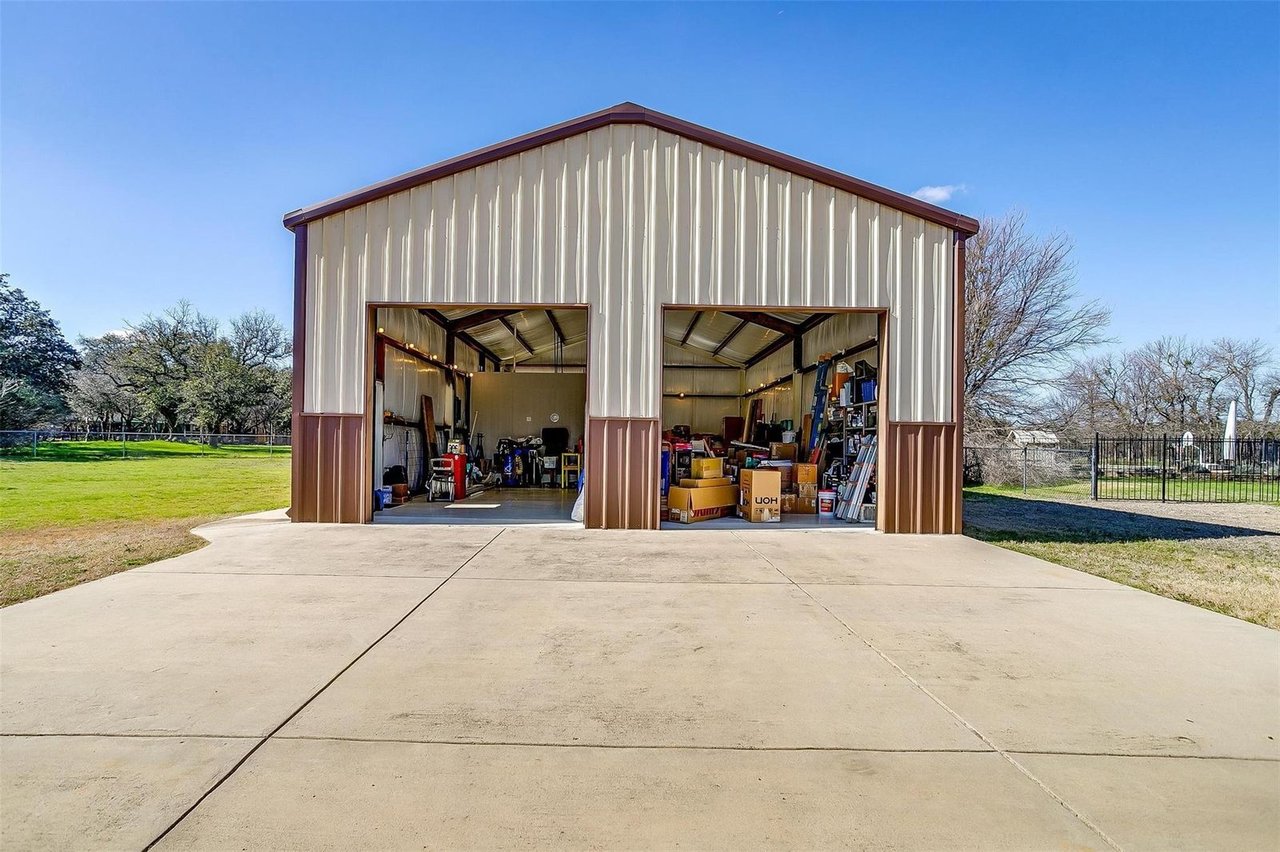
A shop with electricity adds about 6% of the sale price. The same building without power adds 2.6% — the same as a storage shed.
Home Improvement
2,002 accessory units measured. Having one adds about 7% — and how big it is adds nothing, so build the smallest one that does the job.
Seller Resources
Your old days on market follow you until you've been gone 30 days — then they vanish completely. 16,465 relisted DFW houses measured.

Home Improvement
About 9% of your price almost regardless of neighborhood — half to all of what one costs to build. And they sell eight days faster.
Buyer Resources
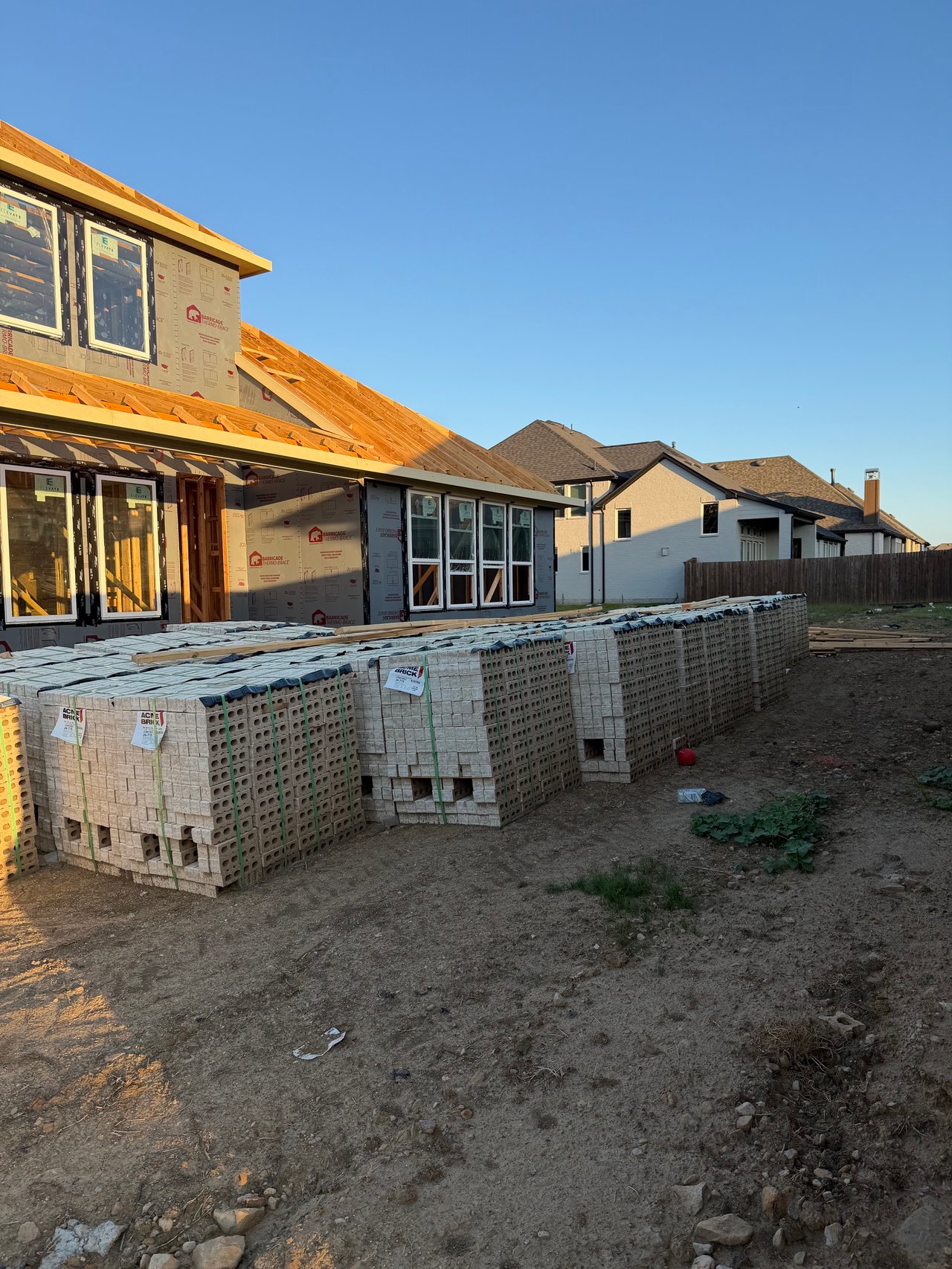
On a new build the listed tax is the vacant lot's bill, and it roughly quadruples in year two — about $526 a month on a $450,000 house.
Buyer Resources
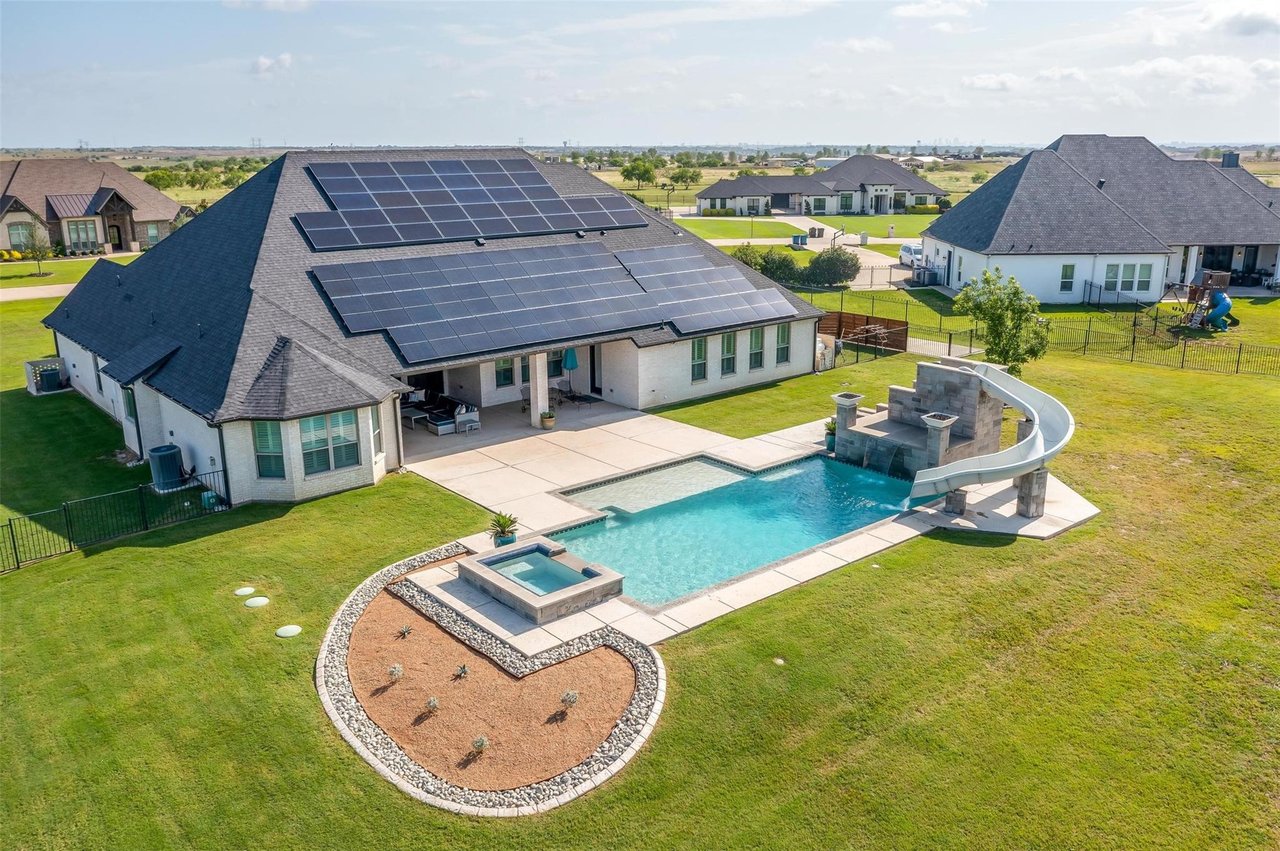
Owned panels add about 3%. Leased panels add nothing — and a listing that doesn't say which gets priced like a lease.

Seller Resources
Your twenty acres are not worth ten times your neighbor's two. Per-acre price falls about a quarter every time a tract doubles.
Owner Resources
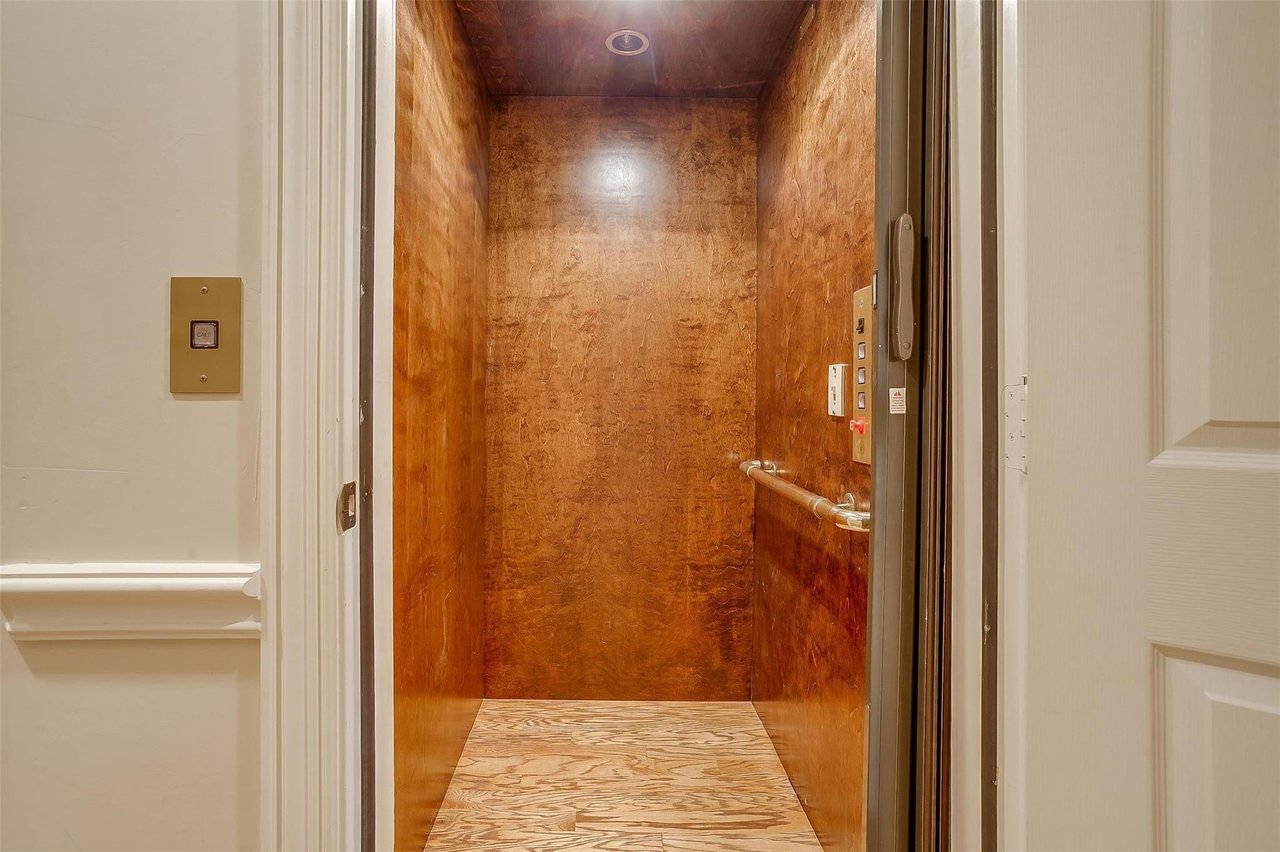
I listed one in North Richland Hills that sold in nine days at 99% of asking. The elevator wasn't why — and 121 sales out of 89,302 show why not.
I've trained three appraisers in this market, and every figure on this blog comes from closed sales I pull and model myself. The same analysis, applied to one address.